# Advances in the Management of Eosinophilic Asthma: Depemocumab and Beyond
## Learning Objectives
1. **Describe** the mechanism of action of depemocumab (depemokimab) and its impact on eosinophilic asthma management
2. **Compare** depemocumab to other IL-5 pathway inhibitors — mepolizumab, reslizumab, and benralizumab — in terms of dosing intervals, binding targets, and clinical efficacy
3. **Evaluate** the criteria for selecting asthma patients for depemocumab therapy based on eosinophilic phenotype and biomarker profiles
4. **Identify** challenges in transitioning patients from current biologics to depemocumab and apply evidence-based switching strategies
5. **Outline** future developments in asthma biologics, including combination approaches and biomarker-guided precision therapy
---
## Section 1: Introduction — The Burden of Eosinophilic Asthma
**Duration:** 10 min | **Content Tier: MUST ACT**
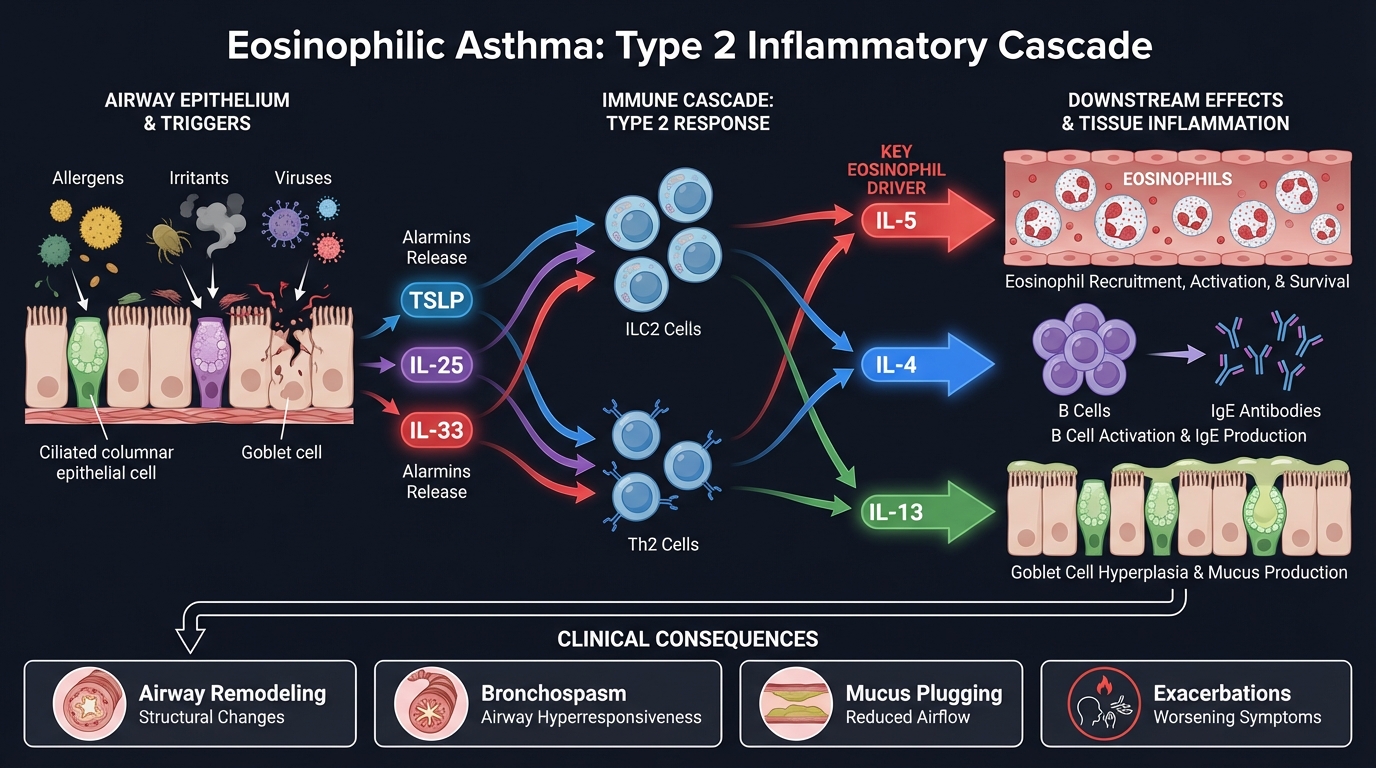 **MUST ACT:** Eosinophilic asthma accounts for approximately 50-60% of severe asthma cases and represents the single most important phenotype to identify when considering biologic therapy. Failure to recognize this phenotype leads to years of unnecessary oral corticosteroid exposure and preventable morbidity.
Asthma affects over 300 million people worldwide, but within this enormous population lies a critically important subset: those with eosinophilic asthma. This phenotype is characterized by persistent eosinophilic airway inflammation driven predominantly by type 2 (T2-high) immune pathways, leading to chronic symptoms, frequent exacerbations, and progressive airflow limitation (PMID: 30660826). The clinical burden is substantial — patients with severe eosinophilic asthma experience an average of 2-4 exacerbations per year, have significantly impaired quality of life, and consume disproportionate healthcare resources.
The pathophysiology begins with allergen or irritant exposure triggering airway epithelial cells to release alarmins — thymic stromal lymphopoietin (TSLP), interleukin-25 (IL-25), and interleukin-33 (IL-33). These alarmins activate group 2 innate lymphoid cells (ILC2s) and T-helper 2 (Th2) cells, which produce the canonical type 2 cytokines: IL-4, IL-5, and IL-13. IL-5 is the master regulator of eosinophil biology — it drives eosinophil differentiation in the bone marrow, promotes their survival, activates them for tissue migration, and enhances their effector functions in the airways (PMID: 30660826).
**Teaching Point:** The reason IL-5 is such an important therapeutic target is its near-exclusive specificity for eosinophils. Unlike IL-4 and IL-13, which have broad effects on multiple cell types (B cells, goblet cells, smooth muscle), IL-5 is the non-redundant signal for eosinophil maturation and survival. Block IL-5, and you specifically deplete eosinophils without broadly suppressing the immune system.
Despite the availability of inhaled corticosteroids, long-acting beta-agonists, long-acting muscarinic antagonists, and leukotriene receptor antagonists, a significant proportion of patients — estimated at 5-10% of the total asthma population — remain inadequately controlled. These patients with "severe asthma" are the ones who drive the greatest morbidity and cost. The Global Initiative for Asthma (GINA) 2021 guidelines recommend phenotyping these patients for type 2 inflammation using blood eosinophil counts and fractional exhaled nitric oxide (FeNO), and initiating biologic therapy when appropriate (GINA 2021, Evidence Class B).
**Say Out Loud:** "Before we add another course of prednisone to a severe asthma patient, we need to ask: have we phenotyped this patient? Do we know their eosinophil count? Because if this is eosinophilic asthma, we have biologics that can fundamentally change their trajectory."
**Nuance:** Not all eosinophilic asthma is the same. Some patients have allergic eosinophilic asthma (driven by allergen-specific IgE and Th2 cells), while others have non-allergic eosinophilic asthma (driven primarily by ILC2s and epithelial alarmins). This distinction matters for biologic selection: patients with overlapping allergic and eosinophilic phenotypes may respond to anti-IgE (omalizumab) or anti-IL-4Rα (dupilumab), while those with pure eosinophilic inflammation may be best served by anti-IL-5 therapies (PMID: 31776617).
**Audience Poll:** What is your current familiarity with biologic therapies for asthma?
- A) I prescribe biologics regularly
- B) I understand the options but rarely prescribe
- C) I have some familiarity but feel unsure about selection
- D) I am new to asthma biologics
---
## Section 2: The IL-5 Pathway and Eosinophil Biology
**Duration:** 12 min | **Content Tier: Teaching Point**
**MUST ACT:** Eosinophilic asthma accounts for approximately 50-60% of severe asthma cases and represents the single most important phenotype to identify when considering biologic therapy. Failure to recognize this phenotype leads to years of unnecessary oral corticosteroid exposure and preventable morbidity.
Asthma affects over 300 million people worldwide, but within this enormous population lies a critically important subset: those with eosinophilic asthma. This phenotype is characterized by persistent eosinophilic airway inflammation driven predominantly by type 2 (T2-high) immune pathways, leading to chronic symptoms, frequent exacerbations, and progressive airflow limitation (PMID: 30660826). The clinical burden is substantial — patients with severe eosinophilic asthma experience an average of 2-4 exacerbations per year, have significantly impaired quality of life, and consume disproportionate healthcare resources.
The pathophysiology begins with allergen or irritant exposure triggering airway epithelial cells to release alarmins — thymic stromal lymphopoietin (TSLP), interleukin-25 (IL-25), and interleukin-33 (IL-33). These alarmins activate group 2 innate lymphoid cells (ILC2s) and T-helper 2 (Th2) cells, which produce the canonical type 2 cytokines: IL-4, IL-5, and IL-13. IL-5 is the master regulator of eosinophil biology — it drives eosinophil differentiation in the bone marrow, promotes their survival, activates them for tissue migration, and enhances their effector functions in the airways (PMID: 30660826).
**Teaching Point:** The reason IL-5 is such an important therapeutic target is its near-exclusive specificity for eosinophils. Unlike IL-4 and IL-13, which have broad effects on multiple cell types (B cells, goblet cells, smooth muscle), IL-5 is the non-redundant signal for eosinophil maturation and survival. Block IL-5, and you specifically deplete eosinophils without broadly suppressing the immune system.
Despite the availability of inhaled corticosteroids, long-acting beta-agonists, long-acting muscarinic antagonists, and leukotriene receptor antagonists, a significant proportion of patients — estimated at 5-10% of the total asthma population — remain inadequately controlled. These patients with "severe asthma" are the ones who drive the greatest morbidity and cost. The Global Initiative for Asthma (GINA) 2021 guidelines recommend phenotyping these patients for type 2 inflammation using blood eosinophil counts and fractional exhaled nitric oxide (FeNO), and initiating biologic therapy when appropriate (GINA 2021, Evidence Class B).
**Say Out Loud:** "Before we add another course of prednisone to a severe asthma patient, we need to ask: have we phenotyped this patient? Do we know their eosinophil count? Because if this is eosinophilic asthma, we have biologics that can fundamentally change their trajectory."
**Nuance:** Not all eosinophilic asthma is the same. Some patients have allergic eosinophilic asthma (driven by allergen-specific IgE and Th2 cells), while others have non-allergic eosinophilic asthma (driven primarily by ILC2s and epithelial alarmins). This distinction matters for biologic selection: patients with overlapping allergic and eosinophilic phenotypes may respond to anti-IgE (omalizumab) or anti-IL-4Rα (dupilumab), while those with pure eosinophilic inflammation may be best served by anti-IL-5 therapies (PMID: 31776617).
**Audience Poll:** What is your current familiarity with biologic therapies for asthma?
- A) I prescribe biologics regularly
- B) I understand the options but rarely prescribe
- C) I have some familiarity but feel unsure about selection
- D) I am new to asthma biologics
---
## Section 2: The IL-5 Pathway and Eosinophil Biology
**Duration:** 12 min | **Content Tier: Teaching Point**
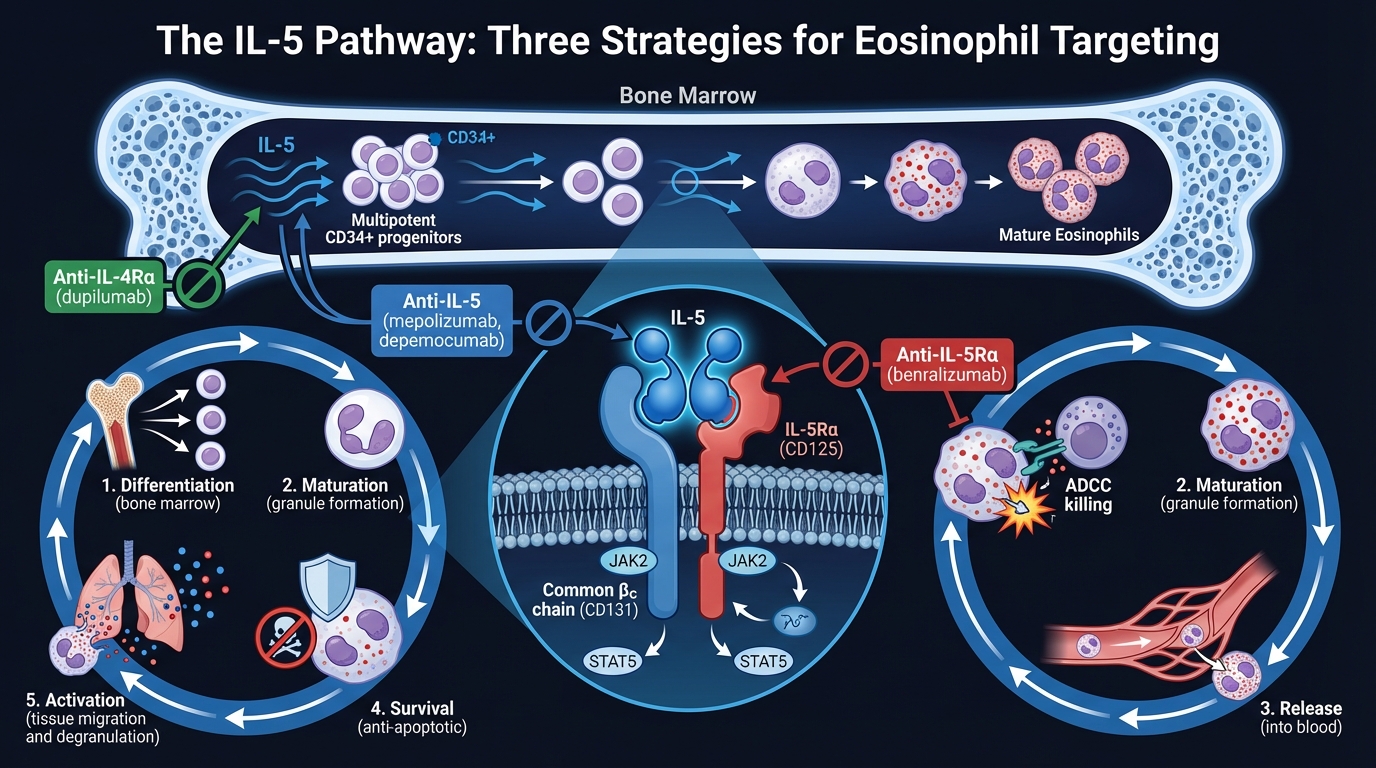 **Teaching Point:** Understanding the IL-5 signaling pathway is essential for appreciating why different anti-IL-5 agents have different mechanisms, why depemocumab may offer advantages in dosing intervals, and why eosinophil depletion depth varies between agents.
### The Lifecycle of an Eosinophil
Eosinophils are born in the bone marrow from CD34+ progenitor cells. IL-5 acts at every stage of their lifecycle:
1. **Differentiation:** IL-5 drives the commitment of myeloid progenitors to the eosinophil lineage
2. **Maturation:** IL-5 promotes the development of immature eosinophils into mature, granule-laden effector cells
3. **Release:** IL-5 stimulates the release of mature eosinophils from the bone marrow into the circulation
4. **Survival:** IL-5 is the primary anti-apoptotic signal for eosinophils, extending their lifespan from days to weeks
5. **Activation:** IL-5 primes eosinophils for degranulation and enhances their tissue-destructive capabilities
The IL-5 receptor is a heterodimer composed of an IL-5-specific alpha subunit (IL-5Rα) and a common beta chain (βc) shared with the receptors for IL-3 and GM-CSF. This shared beta chain is important clinically — it means that blocking IL-5 itself versus blocking IL-5Rα will have subtly different downstream effects (PMID: 30660826).
### Three Strategies for Targeting the IL-5 Axis
The biologic revolution in eosinophilic asthma has produced three distinct strategies:
**Strategy 1: Anti-IL-5 antibodies (mepolizumab, reslizumab, depemocumab)** — These bind circulating IL-5 and prevent it from engaging its receptor. They reduce blood eosinophil counts by approximately 75-85% but do not directly kill tissue-resident eosinophils, which have already received survival signals.
**Strategy 2: Anti-IL-5Rα antibody (benralizumab)** — This antibody binds the IL-5 receptor alpha subunit on the eosinophil surface, blocking IL-5 signaling AND inducing antibody-dependent cell-mediated cytotoxicity (ADCC) through natural killer cells. This results in near-complete eosinophil depletion (>90% reduction) in both blood and tissue.
**Strategy 3: Anti-IL-4Rα antibody (dupilumab)** — This broader agent blocks both IL-4 and IL-13 signaling by targeting the shared IL-4Rα subunit. It reduces eosinophilic inflammation through upstream pathway modulation rather than direct eosinophil targeting.
**Decision Point:** The depth of eosinophil depletion varies significantly between agents. Benralizumab achieves near-complete depletion via ADCC, while anti-IL-5 antibodies like mepolizumab and depemocumab achieve substantial but incomplete depletion. Is deeper depletion always better? Not necessarily — the clinical outcomes (exacerbation reduction, OCS sparing) are remarkably similar across agents, suggesting that reducing eosinophils below a functional threshold is sufficient (PMID: 30768390).
**Say Out Loud:** "Think of it this way: mepolizumab and depemocumab starve the eosinophils by cutting off their food supply — IL-5. Benralizumab goes further and actually kills the eosinophils directly through ADCC. Both approaches reduce exacerbations by about 50%. The clinical question is not which depletes eosinophils more, but which is most convenient and best tolerated for your specific patient."
---
## Section 3: Depemocumab — Mechanism, Trials, and Clinical Data
**Duration:** 15 min | **Content Tier: MUST ACT**
**Teaching Point:** Understanding the IL-5 signaling pathway is essential for appreciating why different anti-IL-5 agents have different mechanisms, why depemocumab may offer advantages in dosing intervals, and why eosinophil depletion depth varies between agents.
### The Lifecycle of an Eosinophil
Eosinophils are born in the bone marrow from CD34+ progenitor cells. IL-5 acts at every stage of their lifecycle:
1. **Differentiation:** IL-5 drives the commitment of myeloid progenitors to the eosinophil lineage
2. **Maturation:** IL-5 promotes the development of immature eosinophils into mature, granule-laden effector cells
3. **Release:** IL-5 stimulates the release of mature eosinophils from the bone marrow into the circulation
4. **Survival:** IL-5 is the primary anti-apoptotic signal for eosinophils, extending their lifespan from days to weeks
5. **Activation:** IL-5 primes eosinophils for degranulation and enhances their tissue-destructive capabilities
The IL-5 receptor is a heterodimer composed of an IL-5-specific alpha subunit (IL-5Rα) and a common beta chain (βc) shared with the receptors for IL-3 and GM-CSF. This shared beta chain is important clinically — it means that blocking IL-5 itself versus blocking IL-5Rα will have subtly different downstream effects (PMID: 30660826).
### Three Strategies for Targeting the IL-5 Axis
The biologic revolution in eosinophilic asthma has produced three distinct strategies:
**Strategy 1: Anti-IL-5 antibodies (mepolizumab, reslizumab, depemocumab)** — These bind circulating IL-5 and prevent it from engaging its receptor. They reduce blood eosinophil counts by approximately 75-85% but do not directly kill tissue-resident eosinophils, which have already received survival signals.
**Strategy 2: Anti-IL-5Rα antibody (benralizumab)** — This antibody binds the IL-5 receptor alpha subunit on the eosinophil surface, blocking IL-5 signaling AND inducing antibody-dependent cell-mediated cytotoxicity (ADCC) through natural killer cells. This results in near-complete eosinophil depletion (>90% reduction) in both blood and tissue.
**Strategy 3: Anti-IL-4Rα antibody (dupilumab)** — This broader agent blocks both IL-4 and IL-13 signaling by targeting the shared IL-4Rα subunit. It reduces eosinophilic inflammation through upstream pathway modulation rather than direct eosinophil targeting.
**Decision Point:** The depth of eosinophil depletion varies significantly between agents. Benralizumab achieves near-complete depletion via ADCC, while anti-IL-5 antibodies like mepolizumab and depemocumab achieve substantial but incomplete depletion. Is deeper depletion always better? Not necessarily — the clinical outcomes (exacerbation reduction, OCS sparing) are remarkably similar across agents, suggesting that reducing eosinophils below a functional threshold is sufficient (PMID: 30768390).
**Say Out Loud:** "Think of it this way: mepolizumab and depemocumab starve the eosinophils by cutting off their food supply — IL-5. Benralizumab goes further and actually kills the eosinophils directly through ADCC. Both approaches reduce exacerbations by about 50%. The clinical question is not which depletes eosinophils more, but which is most convenient and best tolerated for your specific patient."
---
## Section 3: Depemocumab — Mechanism, Trials, and Clinical Data
**Duration:** 15 min | **Content Tier: MUST ACT**
 **MUST ACT:** Depemocumab (also known as depemokimab, GSK3511294) is a next-generation anti-IL-5 monoclonal antibody that represents a significant evolution in dosing convenience. Clinicians managing severe eosinophilic asthma must understand its unique properties and how it fits into the current treatment landscape.
### What Makes Depemocumab Different?
Depemocumab is an ultra-long-acting anti-IL-5 IgG1 monoclonal antibody engineered for extended pharmacokinetics. Its key differentiating features include:
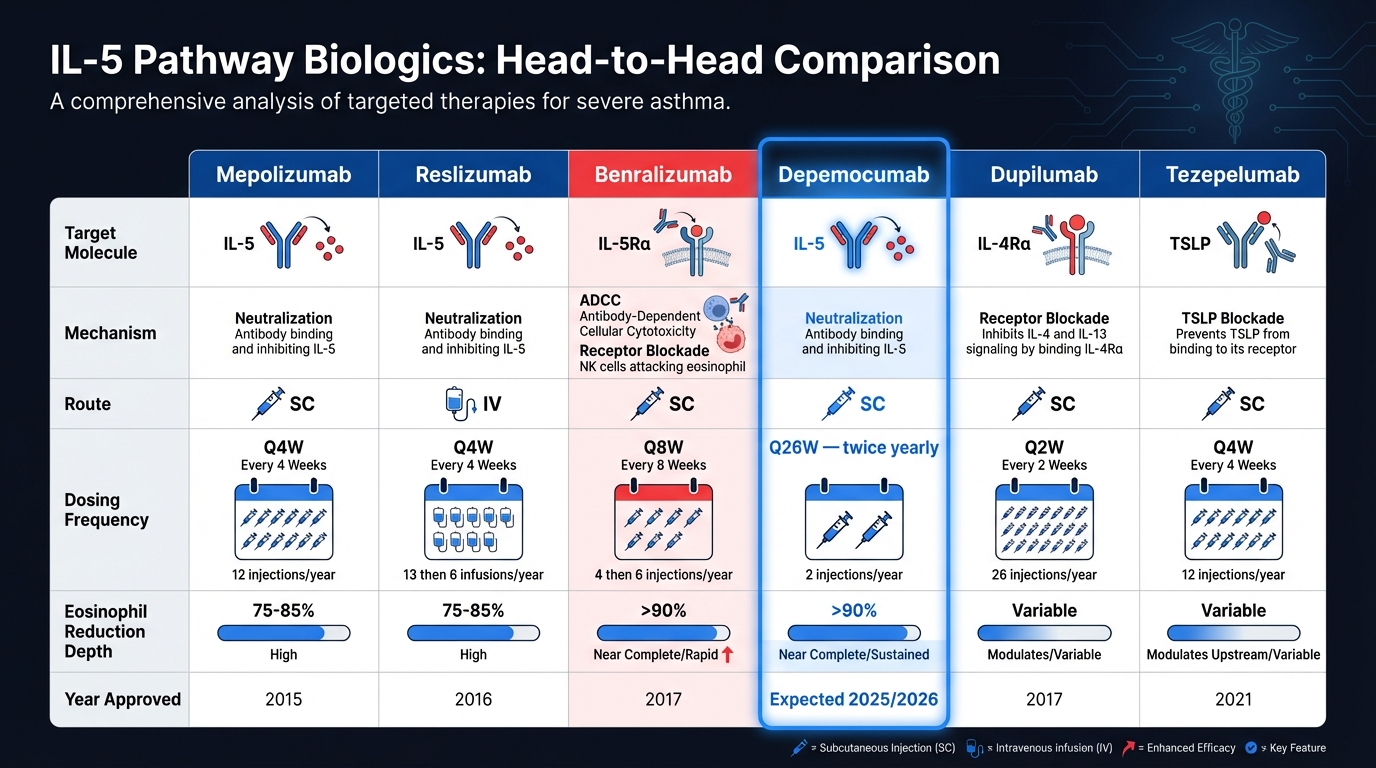
1. **Extended dosing interval:** Every 6 months (26 weeks) by subcutaneous injection — compared to every 4 weeks for mepolizumab, every 4 weeks for reslizumab (IV), and every 8 weeks (after loading) for benralizumab
2. **High-affinity IL-5 binding:** Depemocumab was engineered with optimized complementarity-determining regions (CDRs) for high-affinity, slow-dissociation binding to IL-5
3. **Extended half-life:** Fc engineering with YTE mutations in the Fc region enhances binding to the neonatal Fc receptor (FcRn), dramatically extending the serum half-life to approximately 50+ days
4. **Low immunogenicity:** Fully humanized construction with minimal anti-drug antibody formation
**Teaching Point:** The pharmacokinetic innovation behind depemocumab's 6-month dosing is the YTE mutation (Met252Tyr/Ser254Thr/Thr256Glu) in the Fc region. This enhances pH-dependent binding to FcRn — the antibody binds FcRn tightly at acidic pH (endosomal) and releases at neutral pH (plasma), creating an efficient recycling loop that dramatically extends serum persistence. This is the same engineering principle used in several other long-acting biologics in development across therapeutic areas.
### The SWIFT-1 and SWIFT-2 Trials
The SWIFT trials were the pivotal phase 3 program for depemocumab. Both were randomized, double-blind, placebo-controlled trials enrolling patients with severe eosinophilic asthma already on mepolizumab.
**SWIFT-1 and SWIFT-2 Design:**
- Population: Adults with severe eosinophilic asthma who had been on mepolizumab for ≥12 months with well-controlled disease (no exacerbations in the prior 12 months on mepolizumab)
- Intervention: Depemocumab 100 mg SC every 6 months vs. placebo (after stopping mepolizumab)
- Primary endpoint: Annualized rate of significant asthma exacerbations
- Key secondary endpoints: Blood eosinophil counts, pre-bronchodilator FEV1, ACQ-5 scores
**Key Results:**
- The pooled SWIFT analysis demonstrated that depemocumab maintained the exacerbation control achieved by mepolizumab — patients transitioning from mepolizumab to depemocumab did not experience a significant increase in exacerbations compared to continuing mepolizumab
- Blood eosinophil suppression was maintained with twice-yearly dosing
- Safety profile was comparable to placebo, with injection site reactions being the most common adverse event
- The FDA approved depemocumab in 2025 for add-on maintenance treatment of severe eosinophilic asthma in adults
### The ANCHOR Trials
The ANCHOR program evaluated depemocumab in patients with additional eosinophil-driven conditions, specifically chronic rhinosinusitis with nasal polyposis (CRSwNP) and hypereosinophilic syndrome (HES). These broader studies help inform our understanding of depemocumab's eosinophil-suppressive capacity:
- Consistent eosinophil suppression across indications
- Favorable safety profile maintained across diverse patient populations
- Extended dosing interval feasible across different eosinophilic conditions
**Nuance:** A critical nuance about the SWIFT trials is that they enrolled patients who were already well-controlled on mepolizumab. This is a maintenance/transition population, not a treatment-naive population. The trials essentially asked: "Can you maintain disease control with two injections per year instead of twelve?" The answer was yes. However, we have less data on depemocumab as first-line biologic therapy in biologic-naive patients with active, uncontrolled eosinophilic asthma. This is an important evidence gap that ongoing trials aim to address.
**Say Out Loud:** "When I explain depemocumab to patients, I say: if you've been well-controlled on mepolizumab and you're tired of monthly injections, we now have an option that gives you the same protection with just two shots a year. That's a game-changer for adherence and quality of life."
**Audience Poll:** Which clinical outcome is most important to you in evaluating asthma biologics?
- A) Exacerbation reduction
- B) Oral corticosteroid sparing
- C) Lung function improvement
- D) Dosing convenience and adherence
---
## Section 4: Comparative Analysis — How Depemocumab Fits In
**Duration:** 12 min | **Content Tier: Teaching Point**
**MUST ACT:** Depemocumab (also known as depemokimab, GSK3511294) is a next-generation anti-IL-5 monoclonal antibody that represents a significant evolution in dosing convenience. Clinicians managing severe eosinophilic asthma must understand its unique properties and how it fits into the current treatment landscape.
### What Makes Depemocumab Different?
Depemocumab is an ultra-long-acting anti-IL-5 IgG1 monoclonal antibody engineered for extended pharmacokinetics. Its key differentiating features include:
1. **Extended dosing interval:** Every 6 months (26 weeks) by subcutaneous injection — compared to every 4 weeks for mepolizumab, every 4 weeks for reslizumab (IV), and every 8 weeks (after loading) for benralizumab
2. **High-affinity IL-5 binding:** Depemocumab was engineered with optimized complementarity-determining regions (CDRs) for high-affinity, slow-dissociation binding to IL-5
3. **Extended half-life:** Fc engineering with YTE mutations in the Fc region enhances binding to the neonatal Fc receptor (FcRn), dramatically extending the serum half-life to approximately 50+ days
4. **Low immunogenicity:** Fully humanized construction with minimal anti-drug antibody formation
**Teaching Point:** The pharmacokinetic innovation behind depemocumab's 6-month dosing is the YTE mutation (Met252Tyr/Ser254Thr/Thr256Glu) in the Fc region. This enhances pH-dependent binding to FcRn — the antibody binds FcRn tightly at acidic pH (endosomal) and releases at neutral pH (plasma), creating an efficient recycling loop that dramatically extends serum persistence. This is the same engineering principle used in several other long-acting biologics in development across therapeutic areas.
### The SWIFT-1 and SWIFT-2 Trials
The SWIFT trials were the pivotal phase 3 program for depemocumab. Both were randomized, double-blind, placebo-controlled trials enrolling patients with severe eosinophilic asthma already on mepolizumab.
**SWIFT-1 and SWIFT-2 Design:**
- Population: Adults with severe eosinophilic asthma who had been on mepolizumab for ≥12 months with well-controlled disease (no exacerbations in the prior 12 months on mepolizumab)
- Intervention: Depemocumab 100 mg SC every 6 months vs. placebo (after stopping mepolizumab)
- Primary endpoint: Annualized rate of significant asthma exacerbations
- Key secondary endpoints: Blood eosinophil counts, pre-bronchodilator FEV1, ACQ-5 scores
**Key Results:**
- The pooled SWIFT analysis demonstrated that depemocumab maintained the exacerbation control achieved by mepolizumab — patients transitioning from mepolizumab to depemocumab did not experience a significant increase in exacerbations compared to continuing mepolizumab
- Blood eosinophil suppression was maintained with twice-yearly dosing
- Safety profile was comparable to placebo, with injection site reactions being the most common adverse event
- The FDA approved depemocumab in 2025 for add-on maintenance treatment of severe eosinophilic asthma in adults
### The ANCHOR Trials
The ANCHOR program evaluated depemocumab in patients with additional eosinophil-driven conditions, specifically chronic rhinosinusitis with nasal polyposis (CRSwNP) and hypereosinophilic syndrome (HES). These broader studies help inform our understanding of depemocumab's eosinophil-suppressive capacity:
- Consistent eosinophil suppression across indications
- Favorable safety profile maintained across diverse patient populations
- Extended dosing interval feasible across different eosinophilic conditions
**Nuance:** A critical nuance about the SWIFT trials is that they enrolled patients who were already well-controlled on mepolizumab. This is a maintenance/transition population, not a treatment-naive population. The trials essentially asked: "Can you maintain disease control with two injections per year instead of twelve?" The answer was yes. However, we have less data on depemocumab as first-line biologic therapy in biologic-naive patients with active, uncontrolled eosinophilic asthma. This is an important evidence gap that ongoing trials aim to address.
**Say Out Loud:** "When I explain depemocumab to patients, I say: if you've been well-controlled on mepolizumab and you're tired of monthly injections, we now have an option that gives you the same protection with just two shots a year. That's a game-changer for adherence and quality of life."
**Audience Poll:** Which clinical outcome is most important to you in evaluating asthma biologics?
- A) Exacerbation reduction
- B) Oral corticosteroid sparing
- C) Lung function improvement
- D) Dosing convenience and adherence
---
## Section 4: Comparative Analysis — How Depemocumab Fits In
**Duration:** 12 min | **Content Tier: Teaching Point**
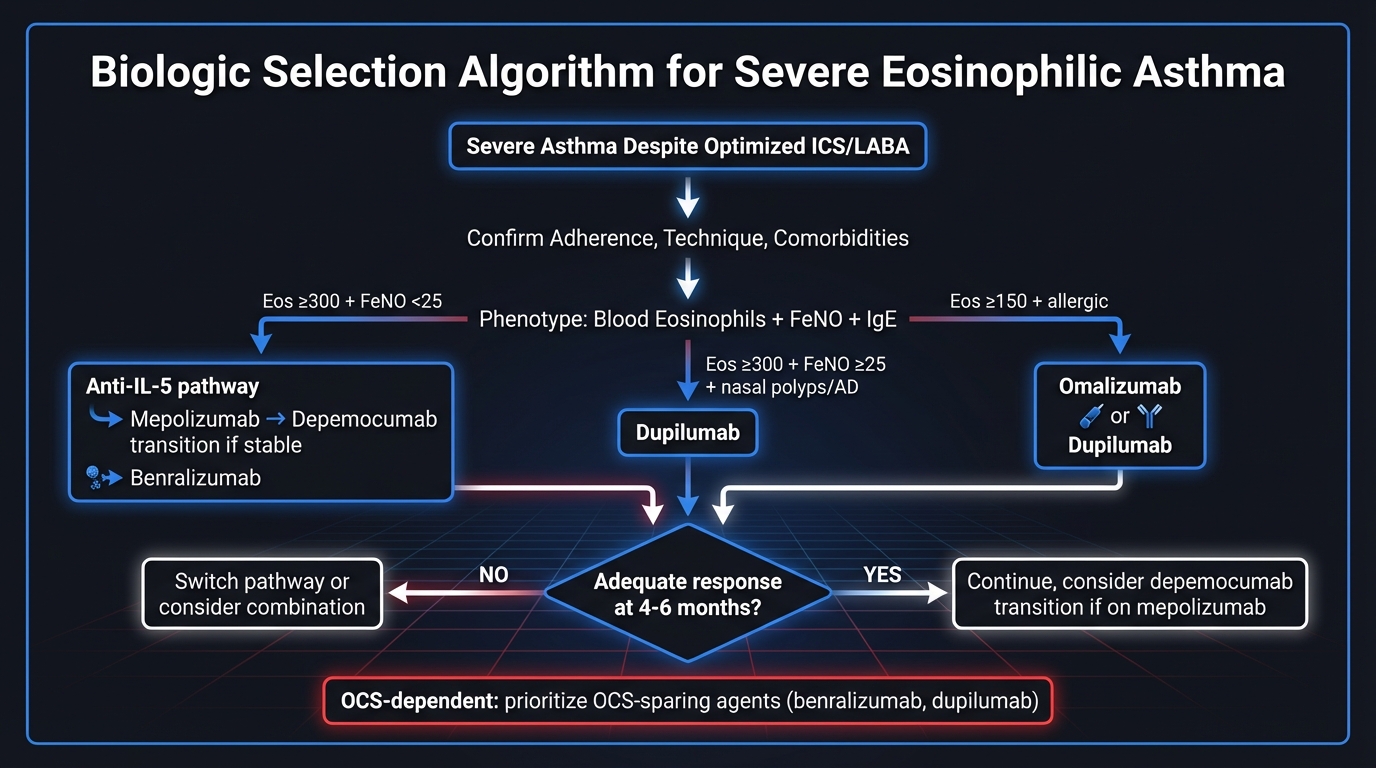 **Teaching Point:** No head-to-head trials exist comparing depemocumab directly to benralizumab or dupilumab. All comparisons are indirect, drawn from separate trial populations. Clinicians must synthesize available evidence with individual patient characteristics.
### Head-to-Head Comparison Framework
| Feature | Mepolizumab | Benralizumab | Reslizumab | Depemocumab | Dupilumab |
|---------|------------|-------------|------------|-------------|-----------|
| Target | IL-5 | IL-5Rα | IL-5 | IL-5 | IL-4Rα |
| Mechanism | Neutralizes IL-5 | ADCC + receptor blockade | Neutralizes IL-5 | Neutralizes IL-5 | Blocks IL-4/IL-13 |
| Route | SC | SC | IV | SC | SC |
| Dosing | Q4W | Q8W (after loading) | Q4W | Q26W (6 months) | Q2W |
| Eosinophil reduction | ~75-85% | >90% (near-complete) | ~75-85% | ~75-85% | Variable (may transiently increase) |
| Exacerbation reduction | ~50% | ~50-60% | ~50% | Maintained from mepolizumab | ~50-70% |
| OCS sparing | Yes | Yes (PONENTE) | Limited data | Inferred from mepolizumab | Yes (VENTURE) |
| Additional benefits | Nasal polyps (limited) | Nasal polyps | — | Nasal polyps, HES | Nasal polyps, atopic dermatitis |
| Year approved for asthma | 2015 | 2017 | 2016 | 2025 | 2018 |
**Decision Point:** How do you choose between these agents for a given patient?
The selection depends on several overlapping factors:
1. **Eosinophil count:** Patients with blood eosinophils ≥300 cells/μL respond well to all anti-IL-5/IL-5Rα agents. Those with counts ≥150 but <300 may still benefit but with smaller effect sizes. Dupilumab has broader eligibility criteria including FeNO-based selection.
2. **Comorbidities:** If the patient also has chronic rhinosinusitis with nasal polyposis, dupilumab or mepolizumab/depemocumab may address both conditions. If they have concurrent atopic dermatitis, dupilumab is the only agent with dual indication.
3. **OCS dependence:** Benralizumab (PONENTE trial) and dupilumab (VENTURE trial) have the strongest OCS-sparing data. Mepolizumab also demonstrated OCS sparing in the SIRIUS trial.
4. **Adherence concerns:** If the patient struggles with frequent healthcare visits, depemocumab's twice-yearly dosing is uniquely advantageous. Benralizumab every 8 weeks is intermediate. Dupilumab's every 2 weeks (self-administered) may suit patients comfortable with self-injection (PMID: 30768390).
5. **Prior biologic response:** Patients who have been well-controlled on mepolizumab are ideal candidates for depemocumab transition based on the SWIFT data.
**Nuance:** The concept of "eosinophil depletion depth" raises an important question. Benralizumab achieves near-complete eosinophil depletion through ADCC, while anti-IL-5 antibodies achieve significant but incomplete depletion. Some experts argue that tissue eosinophils — which are more resistant to anti-IL-5 neutralization — may be clinically relevant. However, the clinical outcomes data suggests that the depth of depletion beyond a functional threshold does not translate into proportionally better outcomes. This remains an active area of investigation (PMID: 30768390).
**Audience Poll:** Would reduced dosing frequency from monthly to twice-yearly influence your treatment decision?
- A) Absolutely — adherence is a major challenge for my patients
- B) Somewhat — but efficacy matters more
- C) Not really — I prioritize clinical outcomes over convenience
- D) It depends on the individual patient
---
## Section 5: Patient Selection and Biologic Initiation
**Duration:** 15 min | **Content Tier: MUST ACT**
**MUST ACT:** Selecting the right patient for the right biologic at the right time is the cornerstone of personalized asthma management. Inappropriate selection leads to treatment failure, wasted resources, and continued patient suffering.
### The Phenotyping Pathway
Before any biologic can be considered, the patient must meet criteria for severe asthma and demonstrate a type 2 inflammatory phenotype:
**Step 1: Confirm severe asthma diagnosis**
- Adherence to high-dose ICS/LABA has been confirmed (with objective measures if possible)
- Comorbidities have been addressed (GERD, rhinosinusitis, obesity, vocal cord dysfunction)
- Inhaler technique has been verified
- Environmental triggers have been assessed
**Step 2: Phenotype for T2 inflammation**
- Blood eosinophils ≥150 cells/μL (≥300 cells/μL is the optimal threshold for anti-IL-5 agents)
- FeNO ≥25 ppb supports T2-high inflammation
- History of allergic sensitization (total IgE, specific IgE)
- Prior OCS responsiveness (eosinophilic patients typically improve on OCS bursts)
**Step 3: Select the appropriate biologic** (PMID: 30146951)
- Eosinophils ≥300, no other comorbidities → Anti-IL-5/IL-5Rα (mepolizumab, benralizumab, or depemocumab)
- Eosinophils ≥300 + nasal polyposis → Dupilumab or mepolizumab
- Eosinophils ≥300 + atopic dermatitis → Dupilumab
- Allergic phenotype with elevated IgE + eosinophils → Omalizumab or dupilumab
- Eosinophils ≥300, already controlled on mepolizumab → Consider depemocumab transition
**Teaching Point:** The blood eosinophil count is the single most important biomarker for predicting response to anti-IL-5 therapy. However, a single measurement can be misleading — eosinophil counts fluctuate with diurnal variation, OCS use, infections, and seasonal allergen exposure. When possible, use the highest documented eosinophil count, ideally measured when the patient is not on OCS. A count ≥300 cells/μL on at least one occasion strongly supports eosinophilic phenotype (PMID: 30146951).
**Say Out Loud:** "I tell my trainees: don't just look at today's eosinophil count. Review the trend. Look at the CBC from six months ago, from last year. Was there ever a count above 300? Above 500? That peak count tells you more about the patient's underlying phenotype than any single snapshot."
### When to Consider Depemocumab Specifically
Based on current evidence from the SWIFT trials, the ideal depemocumab candidate is:
1. An adult with severe eosinophilic asthma
2. Currently well-controlled on mepolizumab (no exacerbations in the past year)
3. Interested in reduced injection frequency
4. Reliable for twice-yearly follow-up visits
**Decision Point:** What about biologic-naive patients? Can you start depemocumab as first-line biologic therapy?
This is an evolving area. The SWIFT trials enrolled patients already stabilized on mepolizumab. While the pharmacological rationale supports depemocumab's efficacy as first-line therapy (it targets the same cytokine as mepolizumab with similar binding affinity), the level 1 evidence currently supports its use primarily as a step-down/transition from mepolizumab. Additional clinical trials are anticipated to broaden the approved indication.
---
## Section 6: Transition Strategies — Switching Between Biologics
**Duration:** 12 min | **Content Tier: MUST ACT**
**MUST ACT:** Biologic transitions are becoming increasingly common as new agents emerge. A poorly planned transition can result in rebound exacerbations, eosinophil rebound, and loss of asthma control. Evidence-based transition strategies are essential.
### Transition Scenarios
**Scenario A: Mepolizumab → Depemocumab** (Supported by SWIFT data)
- This is the best-studied transition
- Timing: Administer depemocumab at the time of the next scheduled mepolizumab dose
- Monitor: Blood eosinophils at 4 weeks, 12 weeks, and 26 weeks post-switch
- Expected: Maintained eosinophil suppression without a significant rebound
- Follow-up: Review exacerbation status at 6 months; confirm ongoing disease control before second dose
**Scenario B: Benralizumab → Depemocumab** (Limited direct evidence)
- Rationale: Patient transitioning from anti-IL-5Rα to anti-IL-5 for practical or tolerability reasons
- Concern: Benralizumab achieves near-complete eosinophil depletion via ADCC. Switching to an anti-IL-5 antibody that achieves less complete depletion could theoretically result in eosinophil rebound
- Approach: Start depemocumab 8 weeks after last benralizumab dose (aligning with dosing interval)
- Monitor closely: Blood eosinophils at 4, 8, 12, and 26 weeks
**Scenario C: Biologic → Depemocumab with ongoing inadequate control**
- If a patient is on a biologic but still experiencing exacerbations, switching biologics may be appropriate
- Assess: Is the persistent inflammation truly eosinophilic? (Recheck blood eosinophils, FeNO, sputum if available)
- Consider: Switching within the same pathway (anti-IL-5 to anti-IL-5Rα, or vice versa) may help some patients (PMID: 28382660)
- Alternative: Switch across pathways (anti-IL-5 to anti-IL-4Rα with dupilumab) if the phenotype has evolved or mixed features exist
**Teaching Point:** The concept of "eosinophil rebound" is important during biologic transitions. When anti-IL-5 therapy is stopped, eosinophils can rebound to pre-treatment or even supra-normal levels within weeks to months. This rebound can trigger exacerbations. The SWIFT trials specifically showed that transitioning to depemocumab prevented this rebound, maintaining eosinophil suppression through extended IL-5 neutralization.
**Say Out Loud:** "When I switch a patient between biologics, I think of it like a relay race. I don't want any gap in coverage. I plan the timing so the new agent is active before the old one wears off. And I monitor closely for the first six months — blood eosinophils and clinical status."
**Audience Poll:** What is your primary concern when transitioning between biologic therapies?
- A) Risk of exacerbation during the transition
- B) Uncertainty about comparative efficacy
- C) Insurance/authorization challenges
- D) Patient anxiety about changing medications
---
## Section 7: Future Directions in Asthma Biologic Therapies
**Duration:** 12 min | **Content Tier: Nuance**
**Teaching Point:** No head-to-head trials exist comparing depemocumab directly to benralizumab or dupilumab. All comparisons are indirect, drawn from separate trial populations. Clinicians must synthesize available evidence with individual patient characteristics.
### Head-to-Head Comparison Framework
| Feature | Mepolizumab | Benralizumab | Reslizumab | Depemocumab | Dupilumab |
|---------|------------|-------------|------------|-------------|-----------|
| Target | IL-5 | IL-5Rα | IL-5 | IL-5 | IL-4Rα |
| Mechanism | Neutralizes IL-5 | ADCC + receptor blockade | Neutralizes IL-5 | Neutralizes IL-5 | Blocks IL-4/IL-13 |
| Route | SC | SC | IV | SC | SC |
| Dosing | Q4W | Q8W (after loading) | Q4W | Q26W (6 months) | Q2W |
| Eosinophil reduction | ~75-85% | >90% (near-complete) | ~75-85% | ~75-85% | Variable (may transiently increase) |
| Exacerbation reduction | ~50% | ~50-60% | ~50% | Maintained from mepolizumab | ~50-70% |
| OCS sparing | Yes | Yes (PONENTE) | Limited data | Inferred from mepolizumab | Yes (VENTURE) |
| Additional benefits | Nasal polyps (limited) | Nasal polyps | — | Nasal polyps, HES | Nasal polyps, atopic dermatitis |
| Year approved for asthma | 2015 | 2017 | 2016 | 2025 | 2018 |
**Decision Point:** How do you choose between these agents for a given patient?
The selection depends on several overlapping factors:
1. **Eosinophil count:** Patients with blood eosinophils ≥300 cells/μL respond well to all anti-IL-5/IL-5Rα agents. Those with counts ≥150 but <300 may still benefit but with smaller effect sizes. Dupilumab has broader eligibility criteria including FeNO-based selection.
2. **Comorbidities:** If the patient also has chronic rhinosinusitis with nasal polyposis, dupilumab or mepolizumab/depemocumab may address both conditions. If they have concurrent atopic dermatitis, dupilumab is the only agent with dual indication.
3. **OCS dependence:** Benralizumab (PONENTE trial) and dupilumab (VENTURE trial) have the strongest OCS-sparing data. Mepolizumab also demonstrated OCS sparing in the SIRIUS trial.
4. **Adherence concerns:** If the patient struggles with frequent healthcare visits, depemocumab's twice-yearly dosing is uniquely advantageous. Benralizumab every 8 weeks is intermediate. Dupilumab's every 2 weeks (self-administered) may suit patients comfortable with self-injection (PMID: 30768390).
5. **Prior biologic response:** Patients who have been well-controlled on mepolizumab are ideal candidates for depemocumab transition based on the SWIFT data.
**Nuance:** The concept of "eosinophil depletion depth" raises an important question. Benralizumab achieves near-complete eosinophil depletion through ADCC, while anti-IL-5 antibodies achieve significant but incomplete depletion. Some experts argue that tissue eosinophils — which are more resistant to anti-IL-5 neutralization — may be clinically relevant. However, the clinical outcomes data suggests that the depth of depletion beyond a functional threshold does not translate into proportionally better outcomes. This remains an active area of investigation (PMID: 30768390).
**Audience Poll:** Would reduced dosing frequency from monthly to twice-yearly influence your treatment decision?
- A) Absolutely — adherence is a major challenge for my patients
- B) Somewhat — but efficacy matters more
- C) Not really — I prioritize clinical outcomes over convenience
- D) It depends on the individual patient
---
## Section 5: Patient Selection and Biologic Initiation
**Duration:** 15 min | **Content Tier: MUST ACT**
**MUST ACT:** Selecting the right patient for the right biologic at the right time is the cornerstone of personalized asthma management. Inappropriate selection leads to treatment failure, wasted resources, and continued patient suffering.
### The Phenotyping Pathway
Before any biologic can be considered, the patient must meet criteria for severe asthma and demonstrate a type 2 inflammatory phenotype:
**Step 1: Confirm severe asthma diagnosis**
- Adherence to high-dose ICS/LABA has been confirmed (with objective measures if possible)
- Comorbidities have been addressed (GERD, rhinosinusitis, obesity, vocal cord dysfunction)
- Inhaler technique has been verified
- Environmental triggers have been assessed
**Step 2: Phenotype for T2 inflammation**
- Blood eosinophils ≥150 cells/μL (≥300 cells/μL is the optimal threshold for anti-IL-5 agents)
- FeNO ≥25 ppb supports T2-high inflammation
- History of allergic sensitization (total IgE, specific IgE)
- Prior OCS responsiveness (eosinophilic patients typically improve on OCS bursts)
**Step 3: Select the appropriate biologic** (PMID: 30146951)
- Eosinophils ≥300, no other comorbidities → Anti-IL-5/IL-5Rα (mepolizumab, benralizumab, or depemocumab)
- Eosinophils ≥300 + nasal polyposis → Dupilumab or mepolizumab
- Eosinophils ≥300 + atopic dermatitis → Dupilumab
- Allergic phenotype with elevated IgE + eosinophils → Omalizumab or dupilumab
- Eosinophils ≥300, already controlled on mepolizumab → Consider depemocumab transition
**Teaching Point:** The blood eosinophil count is the single most important biomarker for predicting response to anti-IL-5 therapy. However, a single measurement can be misleading — eosinophil counts fluctuate with diurnal variation, OCS use, infections, and seasonal allergen exposure. When possible, use the highest documented eosinophil count, ideally measured when the patient is not on OCS. A count ≥300 cells/μL on at least one occasion strongly supports eosinophilic phenotype (PMID: 30146951).
**Say Out Loud:** "I tell my trainees: don't just look at today's eosinophil count. Review the trend. Look at the CBC from six months ago, from last year. Was there ever a count above 300? Above 500? That peak count tells you more about the patient's underlying phenotype than any single snapshot."
### When to Consider Depemocumab Specifically
Based on current evidence from the SWIFT trials, the ideal depemocumab candidate is:
1. An adult with severe eosinophilic asthma
2. Currently well-controlled on mepolizumab (no exacerbations in the past year)
3. Interested in reduced injection frequency
4. Reliable for twice-yearly follow-up visits
**Decision Point:** What about biologic-naive patients? Can you start depemocumab as first-line biologic therapy?
This is an evolving area. The SWIFT trials enrolled patients already stabilized on mepolizumab. While the pharmacological rationale supports depemocumab's efficacy as first-line therapy (it targets the same cytokine as mepolizumab with similar binding affinity), the level 1 evidence currently supports its use primarily as a step-down/transition from mepolizumab. Additional clinical trials are anticipated to broaden the approved indication.
---
## Section 6: Transition Strategies — Switching Between Biologics
**Duration:** 12 min | **Content Tier: MUST ACT**
**MUST ACT:** Biologic transitions are becoming increasingly common as new agents emerge. A poorly planned transition can result in rebound exacerbations, eosinophil rebound, and loss of asthma control. Evidence-based transition strategies are essential.
### Transition Scenarios
**Scenario A: Mepolizumab → Depemocumab** (Supported by SWIFT data)
- This is the best-studied transition
- Timing: Administer depemocumab at the time of the next scheduled mepolizumab dose
- Monitor: Blood eosinophils at 4 weeks, 12 weeks, and 26 weeks post-switch
- Expected: Maintained eosinophil suppression without a significant rebound
- Follow-up: Review exacerbation status at 6 months; confirm ongoing disease control before second dose
**Scenario B: Benralizumab → Depemocumab** (Limited direct evidence)
- Rationale: Patient transitioning from anti-IL-5Rα to anti-IL-5 for practical or tolerability reasons
- Concern: Benralizumab achieves near-complete eosinophil depletion via ADCC. Switching to an anti-IL-5 antibody that achieves less complete depletion could theoretically result in eosinophil rebound
- Approach: Start depemocumab 8 weeks after last benralizumab dose (aligning with dosing interval)
- Monitor closely: Blood eosinophils at 4, 8, 12, and 26 weeks
**Scenario C: Biologic → Depemocumab with ongoing inadequate control**
- If a patient is on a biologic but still experiencing exacerbations, switching biologics may be appropriate
- Assess: Is the persistent inflammation truly eosinophilic? (Recheck blood eosinophils, FeNO, sputum if available)
- Consider: Switching within the same pathway (anti-IL-5 to anti-IL-5Rα, or vice versa) may help some patients (PMID: 28382660)
- Alternative: Switch across pathways (anti-IL-5 to anti-IL-4Rα with dupilumab) if the phenotype has evolved or mixed features exist
**Teaching Point:** The concept of "eosinophil rebound" is important during biologic transitions. When anti-IL-5 therapy is stopped, eosinophils can rebound to pre-treatment or even supra-normal levels within weeks to months. This rebound can trigger exacerbations. The SWIFT trials specifically showed that transitioning to depemocumab prevented this rebound, maintaining eosinophil suppression through extended IL-5 neutralization.
**Say Out Loud:** "When I switch a patient between biologics, I think of it like a relay race. I don't want any gap in coverage. I plan the timing so the new agent is active before the old one wears off. And I monitor closely for the first six months — blood eosinophils and clinical status."
**Audience Poll:** What is your primary concern when transitioning between biologic therapies?
- A) Risk of exacerbation during the transition
- B) Uncertainty about comparative efficacy
- C) Insurance/authorization challenges
- D) Patient anxiety about changing medications
---
## Section 7: Future Directions in Asthma Biologic Therapies
**Duration:** 12 min | **Content Tier: Nuance**
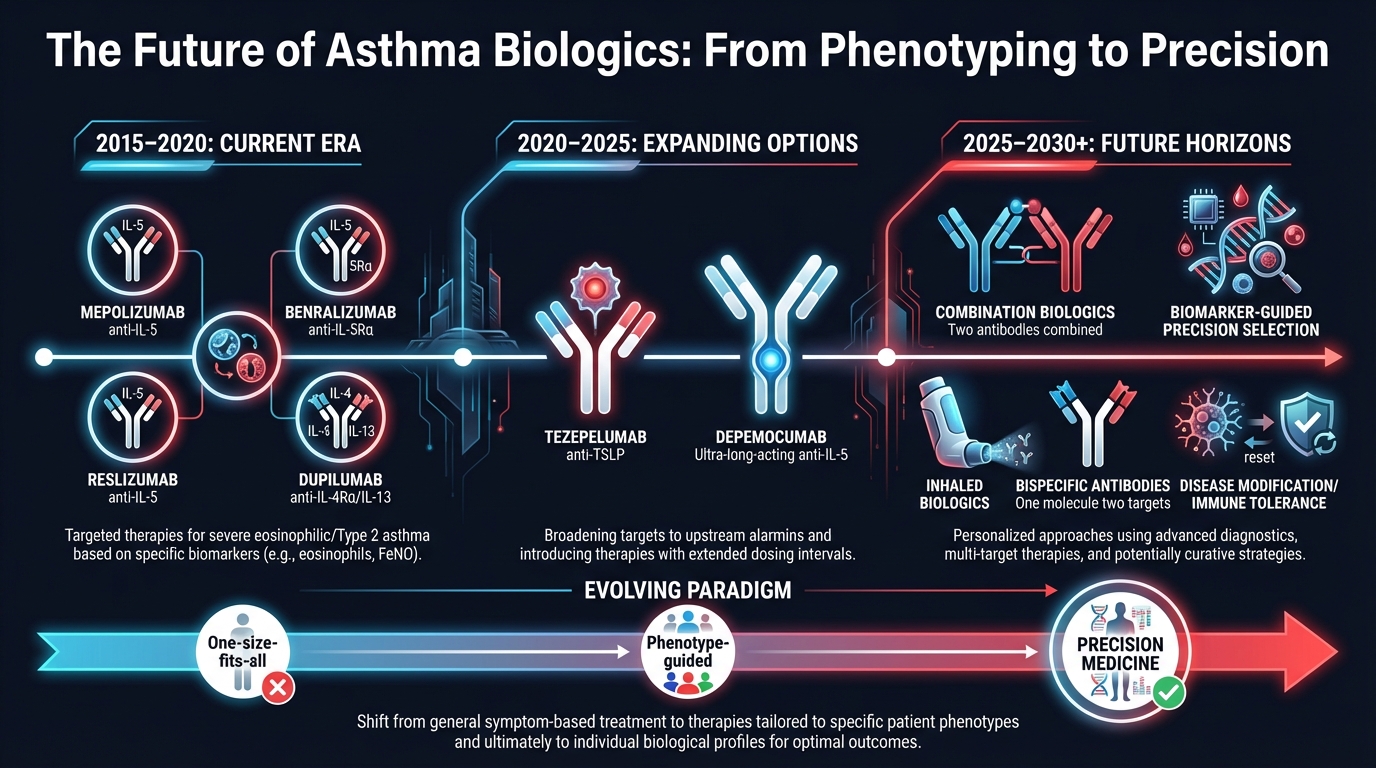 **Nuance:** The biologic landscape for asthma is rapidly evolving. Several emerging approaches could fundamentally change how we manage severe eosinophilic asthma in the coming decade.
### Emerging Targets and Approaches
**1. Anti-Alarmin Therapies**
The alarmins — TSLP, IL-33, and IL-25 — are upstream epithelial cytokines that initiate the type 2 inflammatory cascade. Blocking them could theoretically address both allergic and non-allergic eosinophilic inflammation:
- **Tezepelumab (anti-TSLP):** Already approved. Reduces exacerbations across T2-high and T2-low phenotypes, the first biologic to show efficacy in patients with lower eosinophil counts. The NAVIGATOR and SOURCE trials demonstrated broad efficacy
- **Itepekimab (anti-IL-33):** In clinical trials. May be particularly effective in patients with both eosinophilic and neutrophilic inflammation
- **Astegolimab (anti-IL-33):** Investigated in moderate-to-severe asthma
**2. Combination Biologic Therapy**
An emerging concept is that blocking multiple type 2 pathways simultaneously could achieve superior outcomes. Early-phase trials are exploring:
- Anti-IL-5 + anti-IL-4Rα combinations
- Anti-alarmin + anti-IL-5 combinations
- These approaches aim to address patients who remain symptomatic on single-biologic therapy
**3. Biomarker-Guided Precision Therapy** (PMID: 31776617)
- Sputum eosinophil-guided therapy has shown promise in reducing exacerbations
- Composite biomarker scores (eosinophils + FeNO + periostin + serum IgE) may better predict biologic response
- Transcriptomic profiling of airway cells could identify "biologic-responsive" subtypes with greater precision
- Pharmacogenomic approaches may predict which patients will develop anti-drug antibodies or have suboptimal responses
**4. Disease Modification vs. Symptom Control**
Current biologics require ongoing treatment; stopping them usually results in disease recurrence. The concept of "disease modification" — inducing long-term immune tolerance so that biologics can eventually be stopped — is an aspirational goal:
- Some patients on long-term anti-IL-5 therapy may have their underlying inflammation "reset" to a less active baseline
- The depemocumab dosing interval (6 months) may facilitate studies exploring whether even less frequent dosing or eventual discontinuation is possible
**5. Next-Generation Antibody Engineering**
Depemocumab's YTE Fc mutations represent first-generation half-life extension. Upcoming technologies include:
- pH-switched antibodies that further enhance FcRn recycling
- Bispecific antibodies targeting two cytokines with a single molecule
- Antibody-drug conjugates for eosinophil-specific cell killing
- mRNA-encoded antibodies that could be administered as inhaled therapeutics
**Teaching Point:** Tezepelumab (anti-TSLP) is the most important recent addition to the biologic arsenal because it works upstream of IL-5, IL-4, and IL-13. By blocking the alarmin signal, it reduces eosinophilic inflammation even in patients who don't have classically elevated eosinophil counts. This expands the treatable population beyond the traditional T2-high phenotype.
**Audience Poll:** What future innovation in asthma biologic therapy are you most looking forward to?
- A) Combination biologic approaches
- B) Biomarker-guided precision selection
- C) Even longer dosing intervals (annual?)
- D) Inhaled biologics
---
## Clinical Cases
### Case 1: The Classic Eosinophilic Asthma Patient
**Nuance:** The biologic landscape for asthma is rapidly evolving. Several emerging approaches could fundamentally change how we manage severe eosinophilic asthma in the coming decade.
### Emerging Targets and Approaches
**1. Anti-Alarmin Therapies**
The alarmins — TSLP, IL-33, and IL-25 — are upstream epithelial cytokines that initiate the type 2 inflammatory cascade. Blocking them could theoretically address both allergic and non-allergic eosinophilic inflammation:
- **Tezepelumab (anti-TSLP):** Already approved. Reduces exacerbations across T2-high and T2-low phenotypes, the first biologic to show efficacy in patients with lower eosinophil counts. The NAVIGATOR and SOURCE trials demonstrated broad efficacy
- **Itepekimab (anti-IL-33):** In clinical trials. May be particularly effective in patients with both eosinophilic and neutrophilic inflammation
- **Astegolimab (anti-IL-33):** Investigated in moderate-to-severe asthma
**2. Combination Biologic Therapy**
An emerging concept is that blocking multiple type 2 pathways simultaneously could achieve superior outcomes. Early-phase trials are exploring:
- Anti-IL-5 + anti-IL-4Rα combinations
- Anti-alarmin + anti-IL-5 combinations
- These approaches aim to address patients who remain symptomatic on single-biologic therapy
**3. Biomarker-Guided Precision Therapy** (PMID: 31776617)
- Sputum eosinophil-guided therapy has shown promise in reducing exacerbations
- Composite biomarker scores (eosinophils + FeNO + periostin + serum IgE) may better predict biologic response
- Transcriptomic profiling of airway cells could identify "biologic-responsive" subtypes with greater precision
- Pharmacogenomic approaches may predict which patients will develop anti-drug antibodies or have suboptimal responses
**4. Disease Modification vs. Symptom Control**
Current biologics require ongoing treatment; stopping them usually results in disease recurrence. The concept of "disease modification" — inducing long-term immune tolerance so that biologics can eventually be stopped — is an aspirational goal:
- Some patients on long-term anti-IL-5 therapy may have their underlying inflammation "reset" to a less active baseline
- The depemocumab dosing interval (6 months) may facilitate studies exploring whether even less frequent dosing or eventual discontinuation is possible
**5. Next-Generation Antibody Engineering**
Depemocumab's YTE Fc mutations represent first-generation half-life extension. Upcoming technologies include:
- pH-switched antibodies that further enhance FcRn recycling
- Bispecific antibodies targeting two cytokines with a single molecule
- Antibody-drug conjugates for eosinophil-specific cell killing
- mRNA-encoded antibodies that could be administered as inhaled therapeutics
**Teaching Point:** Tezepelumab (anti-TSLP) is the most important recent addition to the biologic arsenal because it works upstream of IL-5, IL-4, and IL-13. By blocking the alarmin signal, it reduces eosinophilic inflammation even in patients who don't have classically elevated eosinophil counts. This expands the treatable population beyond the traditional T2-high phenotype.
**Audience Poll:** What future innovation in asthma biologic therapy are you most looking forward to?
- A) Combination biologic approaches
- B) Biomarker-guided precision selection
- C) Even longer dosing intervals (annual?)
- D) Inhaled biologics
---
## Clinical Cases
### Case 1: The Classic Eosinophilic Asthma Patient
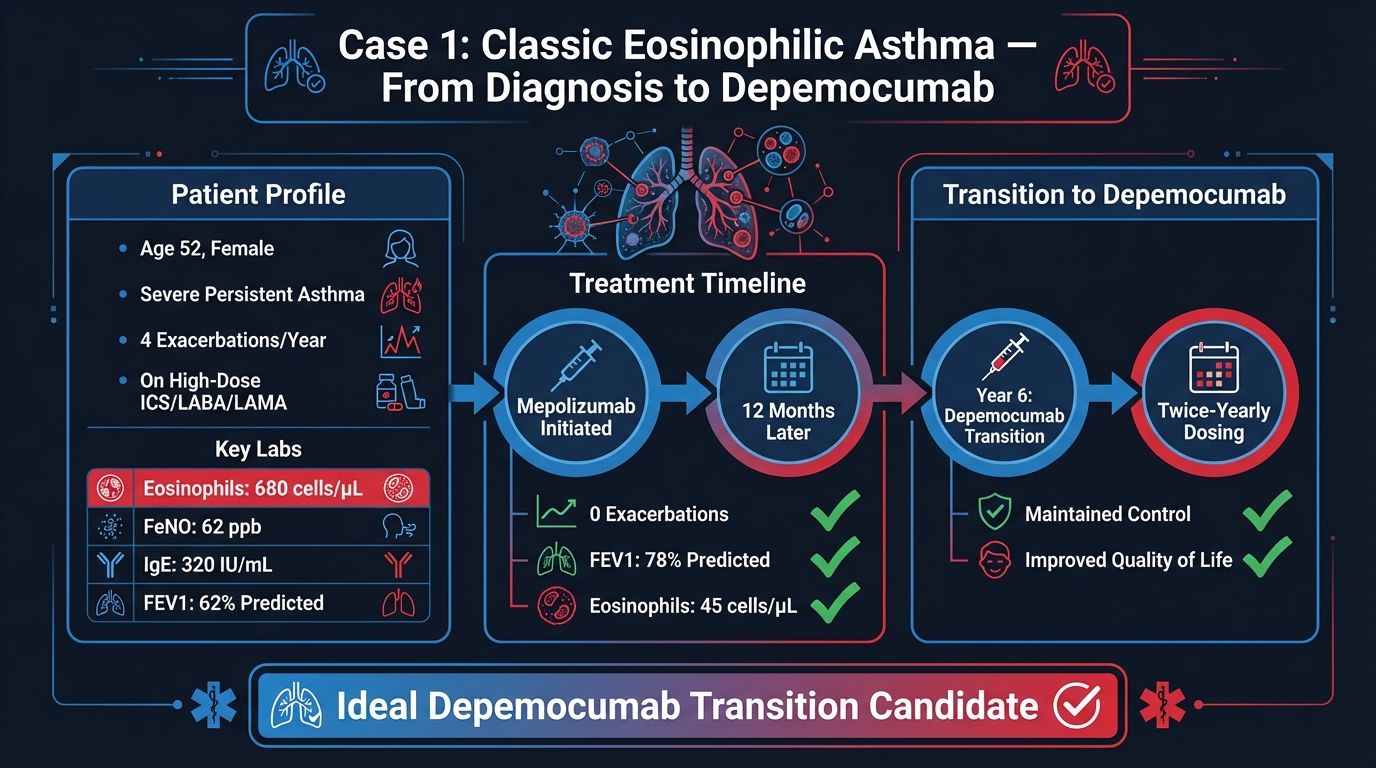 **Presentation:** A 52-year-old woman presents to pulmonary clinic with severe persistent asthma. She is on fluticasone/salmeterol 500/50 mcg twice daily, montelukast, and tiotropium. Despite this, she has had 4 exacerbations in the past year requiring OCS bursts and one hospitalization. She uses her rescue inhaler 3-4 times daily. Peak flow variability is >20%.
**Workup:** Blood eosinophils: 680 cells/μL. FeNO: 62 ppb. Total IgE: 320 IU/mL. Skin prick testing: positive to dust mites and cat dander. Spirometry: FEV1 62% predicted, with 14% reversibility post-bronchodilator.
**Audience Poll:** What biologic would you initiate for this patient?
- A) Omalizumab (anti-IgE)
- B) Mepolizumab (anti-IL-5)
- C) Benralizumab (anti-IL-5Rα)
- D) Dupilumab (anti-IL-4Rα)
**Discussion:** This patient has a classic overlapping allergic/eosinophilic phenotype. Any of the listed options could be appropriate, but the eosinophil count of 680 cells/μL makes anti-IL-5 therapy a strong choice. Given the allergic component, dupilumab is also reasonable as it addresses both IL-4/IL-13 pathways and has nasal polyp coverage if needed.
**Decision:** Mepolizumab 100 mg SC every 4 weeks is initiated. Over the next 12 months: exacerbations drop to zero, rescue inhaler use decreases to 2-3 times per week, FEV1 improves to 78% predicted, and blood eosinophils decrease to 45 cells/μL.
**Key Teaching Point:** After one year of excellent control on mepolizumab, this patient is now an ideal candidate for transition to depemocumab — well-controlled disease, stable on anti-IL-5 therapy, and interested in reducing her injection frequency from 12 per year to 2.
---
### Case 2: The Transition Patient — Mepolizumab to Depemocumab
**Presentation:** The patient from Case 1 is now 58 years old and has been well-controlled on mepolizumab for 6 years. She reports that monthly clinic visits for injections are becoming burdensome — she lives 90 minutes from the clinic and has missed 3 doses in the past year due to scheduling conflicts. Her blood eosinophils remain suppressed at <100 cells/μL, FeNO 18 ppb, and she has had no exacerbations in the past 3 years.
**The Question:** Can we safely transition her to depemocumab?
**Decision:** Based on the SWIFT trial data, she is an excellent candidate. The transition plan:
- Depemocumab 100 mg SC administered at the time of her next scheduled mepolizumab dose
- Blood eosinophils checked at 4 weeks, 12 weeks, and 26 weeks
- Clinical review (ACQ-5, exacerbation history) at 3 months and 6 months
- Next depemocumab dose at 26 weeks
**Outcome:** At 4 weeks: eosinophils 82 cells/μL (stable). At 12 weeks: eosinophils 95 cells/μL (stable). At 26 weeks (pre-dose 2): eosinophils 120 cells/μL (mild rise but still well-controlled). No exacerbations. ACQ-5 score 0.4 (well-controlled). Patient reports significant improvement in quality of life from the reduced visit burden.
**Key Teaching Point:** This case demonstrates the ideal depemocumab transition as studied in SWIFT — a patient already well-controlled on mepolizumab who benefits from reduced injection frequency without loss of disease control (PMID: 28382660).
---
### Case 3: The Biologic Non-Responder
**Presentation:** A 44-year-old man with severe eosinophilic asthma (blood eosinophils 920 cells/μL at diagnosis) was started on mepolizumab 12 months ago. His eosinophils have decreased to 180 cells/μL, but he continues to have 3 exacerbations in the past year. His FeNO remains elevated at 58 ppb despite eosinophil reduction. He is on high-dose ICS/LABA, tiotropium, and daily low-dose prednisone 10 mg.
**The Challenge:** Eosinophil suppression is adequate, but the patient is still uncontrolled. Why?
**Discussion:** This is a scenario where eosinophil-focused therapy alone may not be sufficient. The persistently elevated FeNO suggests ongoing IL-13-driven inflammation (goblet cell hyperplasia, mucus production, subepithelial fibrosis) that anti-IL-5 therapy does not address. IL-5 neutralization controls the eosinophil arm but does not touch the IL-4/IL-13 arm of type 2 inflammation.
**Decision Point:** Should you:
- A) Switch to benralizumab for deeper eosinophil depletion?
- B) Switch to dupilumab to address the IL-4/IL-13 pathway?
- C) Add dupilumab to mepolizumab (combination biologic therapy)?
- D) Increase prednisone dose?
**Outcome:** The patient is switched from mepolizumab to dupilumab 300 mg SC every 2 weeks. Over 6 months: exacerbations drop to zero, FeNO decreases to 22 ppb, prednisone is tapered from 10 mg to 2.5 mg daily, and FEV1 improves from 55% to 72% predicted. Eosinophils transiently rise to 450 cells/μL (known dupilumab effect) then stabilize at 280 cells/μL.
**Key Teaching Point:** Not all eosinophilic asthma responds optimally to anti-IL-5 alone. Persistent FeNO elevation despite eosinophil suppression is a signal that IL-13-driven pathology is a major contributor. Switching across pathways (anti-IL-5 to anti-IL-4Rα) can rescue these patients. This also highlights that a single biomarker (eosinophils) is insufficient for complete phenotyping — FeNO provides complementary information about the IL-13 axis (PMID: 31776617).
---
### Case 4: The OCS-Dependent Patient
**Presentation:** A 61-year-old woman has been on continuous oral prednisone (15-20 mg daily) for the past 4 years for severe eosinophilic asthma. She has developed iatrogenic Cushing syndrome, osteoporosis with two vertebral compression fractures, diabetes mellitus, and recurrent infections. Blood eosinophils (while on prednisone 20 mg): 180 cells/μL. Historic eosinophils (when briefly off prednisone 3 years ago): 1,200 cells/μL.
**The Dilemma:** Her current eosinophil count is suppressed by prednisone and does not reflect her true phenotype. How do you choose a biologic?
**Teaching Point:** This is a critically important clinical pearl. OCS suppress blood eosinophil counts and can make a patient appear "non-eosinophilic" when they are, in fact, profoundly eosinophilic. Always review historical eosinophil counts obtained before or between OCS courses. A historic peak eosinophil count ≥300 cells/μL qualifies the patient for anti-IL-5 therapy regardless of the current suppressed count.
**Decision:** Benralizumab 30 mg SC is initiated (strong OCS-sparing data from PONENTE and ZONDA trials). Over 6 months, prednisone is tapered from 20 mg to 5 mg daily. Over 12 months, tapered to zero. Eosinophils remain <50 cells/μL. Exacerbations: zero. Blood glucose normalizes. Bone density stabilization confirmed.
**Say Out Loud:** "The most important thing I can do for this patient is get her off prednisone. Every day on high-dose OCS is a day of cumulative organ damage — diabetes, osteoporosis, infections, adrenal suppression. Biologics aren't optional for these patients; they're urgent."
---
### Case 5: The Adolescent Transition
**Presentation:** A 17-year-old male student has had severe eosinophilic asthma since age 8. He has been on omalizumab for 3 years with partial response — exacerbations reduced from 5 to 2 per year, but he still requires OCS bursts. Blood eosinophils: 720 cells/μL. FeNO: 45 ppb. Total IgE: 1,450 IU/mL. He is about to leave for university and is anxious about managing his asthma independently.
**Discussion:** This patient has a dual allergic/eosinophilic phenotype with suboptimal omalizumab response. The high persistent eosinophil count suggests that the eosinophilic arm of his disease requires direct targeting. Options include switching to mepolizumab (with potential future transition to depemocumab for convenience) or dupilumab (which addresses both IgE-mediated and eosinophilic pathways).
**Decision:** Given his upcoming independence at university, adherence is paramount. He is switched to mepolizumab 100 mg SC every 4 weeks (self-administered pen device available). Plan: After 12 months of stable control, discuss transition to depemocumab for twice-yearly dosing — ideal for a university student.
**Key Teaching Point:** Treatment planning for adolescents and young adults must factor in lifestyle, autonomy, and adherence capacity. Depemocumab's twice-yearly dosing is uniquely suited for patients who may struggle with frequent injection schedules. Future depemocumab approval in this age group could transform adherence in the young adult population.
---
## Tonight on Shift: Actionable Checklist
**When you are next managing a patient with severe asthma, remember these key actions:**
1. **Phenotype every severe asthma patient** — Check blood eosinophils and FeNO before adding another course of prednisone. If eosinophils ≥300 cells/μL, this patient deserves a biologic.
2. **Understand the IL-5 pathway** — IL-5 is the master regulator of eosinophil biology. Anti-IL-5 agents (mepolizumab, depemocumab) starve eosinophils. Anti-IL-5Rα (benralizumab) kills them. Both approaches reduce exacerbations by ~50%.
3. **Know depemocumab's niche** — Twice-yearly dosing for patients already stable on anti-IL-5 therapy. Based on SWIFT data, it maintains disease control with dramatically reduced injection frequency.
4. **Select the right biologic for the right patient** — Eosinophils alone don't tell the whole story. Consider FeNO, comorbidities (nasal polyps, atopic dermatitis), OCS dependence, and adherence capacity.
5. **Plan transitions carefully** — Time the switch so there's no gap in coverage. Monitor blood eosinophils and clinical status closely during the first 6 months after any biologic switch.
6. **Don't forget OCS-suppressed phenotypes** — A patient on prednisone with "normal" eosinophils may be profoundly eosinophilic. Review historical labs.
7. **Watch for incomplete responders** — Persistent FeNO elevation despite eosinophil suppression signals IL-13-driven pathology that anti-IL-5 won't address. Consider switching to dupilumab.
8. **Look ahead** — Anti-alarmin therapies (tezepelumab), combination biologics, and biomarker-guided precision therapy will continue to expand our options. Stay current.
---
## References
1. Bel EH, Ten Brinke A. New anti-eosinophil drugs for asthma and COPD: targeting the trait. *Chest*. 2017;152(6):1276-1282. PMID: 28882555.
2. Pavord ID, et al. Mepolizumab for severe eosinophilic asthma (DREAM): a multicentre, double-blind, placebo-controlled trial. *Lancet*. 2012;380(9842):651-659. PMID: 22901886.
3. Farne HA, et al. Anti-IL5 therapies for asthma. *Cochrane Database Syst Rev*. 2017;9:CD010834. PMID: 28933516.
4. Castro M, et al. Reslizumab for inadequately controlled asthma with elevated blood eosinophil counts: results from two multicentre, parallel, double-blind, randomised, placebo-controlled, phase 3 trials. *Lancet Respir Med*. 2015;3(5):355-366. PMID: 25736990.
5. Bleecker ER, et al. Efficacy and safety of benralizumab for patients with severe asthma uncontrolled with high-dosage inhaled corticosteroids and long-acting β2-agonists (SIROCCO): a randomised, multicentre, placebo-controlled phase 3 trial. *Lancet*. 2016;388(10056):2115-2127. PMID: 27609408.
6. FitzGerald JM, et al. Benralizumab, an anti-interleukin-5 receptor α monoclonal antibody, as add-on treatment for patients with severe, uncontrolled, eosinophilic asthma (CALIMA): a randomised, double-blind, placebo-controlled phase 3 trial. *Lancet*. 2016;388(10056):2128-2141. PMID: 27609406.
7. Castro M, et al. Dupilumab efficacy and safety in moderate-to-severe uncontrolled asthma. *N Engl J Med*. 2018;378(26):2486-2496. PMID: 29782217.
8. Menzies-Gow A, et al. Tezepelumab in adults and adolescents with severe, uncontrolled asthma (NAVIGATOR). *N Engl J Med*. 2021;384(19):1800-1809. PMID: 33979488.
9. Global Initiative for Asthma (GINA). Global strategy for asthma management and prevention. 2021 update. Evidence Class B.
10. Ortega HG, et al. Mepolizumab treatment in patients with severe eosinophilic asthma. *N Engl J Med*. 2014;371(13):1198-1207. PMID: 25199059.
11. Wechsler ME, et al. Efficacy and safety of itepekimab in patients with moderate-to-severe asthma. *N Engl J Med*. 2021;385(18):1656-1668. PMID: 34706170.
12. Jackson DJ, et al. Characterisation of patients with severe asthma in the UK Severe Asthma Registry in the biologic era. *Thorax*. 2021;76(3):220-227. PMID: 33199524.
13. Busse WW, et al. Long-term safety and efficacy of benralizumab in patients with severe, uncontrolled asthma: 1-year results from the BORA phase 3 extension trial. *Lancet Respir Med*. 2019;7(1):46-59. PMID: 30416083.
14. Mukherjee M, et al. Sub-optimal treatment response to anti-IL-5 monoclonal antibodies in severe eosinophilic asthmatics with airway autoimmune phenomena. *Eur Respir J*. 2020;56(4):2000117. PMID: 32444401.
15. Depemokimab prescribing information. GSK. 2025.
16. PMID: 30660826 — Eosinophil role in asthma pathophysiology.
17. PMID: 30768390 — IL-5 inhibitor comparisons and dosing intervals.
18. PMID: 30146951 — Patient selection criteria for biologic therapy.
19. PMID: 28382660 — Biologic transition considerations.
20. PMID: 31776617 — Personalized medicine and biomarker-guided therapy in asthma.
**Presentation:** A 52-year-old woman presents to pulmonary clinic with severe persistent asthma. She is on fluticasone/salmeterol 500/50 mcg twice daily, montelukast, and tiotropium. Despite this, she has had 4 exacerbations in the past year requiring OCS bursts and one hospitalization. She uses her rescue inhaler 3-4 times daily. Peak flow variability is >20%.
**Workup:** Blood eosinophils: 680 cells/μL. FeNO: 62 ppb. Total IgE: 320 IU/mL. Skin prick testing: positive to dust mites and cat dander. Spirometry: FEV1 62% predicted, with 14% reversibility post-bronchodilator.
**Audience Poll:** What biologic would you initiate for this patient?
- A) Omalizumab (anti-IgE)
- B) Mepolizumab (anti-IL-5)
- C) Benralizumab (anti-IL-5Rα)
- D) Dupilumab (anti-IL-4Rα)
**Discussion:** This patient has a classic overlapping allergic/eosinophilic phenotype. Any of the listed options could be appropriate, but the eosinophil count of 680 cells/μL makes anti-IL-5 therapy a strong choice. Given the allergic component, dupilumab is also reasonable as it addresses both IL-4/IL-13 pathways and has nasal polyp coverage if needed.
**Decision:** Mepolizumab 100 mg SC every 4 weeks is initiated. Over the next 12 months: exacerbations drop to zero, rescue inhaler use decreases to 2-3 times per week, FEV1 improves to 78% predicted, and blood eosinophils decrease to 45 cells/μL.
**Key Teaching Point:** After one year of excellent control on mepolizumab, this patient is now an ideal candidate for transition to depemocumab — well-controlled disease, stable on anti-IL-5 therapy, and interested in reducing her injection frequency from 12 per year to 2.
---
### Case 2: The Transition Patient — Mepolizumab to Depemocumab
**Presentation:** The patient from Case 1 is now 58 years old and has been well-controlled on mepolizumab for 6 years. She reports that monthly clinic visits for injections are becoming burdensome — she lives 90 minutes from the clinic and has missed 3 doses in the past year due to scheduling conflicts. Her blood eosinophils remain suppressed at <100 cells/μL, FeNO 18 ppb, and she has had no exacerbations in the past 3 years.
**The Question:** Can we safely transition her to depemocumab?
**Decision:** Based on the SWIFT trial data, she is an excellent candidate. The transition plan:
- Depemocumab 100 mg SC administered at the time of her next scheduled mepolizumab dose
- Blood eosinophils checked at 4 weeks, 12 weeks, and 26 weeks
- Clinical review (ACQ-5, exacerbation history) at 3 months and 6 months
- Next depemocumab dose at 26 weeks
**Outcome:** At 4 weeks: eosinophils 82 cells/μL (stable). At 12 weeks: eosinophils 95 cells/μL (stable). At 26 weeks (pre-dose 2): eosinophils 120 cells/μL (mild rise but still well-controlled). No exacerbations. ACQ-5 score 0.4 (well-controlled). Patient reports significant improvement in quality of life from the reduced visit burden.
**Key Teaching Point:** This case demonstrates the ideal depemocumab transition as studied in SWIFT — a patient already well-controlled on mepolizumab who benefits from reduced injection frequency without loss of disease control (PMID: 28382660).
---
### Case 3: The Biologic Non-Responder
**Presentation:** A 44-year-old man with severe eosinophilic asthma (blood eosinophils 920 cells/μL at diagnosis) was started on mepolizumab 12 months ago. His eosinophils have decreased to 180 cells/μL, but he continues to have 3 exacerbations in the past year. His FeNO remains elevated at 58 ppb despite eosinophil reduction. He is on high-dose ICS/LABA, tiotropium, and daily low-dose prednisone 10 mg.
**The Challenge:** Eosinophil suppression is adequate, but the patient is still uncontrolled. Why?
**Discussion:** This is a scenario where eosinophil-focused therapy alone may not be sufficient. The persistently elevated FeNO suggests ongoing IL-13-driven inflammation (goblet cell hyperplasia, mucus production, subepithelial fibrosis) that anti-IL-5 therapy does not address. IL-5 neutralization controls the eosinophil arm but does not touch the IL-4/IL-13 arm of type 2 inflammation.
**Decision Point:** Should you:
- A) Switch to benralizumab for deeper eosinophil depletion?
- B) Switch to dupilumab to address the IL-4/IL-13 pathway?
- C) Add dupilumab to mepolizumab (combination biologic therapy)?
- D) Increase prednisone dose?
**Outcome:** The patient is switched from mepolizumab to dupilumab 300 mg SC every 2 weeks. Over 6 months: exacerbations drop to zero, FeNO decreases to 22 ppb, prednisone is tapered from 10 mg to 2.5 mg daily, and FEV1 improves from 55% to 72% predicted. Eosinophils transiently rise to 450 cells/μL (known dupilumab effect) then stabilize at 280 cells/μL.
**Key Teaching Point:** Not all eosinophilic asthma responds optimally to anti-IL-5 alone. Persistent FeNO elevation despite eosinophil suppression is a signal that IL-13-driven pathology is a major contributor. Switching across pathways (anti-IL-5 to anti-IL-4Rα) can rescue these patients. This also highlights that a single biomarker (eosinophils) is insufficient for complete phenotyping — FeNO provides complementary information about the IL-13 axis (PMID: 31776617).
---
### Case 4: The OCS-Dependent Patient
**Presentation:** A 61-year-old woman has been on continuous oral prednisone (15-20 mg daily) for the past 4 years for severe eosinophilic asthma. She has developed iatrogenic Cushing syndrome, osteoporosis with two vertebral compression fractures, diabetes mellitus, and recurrent infections. Blood eosinophils (while on prednisone 20 mg): 180 cells/μL. Historic eosinophils (when briefly off prednisone 3 years ago): 1,200 cells/μL.
**The Dilemma:** Her current eosinophil count is suppressed by prednisone and does not reflect her true phenotype. How do you choose a biologic?
**Teaching Point:** This is a critically important clinical pearl. OCS suppress blood eosinophil counts and can make a patient appear "non-eosinophilic" when they are, in fact, profoundly eosinophilic. Always review historical eosinophil counts obtained before or between OCS courses. A historic peak eosinophil count ≥300 cells/μL qualifies the patient for anti-IL-5 therapy regardless of the current suppressed count.
**Decision:** Benralizumab 30 mg SC is initiated (strong OCS-sparing data from PONENTE and ZONDA trials). Over 6 months, prednisone is tapered from 20 mg to 5 mg daily. Over 12 months, tapered to zero. Eosinophils remain <50 cells/μL. Exacerbations: zero. Blood glucose normalizes. Bone density stabilization confirmed.
**Say Out Loud:** "The most important thing I can do for this patient is get her off prednisone. Every day on high-dose OCS is a day of cumulative organ damage — diabetes, osteoporosis, infections, adrenal suppression. Biologics aren't optional for these patients; they're urgent."
---
### Case 5: The Adolescent Transition
**Presentation:** A 17-year-old male student has had severe eosinophilic asthma since age 8. He has been on omalizumab for 3 years with partial response — exacerbations reduced from 5 to 2 per year, but he still requires OCS bursts. Blood eosinophils: 720 cells/μL. FeNO: 45 ppb. Total IgE: 1,450 IU/mL. He is about to leave for university and is anxious about managing his asthma independently.
**Discussion:** This patient has a dual allergic/eosinophilic phenotype with suboptimal omalizumab response. The high persistent eosinophil count suggests that the eosinophilic arm of his disease requires direct targeting. Options include switching to mepolizumab (with potential future transition to depemocumab for convenience) or dupilumab (which addresses both IgE-mediated and eosinophilic pathways).
**Decision:** Given his upcoming independence at university, adherence is paramount. He is switched to mepolizumab 100 mg SC every 4 weeks (self-administered pen device available). Plan: After 12 months of stable control, discuss transition to depemocumab for twice-yearly dosing — ideal for a university student.
**Key Teaching Point:** Treatment planning for adolescents and young adults must factor in lifestyle, autonomy, and adherence capacity. Depemocumab's twice-yearly dosing is uniquely suited for patients who may struggle with frequent injection schedules. Future depemocumab approval in this age group could transform adherence in the young adult population.
---
## Tonight on Shift: Actionable Checklist
**When you are next managing a patient with severe asthma, remember these key actions:**
1. **Phenotype every severe asthma patient** — Check blood eosinophils and FeNO before adding another course of prednisone. If eosinophils ≥300 cells/μL, this patient deserves a biologic.
2. **Understand the IL-5 pathway** — IL-5 is the master regulator of eosinophil biology. Anti-IL-5 agents (mepolizumab, depemocumab) starve eosinophils. Anti-IL-5Rα (benralizumab) kills them. Both approaches reduce exacerbations by ~50%.
3. **Know depemocumab's niche** — Twice-yearly dosing for patients already stable on anti-IL-5 therapy. Based on SWIFT data, it maintains disease control with dramatically reduced injection frequency.
4. **Select the right biologic for the right patient** — Eosinophils alone don't tell the whole story. Consider FeNO, comorbidities (nasal polyps, atopic dermatitis), OCS dependence, and adherence capacity.
5. **Plan transitions carefully** — Time the switch so there's no gap in coverage. Monitor blood eosinophils and clinical status closely during the first 6 months after any biologic switch.
6. **Don't forget OCS-suppressed phenotypes** — A patient on prednisone with "normal" eosinophils may be profoundly eosinophilic. Review historical labs.
7. **Watch for incomplete responders** — Persistent FeNO elevation despite eosinophil suppression signals IL-13-driven pathology that anti-IL-5 won't address. Consider switching to dupilumab.
8. **Look ahead** — Anti-alarmin therapies (tezepelumab), combination biologics, and biomarker-guided precision therapy will continue to expand our options. Stay current.
---
## References
1. Bel EH, Ten Brinke A. New anti-eosinophil drugs for asthma and COPD: targeting the trait. *Chest*. 2017;152(6):1276-1282. PMID: 28882555.
2. Pavord ID, et al. Mepolizumab for severe eosinophilic asthma (DREAM): a multicentre, double-blind, placebo-controlled trial. *Lancet*. 2012;380(9842):651-659. PMID: 22901886.
3. Farne HA, et al. Anti-IL5 therapies for asthma. *Cochrane Database Syst Rev*. 2017;9:CD010834. PMID: 28933516.
4. Castro M, et al. Reslizumab for inadequately controlled asthma with elevated blood eosinophil counts: results from two multicentre, parallel, double-blind, randomised, placebo-controlled, phase 3 trials. *Lancet Respir Med*. 2015;3(5):355-366. PMID: 25736990.
5. Bleecker ER, et al. Efficacy and safety of benralizumab for patients with severe asthma uncontrolled with high-dosage inhaled corticosteroids and long-acting β2-agonists (SIROCCO): a randomised, multicentre, placebo-controlled phase 3 trial. *Lancet*. 2016;388(10056):2115-2127. PMID: 27609408.
6. FitzGerald JM, et al. Benralizumab, an anti-interleukin-5 receptor α monoclonal antibody, as add-on treatment for patients with severe, uncontrolled, eosinophilic asthma (CALIMA): a randomised, double-blind, placebo-controlled phase 3 trial. *Lancet*. 2016;388(10056):2128-2141. PMID: 27609406.
7. Castro M, et al. Dupilumab efficacy and safety in moderate-to-severe uncontrolled asthma. *N Engl J Med*. 2018;378(26):2486-2496. PMID: 29782217.
8. Menzies-Gow A, et al. Tezepelumab in adults and adolescents with severe, uncontrolled asthma (NAVIGATOR). *N Engl J Med*. 2021;384(19):1800-1809. PMID: 33979488.
9. Global Initiative for Asthma (GINA). Global strategy for asthma management and prevention. 2021 update. Evidence Class B.
10. Ortega HG, et al. Mepolizumab treatment in patients with severe eosinophilic asthma. *N Engl J Med*. 2014;371(13):1198-1207. PMID: 25199059.
11. Wechsler ME, et al. Efficacy and safety of itepekimab in patients with moderate-to-severe asthma. *N Engl J Med*. 2021;385(18):1656-1668. PMID: 34706170.
12. Jackson DJ, et al. Characterisation of patients with severe asthma in the UK Severe Asthma Registry in the biologic era. *Thorax*. 2021;76(3):220-227. PMID: 33199524.
13. Busse WW, et al. Long-term safety and efficacy of benralizumab in patients with severe, uncontrolled asthma: 1-year results from the BORA phase 3 extension trial. *Lancet Respir Med*. 2019;7(1):46-59. PMID: 30416083.
14. Mukherjee M, et al. Sub-optimal treatment response to anti-IL-5 monoclonal antibodies in severe eosinophilic asthmatics with airway autoimmune phenomena. *Eur Respir J*. 2020;56(4):2000117. PMID: 32444401.
15. Depemokimab prescribing information. GSK. 2025.
16. PMID: 30660826 — Eosinophil role in asthma pathophysiology.
17. PMID: 30768390 — IL-5 inhibitor comparisons and dosing intervals.
18. PMID: 30146951 — Patient selection criteria for biologic therapy.
19. PMID: 28382660 — Biologic transition considerations.
20. PMID: 31776617 — Personalized medicine and biomarker-guided therapy in asthma.