# Enhancing Pediatric Emergency Preparedness: Lessons from Current Best Practices
## Learning Objectives
1. Assess emergency department pediatric readiness across personnel, equipment, policy, quality, and regional-system domains.
2. Recognize respiratory failure, shock, dysrhythmia, and cardiac arrest using age-specific physiologic findings.
3. Execute weight-based pediatric resuscitation, including ventilation, defibrillation, medication delivery, and intraosseous access.
4. Design simulation programs that improve individual competence, team performance, and system reliability.
5. Operationalize the physician–nurse Pediatric Emergency Care Coordinator model through measurable quality-improvement work.
6. Allocate scarce resources ethically during pediatric surge, burn, and mass-casualty events.
7. Coordinate multidisciplinary stabilization, consultation, transfer, family support, and post-event learning.
---
## Overview of Pediatric Emergency Preparedness
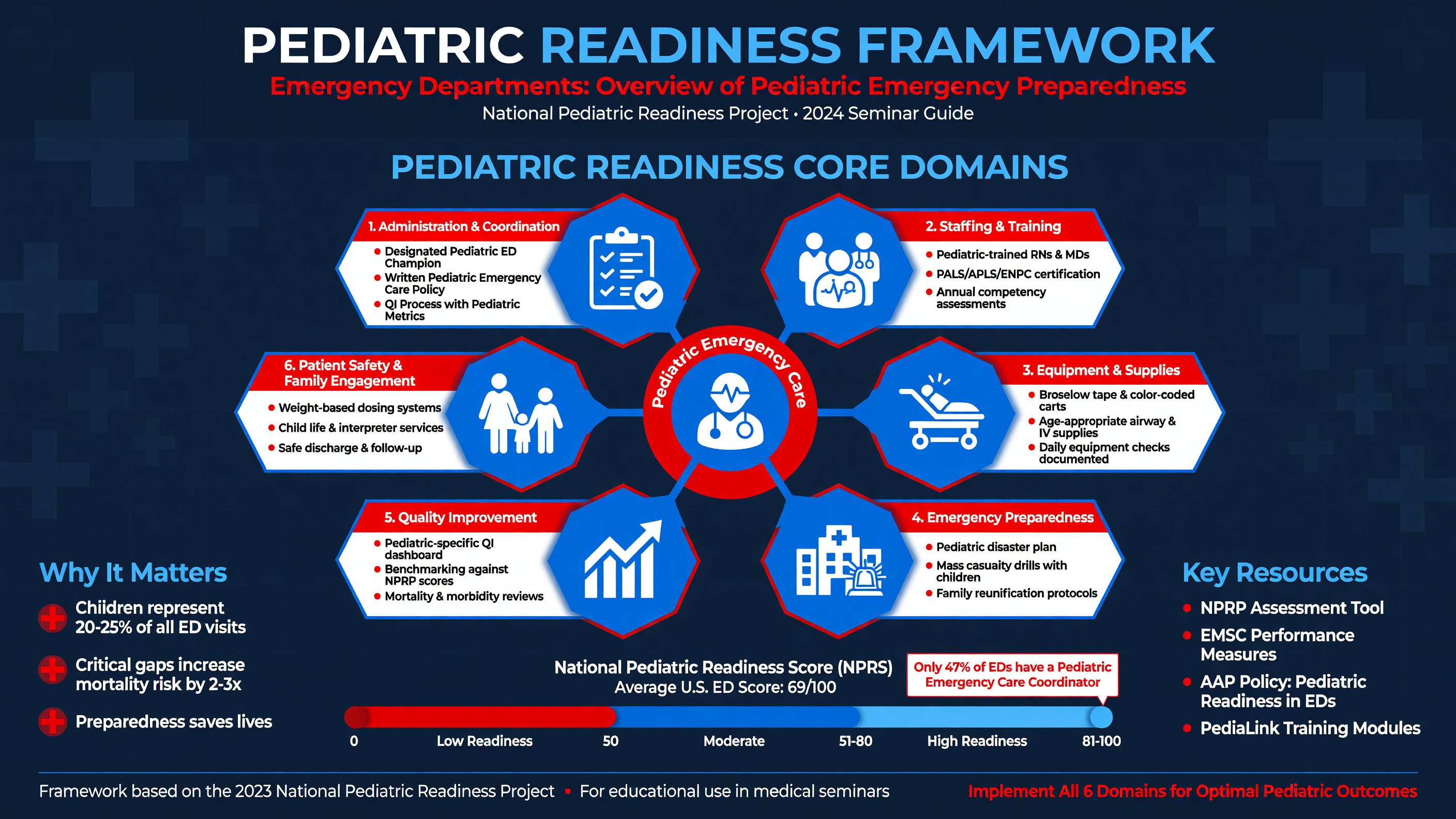 Pediatric readiness is the reliable capability to recognize, stabilize, resuscitate, and safely disposition an acutely ill or injured child. It does not mean reproducing every service of a tertiary children’s hospital. It means that the necessary people, medications, equipment, cognitive aids, policies, and escalation pathways are functional before the child arrives. This distinction matters because most children receive emergency care outside dedicated pediatric centers, often in departments where severe pediatric illness is uncommon enough for procedural and cognitive skills to decay.
Children are not simply smaller adults. Infants have high oxygen consumption, limited functional residual capacity, compliant chest walls, proportionally larger tongues, and smaller airways in which a small increase in mucosal thickness markedly increases resistance. Cardiac output is more heart-rate dependent, hypotension is late in shock, glycogen reserves are limited, and medication or device selection changes across a wide range of weights. Development, communication ability, chronic technology dependence, safeguarding needs, and caregiver involvement further alter how emergencies present and how care must be delivered.
**Teaching Point:** Readiness is a property of a system, not an individual clinician. Even an excellent resuscitationist will struggle if the infant mask is missing, epinephrine concentrations are ambiguous, the defibrillator cable is incompatible, or no one knows how to reach the pediatric transport team.
The National Pediatric Readiness Project evaluates domains that include coordination, staff competencies, quality improvement, medication safety, age-specific policies, equipment, family-centered care, disaster planning, and integration with EMS and referral centers. The weighted Pediatric Readiness Score provides a useful gap-assessment tool, but the objective is dependable clinical performance rather than a high survey score. Current joint guidance places physician and nurse Pediatric Emergency Care Coordinators at the center of this work ([2026 joint policy statement; PMID: 41556937](https://pubmed.ncbi.nlm.nih.gov/41556937/)).
Outcome data are compelling but should be interpreted correctly. In a cohort of 20,483 critically ill children, care in the highest readiness quartile was associated with substantially lower adjusted in-hospital mortality than care in the lowest quartile ([PMID: 31444254](https://pubmed.ncbi.nlm.nih.gov/31444254/)). A later 11-state cohort of 796,937 children found that the highest versus lowest readiness quartile was associated with 60% lower in-hospital mortality among injured children and 76% lower mortality among children with medical illness; an association persisted to one year ([PMID: 36637819](https://pubmed.ncbi.nlm.nih.gov/36637819/)). These are observational associations, not randomized proof of causality. A subsequent modeling analysis estimated that universal high readiness might prevent approximately 2,143 deaths annually, but that figure remains a population estimate rather than a direct effect attributable to any single intervention ([PMID: 39485354](https://pubmed.ncbi.nlm.nih.gov/39485354/)).
**MUST ACT:** Every child should have a measured weight recorded in kilograms only, a complete age-appropriate vital-sign set, explicit escalation of abnormal findings, and reassessment before discharge, admission, or transfer. Estimated pounds, missing respiratory rates, and unrepeated abnormal vital signs are preventable hazards.
**Framework:** Audit five linked functions: recognize deterioration, stabilize physiology, deliver error-resistant treatment, mobilize expertise, and measure performance. Readiness fails when any link is absent.
Operational readiness includes standardized carts organized by size, immediately accessible airway and vascular equipment, pediatric-capable monitors and defibrillation pads, precalculated dosing aids with maximum doses, standard medication concentrations, and computerized safeguards where available. Policies should address common emergencies such as asthma, bronchiolitis, fever in young infants, seizure, sepsis, anaphylaxis, head trauma, analgesia and sedation, agitation and suicidality, maltreatment, transfusion, death in the ED, and children with complex care plans.
**Nuance:** Low pediatric volume increases the importance of preparedness. A rural department may appropriately transfer a child who needs intensive or surgical care, but transfer cannot substitute for immediate ventilation, hemorrhage control, seizure termination, antibiotics, antidotes, or treatment of hypoglycemia.
Preparedness also extends beyond the resuscitation bay. Departments need language access, family-presence procedures, pediatric mental-health safety processes, disaster tracking and reunification plans, teleconsultation, transport agreements, and a mechanism for reviewing deaths, transfers, medication events, near misses, and unplanned escalation.
**Decision Point:** If the child may exceed local capability, initiate consultation and transfer early while stabilization continues. Waiting for every test to return often wastes the safest transport window.
**Audience Poll:** Which weakness is most likely to affect a critically ill child in your department tonight: delayed recognition, missing equipment, dose calculation, unclear leadership, or transfer delay?
---
## Key Concepts in Pediatric Resuscitation and Acute Care
Pediatric readiness is the reliable capability to recognize, stabilize, resuscitate, and safely disposition an acutely ill or injured child. It does not mean reproducing every service of a tertiary children’s hospital. It means that the necessary people, medications, equipment, cognitive aids, policies, and escalation pathways are functional before the child arrives. This distinction matters because most children receive emergency care outside dedicated pediatric centers, often in departments where severe pediatric illness is uncommon enough for procedural and cognitive skills to decay.
Children are not simply smaller adults. Infants have high oxygen consumption, limited functional residual capacity, compliant chest walls, proportionally larger tongues, and smaller airways in which a small increase in mucosal thickness markedly increases resistance. Cardiac output is more heart-rate dependent, hypotension is late in shock, glycogen reserves are limited, and medication or device selection changes across a wide range of weights. Development, communication ability, chronic technology dependence, safeguarding needs, and caregiver involvement further alter how emergencies present and how care must be delivered.
**Teaching Point:** Readiness is a property of a system, not an individual clinician. Even an excellent resuscitationist will struggle if the infant mask is missing, epinephrine concentrations are ambiguous, the defibrillator cable is incompatible, or no one knows how to reach the pediatric transport team.
The National Pediatric Readiness Project evaluates domains that include coordination, staff competencies, quality improvement, medication safety, age-specific policies, equipment, family-centered care, disaster planning, and integration with EMS and referral centers. The weighted Pediatric Readiness Score provides a useful gap-assessment tool, but the objective is dependable clinical performance rather than a high survey score. Current joint guidance places physician and nurse Pediatric Emergency Care Coordinators at the center of this work ([2026 joint policy statement; PMID: 41556937](https://pubmed.ncbi.nlm.nih.gov/41556937/)).
Outcome data are compelling but should be interpreted correctly. In a cohort of 20,483 critically ill children, care in the highest readiness quartile was associated with substantially lower adjusted in-hospital mortality than care in the lowest quartile ([PMID: 31444254](https://pubmed.ncbi.nlm.nih.gov/31444254/)). A later 11-state cohort of 796,937 children found that the highest versus lowest readiness quartile was associated with 60% lower in-hospital mortality among injured children and 76% lower mortality among children with medical illness; an association persisted to one year ([PMID: 36637819](https://pubmed.ncbi.nlm.nih.gov/36637819/)). These are observational associations, not randomized proof of causality. A subsequent modeling analysis estimated that universal high readiness might prevent approximately 2,143 deaths annually, but that figure remains a population estimate rather than a direct effect attributable to any single intervention ([PMID: 39485354](https://pubmed.ncbi.nlm.nih.gov/39485354/)).
**MUST ACT:** Every child should have a measured weight recorded in kilograms only, a complete age-appropriate vital-sign set, explicit escalation of abnormal findings, and reassessment before discharge, admission, or transfer. Estimated pounds, missing respiratory rates, and unrepeated abnormal vital signs are preventable hazards.
**Framework:** Audit five linked functions: recognize deterioration, stabilize physiology, deliver error-resistant treatment, mobilize expertise, and measure performance. Readiness fails when any link is absent.
Operational readiness includes standardized carts organized by size, immediately accessible airway and vascular equipment, pediatric-capable monitors and defibrillation pads, precalculated dosing aids with maximum doses, standard medication concentrations, and computerized safeguards where available. Policies should address common emergencies such as asthma, bronchiolitis, fever in young infants, seizure, sepsis, anaphylaxis, head trauma, analgesia and sedation, agitation and suicidality, maltreatment, transfusion, death in the ED, and children with complex care plans.
**Nuance:** Low pediatric volume increases the importance of preparedness. A rural department may appropriately transfer a child who needs intensive or surgical care, but transfer cannot substitute for immediate ventilation, hemorrhage control, seizure termination, antibiotics, antidotes, or treatment of hypoglycemia.
Preparedness also extends beyond the resuscitation bay. Departments need language access, family-presence procedures, pediatric mental-health safety processes, disaster tracking and reunification plans, teleconsultation, transport agreements, and a mechanism for reviewing deaths, transfers, medication events, near misses, and unplanned escalation.
**Decision Point:** If the child may exceed local capability, initiate consultation and transfer early while stabilization continues. Waiting for every test to return often wastes the safest transport window.
**Audience Poll:** Which weakness is most likely to affect a critically ill child in your department tonight: delayed recognition, missing equipment, dose calculation, unclear leadership, or transfer delay?
---
## Key Concepts in Pediatric Resuscitation and Acute Care
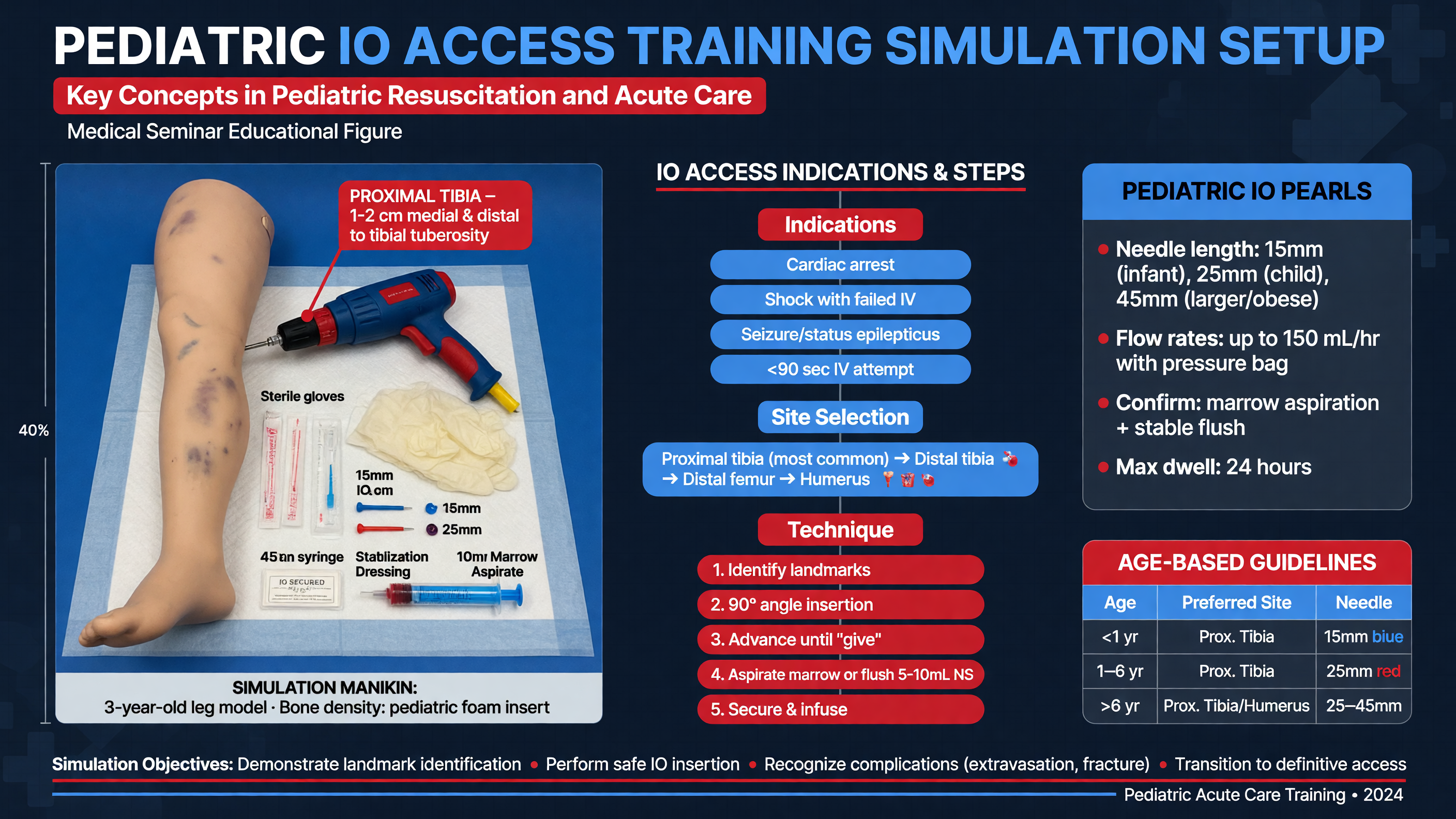 Initial assessment should move from pattern recognition to physiology. The Pediatric Assessment Triangle—appearance, work of breathing, and circulation to skin—provides a seconds-long first impression without touching the child. An abnormal appearance may reflect hypoxemia, hypercapnia, shock, hypoglycemia, seizure, toxic exposure, or intracranial disease. Increased work of breathing suggests distress; poor respiratory effort, altered consciousness, cyanosis, or a silent chest suggests failure. Follow immediately with an ABCDE primary survey, point-of-care glucose, temperature, monitoring, exposure for trauma or rash, and repeated assessment after every intervention.
**Teaching Point:** Pediatric cardiac arrest is usually the endpoint of respiratory failure or progressive shock rather than a primary ventricular dysrhythmia. Preventing arrest through early oxygenation, ventilation, and perfusion support is therefore the central resuscitation strategy.
Open and position the airway, suction when obstruction is present, and use appropriately sized adjuncts. Two-person bag-mask ventilation—one clinician maintaining a two-handed seal and airway position while another compresses the bag—is often more effective than hurried intubation. Deliver only enough volume to produce visible chest rise. Excessive rate or pressure causes gastric insufflation, barotrauma, and increased intrathoracic pressure, reducing venous return and coronary perfusion. Waveform capnography should confirm and continuously monitor an advanced airway. Current AHA/AAP guidance uses 20–30 breaths per minute, approximately one breath every two to three seconds, for inadequate breathing with a pulse and during CPR with an advanced airway ([2025 Pediatric BLS guidance](https://cpr.heart.org/en/resuscitation-science/cpr-and-ecc-guidelines/pediatric-basic-life-support)).
If bradycardia with cardiopulmonary compromise persists despite effective oxygenation and ventilation and the heart rate is below 60/min, begin CPR. Compress at 100–120/min to at least one-third of the chest’s anteroposterior diameter—approximately 4 cm in an infant and 5 cm in a child—with full recoil and minimal interruption. Use 30:2 for one rescuer and 15:2 for two rescuers before puberty. The 2025 guidance no longer recommends two-finger infant compressions because adequate depth is difficult to achieve; use one hand or the two-thumb encircling technique.
**MUST ACT:** For nonshockable arrest, obtain IV or IO access and give epinephrine as early as possible: 0.01 mg/kg IV/IO of the 0.1 mg/mL solution, equivalent to 0.1 mL/kg, maximum 1 mg, every three to five minutes. Always state the concentration as well as the dose.
For ventricular fibrillation or pulseless ventricular tachycardia, defibrillate at 2 J/kg, then 4 J/kg, then at least 4 J/kg up to 10 J/kg or the adult maximum. Resume compressions immediately after each shock. Refractory VF/pVT may be treated with amiodarone 5 mg/kg IV/IO, maximum 300 mg for the initial dose, or lidocaine 1 mg/kg. Routine calcium or sodium bicarbonate is not indicated unless a specific cause—such as hypocalcemia, hyperkalemia, calcium-channel-blocker poisoning, or sodium-channel blockade—is identified.
Tachycardia requires mechanism-based reasoning. Sinus tachycardia varies with stimulation and usually has visible normal P waves; search for fever, pain, hypovolemia, anemia, hypoxemia, sepsis, or toxic-metabolic disease. Supraventricular tachycardia is typically abrupt, regular, and narrow-complex. In a stable patient, try an age-appropriate vagal maneuver, followed by adenosine 0.1 mg/kg by rapid IV/IO push, maximum 6 mg; if needed, use 0.2 mg/kg, maximum 12 mg. Cardiopulmonary compromise requires synchronized cardioversion at 0.5–1 J/kg, increasing to 2 J/kg. Sedation is desirable when feasible but must not delay cardioversion in shock.
**Decision Point:** Do not allow repeated peripheral IV attempts to postpone time-critical treatment. In arrest, decompensated shock, or status epilepticus, move rapidly to IO access when IV access is not promptly obtained.
Mechanical IO devices can produce rapid, reliable simulated access. In Szarpak and colleagues’ randomized simulation study, 75 novice physicians were retested six months after one educational session. Among those who identified the site and performed cannulation, first-attempt success was 100% with NIO Pediatric, 97% with EZ-IO, 90% with BIG Pediatric, and 43% with a manual Jamshidi needle; mechanical-device times were 18–23 seconds versus 34 seconds manually. The study supports simulated novice performance, not superiority in clinical outcomes or neonatal resuscitation ([PMID: 30106870](https://pubmed.ncbi.nlm.nih.gov/30106870/)). Confirm stability and flow, secure the needle, use pressure-assisted infusion, and monitor continuously for extravasation or compartment syndrome. Avoid a fractured or infected bone, a previous attempt in the same bone, or a limb with disrupted vascular integrity.
**Nuance:** A newly born infant undergoing delivery-room resuscitation follows neonatal guidance, in which umbilical venous access is generally preferred. Pediatric IO evidence should not be indiscriminately applied to neonatal transition.
Medication systems should reduce arithmetic under stress. A length-based tape is a useful fallback when a measured weight is unavailable, but it can misestimate weight in obesity or unusual body habitus. Use actual kilogram weight, institutional dosing references, maximum doses, standard concentrations, and closed-loop read-back. Distinguish arrest epinephrine from anaphylaxis treatment: anaphylaxis requires epinephrine 0.01 mg/kg IM of the 1 mg/mL solution, generally to a maximum of 0.5 mg, repeated every 5–15 minutes as clinically required.
Shock treatment must be titrated to physiology. Give isotonic crystalloid in 10- or 20-mL/kg aliquots with reassessment after each bolus for mental status, pulses, capillary refill, blood pressure, hepatomegaly, rales, work of breathing, and urine output. Avoid an automatic “60 mL/kg” endpoint. Start epinephrine or norepinephrine for fluid-refractory septic shock; favor earlier vasoactive support when myocardial dysfunction, renal disease, malnutrition, or fluid overload is plausible. In hemorrhagic shock, control bleeding and transition early to warmed blood products rather than repeatedly diluting clotting factors with crystalloid.
**Framework:** After return of spontaneous circulation, protect the brain and myocardium: target oxygen saturation around 94%–99%, avoid hypo- and hypercapnia, maintain blood pressure above the age-specific 10th percentile, identify the arrest cause, monitor glucose and temperature, and arrange intensive-care transfer.
**Audience Poll:** When IV access fails during pediatric shock, how many attempts occur in your current workflow before someone explicitly calls for IO access?
---
## Implementing Simulation-Based Training for Teams
Initial assessment should move from pattern recognition to physiology. The Pediatric Assessment Triangle—appearance, work of breathing, and circulation to skin—provides a seconds-long first impression without touching the child. An abnormal appearance may reflect hypoxemia, hypercapnia, shock, hypoglycemia, seizure, toxic exposure, or intracranial disease. Increased work of breathing suggests distress; poor respiratory effort, altered consciousness, cyanosis, or a silent chest suggests failure. Follow immediately with an ABCDE primary survey, point-of-care glucose, temperature, monitoring, exposure for trauma or rash, and repeated assessment after every intervention.
**Teaching Point:** Pediatric cardiac arrest is usually the endpoint of respiratory failure or progressive shock rather than a primary ventricular dysrhythmia. Preventing arrest through early oxygenation, ventilation, and perfusion support is therefore the central resuscitation strategy.
Open and position the airway, suction when obstruction is present, and use appropriately sized adjuncts. Two-person bag-mask ventilation—one clinician maintaining a two-handed seal and airway position while another compresses the bag—is often more effective than hurried intubation. Deliver only enough volume to produce visible chest rise. Excessive rate or pressure causes gastric insufflation, barotrauma, and increased intrathoracic pressure, reducing venous return and coronary perfusion. Waveform capnography should confirm and continuously monitor an advanced airway. Current AHA/AAP guidance uses 20–30 breaths per minute, approximately one breath every two to three seconds, for inadequate breathing with a pulse and during CPR with an advanced airway ([2025 Pediatric BLS guidance](https://cpr.heart.org/en/resuscitation-science/cpr-and-ecc-guidelines/pediatric-basic-life-support)).
If bradycardia with cardiopulmonary compromise persists despite effective oxygenation and ventilation and the heart rate is below 60/min, begin CPR. Compress at 100–120/min to at least one-third of the chest’s anteroposterior diameter—approximately 4 cm in an infant and 5 cm in a child—with full recoil and minimal interruption. Use 30:2 for one rescuer and 15:2 for two rescuers before puberty. The 2025 guidance no longer recommends two-finger infant compressions because adequate depth is difficult to achieve; use one hand or the two-thumb encircling technique.
**MUST ACT:** For nonshockable arrest, obtain IV or IO access and give epinephrine as early as possible: 0.01 mg/kg IV/IO of the 0.1 mg/mL solution, equivalent to 0.1 mL/kg, maximum 1 mg, every three to five minutes. Always state the concentration as well as the dose.
For ventricular fibrillation or pulseless ventricular tachycardia, defibrillate at 2 J/kg, then 4 J/kg, then at least 4 J/kg up to 10 J/kg or the adult maximum. Resume compressions immediately after each shock. Refractory VF/pVT may be treated with amiodarone 5 mg/kg IV/IO, maximum 300 mg for the initial dose, or lidocaine 1 mg/kg. Routine calcium or sodium bicarbonate is not indicated unless a specific cause—such as hypocalcemia, hyperkalemia, calcium-channel-blocker poisoning, or sodium-channel blockade—is identified.
Tachycardia requires mechanism-based reasoning. Sinus tachycardia varies with stimulation and usually has visible normal P waves; search for fever, pain, hypovolemia, anemia, hypoxemia, sepsis, or toxic-metabolic disease. Supraventricular tachycardia is typically abrupt, regular, and narrow-complex. In a stable patient, try an age-appropriate vagal maneuver, followed by adenosine 0.1 mg/kg by rapid IV/IO push, maximum 6 mg; if needed, use 0.2 mg/kg, maximum 12 mg. Cardiopulmonary compromise requires synchronized cardioversion at 0.5–1 J/kg, increasing to 2 J/kg. Sedation is desirable when feasible but must not delay cardioversion in shock.
**Decision Point:** Do not allow repeated peripheral IV attempts to postpone time-critical treatment. In arrest, decompensated shock, or status epilepticus, move rapidly to IO access when IV access is not promptly obtained.
Mechanical IO devices can produce rapid, reliable simulated access. In Szarpak and colleagues’ randomized simulation study, 75 novice physicians were retested six months after one educational session. Among those who identified the site and performed cannulation, first-attempt success was 100% with NIO Pediatric, 97% with EZ-IO, 90% with BIG Pediatric, and 43% with a manual Jamshidi needle; mechanical-device times were 18–23 seconds versus 34 seconds manually. The study supports simulated novice performance, not superiority in clinical outcomes or neonatal resuscitation ([PMID: 30106870](https://pubmed.ncbi.nlm.nih.gov/30106870/)). Confirm stability and flow, secure the needle, use pressure-assisted infusion, and monitor continuously for extravasation or compartment syndrome. Avoid a fractured or infected bone, a previous attempt in the same bone, or a limb with disrupted vascular integrity.
**Nuance:** A newly born infant undergoing delivery-room resuscitation follows neonatal guidance, in which umbilical venous access is generally preferred. Pediatric IO evidence should not be indiscriminately applied to neonatal transition.
Medication systems should reduce arithmetic under stress. A length-based tape is a useful fallback when a measured weight is unavailable, but it can misestimate weight in obesity or unusual body habitus. Use actual kilogram weight, institutional dosing references, maximum doses, standard concentrations, and closed-loop read-back. Distinguish arrest epinephrine from anaphylaxis treatment: anaphylaxis requires epinephrine 0.01 mg/kg IM of the 1 mg/mL solution, generally to a maximum of 0.5 mg, repeated every 5–15 minutes as clinically required.
Shock treatment must be titrated to physiology. Give isotonic crystalloid in 10- or 20-mL/kg aliquots with reassessment after each bolus for mental status, pulses, capillary refill, blood pressure, hepatomegaly, rales, work of breathing, and urine output. Avoid an automatic “60 mL/kg” endpoint. Start epinephrine or norepinephrine for fluid-refractory septic shock; favor earlier vasoactive support when myocardial dysfunction, renal disease, malnutrition, or fluid overload is plausible. In hemorrhagic shock, control bleeding and transition early to warmed blood products rather than repeatedly diluting clotting factors with crystalloid.
**Framework:** After return of spontaneous circulation, protect the brain and myocardium: target oxygen saturation around 94%–99%, avoid hypo- and hypercapnia, maintain blood pressure above the age-specific 10th percentile, identify the arrest cause, monitor glucose and temperature, and arrange intensive-care transfer.
**Audience Poll:** When IV access fails during pediatric shock, how many attempts occur in your current workflow before someone explicitly calls for IO access?
---
## Implementing Simulation-Based Training for Teams
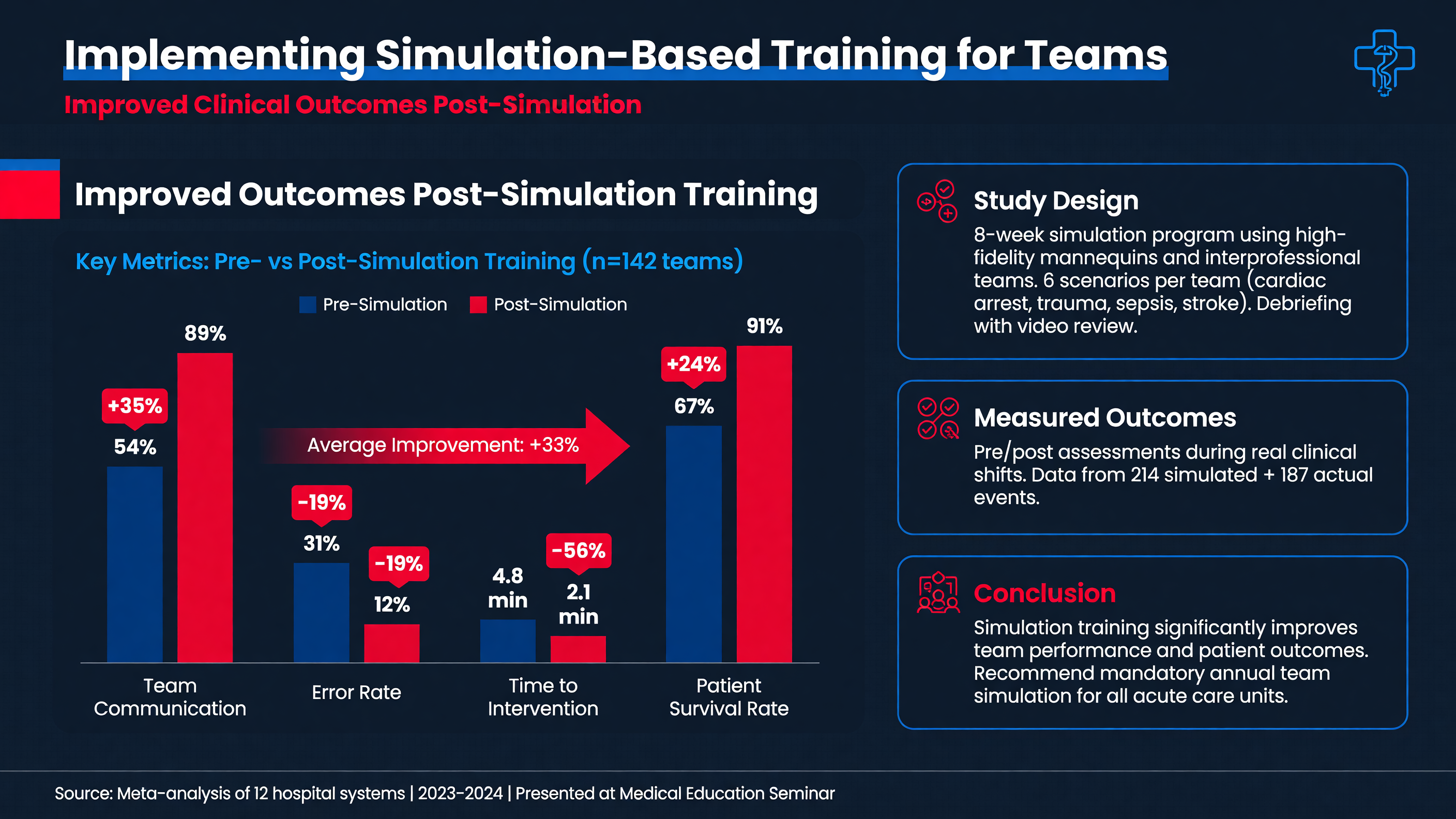 Simulation is most valuable when it is treated as both education and a test of the clinical microsystem. Pediatric crises are low-frequency, high-consequence events in which clinicians must retrieve rarely used knowledge while coordinating unfamiliar equipment, weight-based medication, distressed caregivers, consultants, and transport services. A mannequin can reveal skill gaps, but an in-situ simulation can also expose a missing infant mask, an expired medication, an inaccessible dosing guide, unreliable Wi-Fi, a delayed blood cooler, or a transfer number that no longer works.
**Framework:** Diagnose, design, drill, debrief, repair, and redrill. The educational cycle is incomplete until identified defects have owners, deadlines, countermeasures, and verification.
Start with local needs rather than a generic scenario library. Review recent deaths, ICU transfers, medication events, near misses, delayed transfers, readiness-assessment gaps, and staff concerns. Prioritize four to six high-risk conditions such as infant respiratory failure, status epilepticus, septic shock, anaphylaxis, arrest with IO access and defibrillation, and trauma with hemorrhage. Rotate less common but operationally important scenarios involving tracheostomy obstruction, diabetic ketoacidosis, neonatal stabilization, behavioral escalation, family reunification, or pediatric mass casualty.
A practical session includes a five-minute prebrief, a 10- to 15-minute scenario, a structured debrief, and an action log. The prebrief defines objectives, confidentiality, psychological safety, equipment limitations, and an emergency stop for real clinical demand. Assign realistic roles: leader, airway clinician, respiratory therapist, vascular-access and medication nurse, compressor or monitor operator, recorder/timekeeper, and family liaison. Expected behaviors should include stating the weight in kilograms, assigning roles, using closed-loop communication, reading back drug dose and concentration, sharing diagnostic updates, and activating consultation or transfer early.
**MUST ACT:** If a drill uncovers the wrong epinephrine concentration, an incompatible defibrillator pad, a missing suction catheter, or an unclear transfer pathway, treat it as an active patient-safety defect—not as a learner failure.
Spaced practice generally produces better retention than a single annual course. A defensible local program might combine monthly five- to ten-minute procedural refreshers, quarterly multidisciplinary in-situ scenarios across different shifts, and an annual surge or disaster exercise. Cadence should reflect local risk and staffing rather than being presented as a universal mandate. The [2025 AHA resuscitation-education guidance](https://cpr.heart.org/en/resuscitation-science/cpr-and-ecc-guidelines/resuscitation-education-science) supports spaced learning, booster training, CPR feedback devices, teamwork training, and rapid-cycle deliberate practice.
Rapid-cycle deliberate practice is particularly useful for discrete, high-risk sequences. The facilitator pauses when a critical action is missed, gives concise corrective feedback, rewinds, and has the team repeat the sequence correctly. An IO station can require landmark identification, device preparation, insertion, confirmation, fixation, connection to pressurized fluid, and detection of extravasation. Szarpak’s IO study demonstrates how simulation can differentiate device performance and retained novice skill, but it should not be described as evidence of reduced mortality or clinical superiority ([PMID: 30106870](https://pubmed.ncbi.nlm.nih.gov/30106870/)).
**Teaching Point:** Task fidelity, environmental fidelity, and debriefing quality often matter more than an expensive mannequin. A low-cost drill using the real cart, actual dosing aid, and real transfer process may reveal more actionable risk than a sophisticated simulation in a remote laboratory.
Measure observable behavior rather than confidence alone. Useful endpoints include time to effective bag-mask ventilation, CPR fraction and compression quality, time to first shock or epinephrine, time to seizure medication, correct dose and concentration, time to IV/IO access, role clarity, closed-loop communication, and time to transfer-center activation. System measures include latent threats found, proportion assigned to an owner, proportion closed by deadline, and performance when the same scenario is repeated.
Evidence is strongest for educational and process outcomes. A systematic review found improvement in time-critical tasks, guideline adherence, and technical or team performance, but relatively few studies reported clinical outcomes and survival benefit remains uncertain ([PMID: 35237809](https://pubmed.ncbi.nlm.nih.gov/35237809/)). The multicenter ImPACTS intervention increased mean readiness scores in participating general EDs, although full adherence to the implementation timeline was difficult—an important reminder that simulation requires operational support, not enthusiasm alone ([PMID: 33137316](https://pubmed.ncbi.nlm.nih.gov/33137316/)).
**Nuance:** Simulation scores are surrogate outcomes. Bridge them to real-case review of pediatric resuscitations, medication errors, transfer delays, 72-hour returns with admission, and condition-specific bundle adherence.
Debrief both technical and relational performance. Ask what the team noticed, what explained its actions, and what should change. Separate skill decay from system design: prescribe deliberate practice for a performance gap, but send equipment, protocol, staffing, or workflow defects into formal quality improvement. Avoid punitive surprise testing, physician-only participation, excluding night staff, or collecting defects without closing them.
**Decision Point:** If performance fails despite correct knowledge, ask whether the environment made the correct action difficult. Redesigning the system may be more effective than repeating a lecture.
**Audience Poll:** If a 7-kg infant arrived apneic now, what would fail first: mask seal, role clarity, dosing, vascular access, equipment availability, or transfer coordination?
---
## The Role of Pediatric Emergency Care Coordinators (PECCs)
Simulation is most valuable when it is treated as both education and a test of the clinical microsystem. Pediatric crises are low-frequency, high-consequence events in which clinicians must retrieve rarely used knowledge while coordinating unfamiliar equipment, weight-based medication, distressed caregivers, consultants, and transport services. A mannequin can reveal skill gaps, but an in-situ simulation can also expose a missing infant mask, an expired medication, an inaccessible dosing guide, unreliable Wi-Fi, a delayed blood cooler, or a transfer number that no longer works.
**Framework:** Diagnose, design, drill, debrief, repair, and redrill. The educational cycle is incomplete until identified defects have owners, deadlines, countermeasures, and verification.
Start with local needs rather than a generic scenario library. Review recent deaths, ICU transfers, medication events, near misses, delayed transfers, readiness-assessment gaps, and staff concerns. Prioritize four to six high-risk conditions such as infant respiratory failure, status epilepticus, septic shock, anaphylaxis, arrest with IO access and defibrillation, and trauma with hemorrhage. Rotate less common but operationally important scenarios involving tracheostomy obstruction, diabetic ketoacidosis, neonatal stabilization, behavioral escalation, family reunification, or pediatric mass casualty.
A practical session includes a five-minute prebrief, a 10- to 15-minute scenario, a structured debrief, and an action log. The prebrief defines objectives, confidentiality, psychological safety, equipment limitations, and an emergency stop for real clinical demand. Assign realistic roles: leader, airway clinician, respiratory therapist, vascular-access and medication nurse, compressor or monitor operator, recorder/timekeeper, and family liaison. Expected behaviors should include stating the weight in kilograms, assigning roles, using closed-loop communication, reading back drug dose and concentration, sharing diagnostic updates, and activating consultation or transfer early.
**MUST ACT:** If a drill uncovers the wrong epinephrine concentration, an incompatible defibrillator pad, a missing suction catheter, or an unclear transfer pathway, treat it as an active patient-safety defect—not as a learner failure.
Spaced practice generally produces better retention than a single annual course. A defensible local program might combine monthly five- to ten-minute procedural refreshers, quarterly multidisciplinary in-situ scenarios across different shifts, and an annual surge or disaster exercise. Cadence should reflect local risk and staffing rather than being presented as a universal mandate. The [2025 AHA resuscitation-education guidance](https://cpr.heart.org/en/resuscitation-science/cpr-and-ecc-guidelines/resuscitation-education-science) supports spaced learning, booster training, CPR feedback devices, teamwork training, and rapid-cycle deliberate practice.
Rapid-cycle deliberate practice is particularly useful for discrete, high-risk sequences. The facilitator pauses when a critical action is missed, gives concise corrective feedback, rewinds, and has the team repeat the sequence correctly. An IO station can require landmark identification, device preparation, insertion, confirmation, fixation, connection to pressurized fluid, and detection of extravasation. Szarpak’s IO study demonstrates how simulation can differentiate device performance and retained novice skill, but it should not be described as evidence of reduced mortality or clinical superiority ([PMID: 30106870](https://pubmed.ncbi.nlm.nih.gov/30106870/)).
**Teaching Point:** Task fidelity, environmental fidelity, and debriefing quality often matter more than an expensive mannequin. A low-cost drill using the real cart, actual dosing aid, and real transfer process may reveal more actionable risk than a sophisticated simulation in a remote laboratory.
Measure observable behavior rather than confidence alone. Useful endpoints include time to effective bag-mask ventilation, CPR fraction and compression quality, time to first shock or epinephrine, time to seizure medication, correct dose and concentration, time to IV/IO access, role clarity, closed-loop communication, and time to transfer-center activation. System measures include latent threats found, proportion assigned to an owner, proportion closed by deadline, and performance when the same scenario is repeated.
Evidence is strongest for educational and process outcomes. A systematic review found improvement in time-critical tasks, guideline adherence, and technical or team performance, but relatively few studies reported clinical outcomes and survival benefit remains uncertain ([PMID: 35237809](https://pubmed.ncbi.nlm.nih.gov/35237809/)). The multicenter ImPACTS intervention increased mean readiness scores in participating general EDs, although full adherence to the implementation timeline was difficult—an important reminder that simulation requires operational support, not enthusiasm alone ([PMID: 33137316](https://pubmed.ncbi.nlm.nih.gov/33137316/)).
**Nuance:** Simulation scores are surrogate outcomes. Bridge them to real-case review of pediatric resuscitations, medication errors, transfer delays, 72-hour returns with admission, and condition-specific bundle adherence.
Debrief both technical and relational performance. Ask what the team noticed, what explained its actions, and what should change. Separate skill decay from system design: prescribe deliberate practice for a performance gap, but send equipment, protocol, staffing, or workflow defects into formal quality improvement. Avoid punitive surprise testing, physician-only participation, excluding night staff, or collecting defects without closing them.
**Decision Point:** If performance fails despite correct knowledge, ask whether the environment made the correct action difficult. Redesigning the system may be more effective than repeating a lecture.
**Audience Poll:** If a 7-kg infant arrived apneic now, what would fail first: mask seal, role clarity, dosing, vascular access, equipment availability, or transfer coordination?
---
## The Role of Pediatric Emergency Care Coordinators (PECCs)
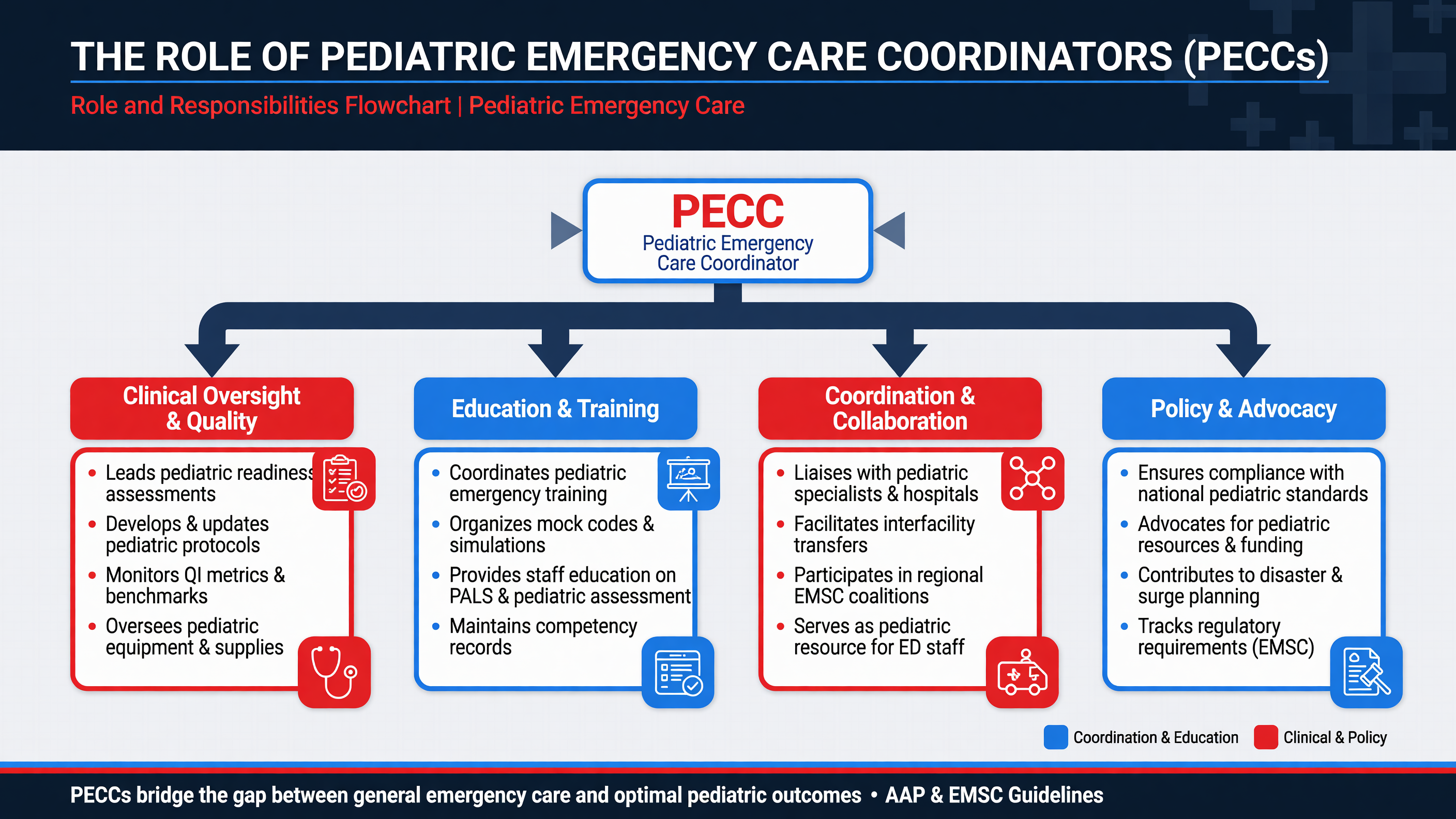 A Pediatric Emergency Care Coordinator is implementation infrastructure: a clinician who translates standards into local practice, maintains readiness between rare emergencies, and connects frontline care with quality leadership. Current joint guidance recommends a physician PECC identified by the ED medical director and a nurse PECC identified by nursing leadership. The preferred model is a dyad because medical staff, nursing operations, competency, equipment, and quality work cross different lines of authority.
**Teaching Point:** The PECC is not required to be the bedside pediatric consultant or a fellowship-trained pediatric emergency physician. The role requires pediatric competence, institutional authority, regional relationships, and protected time to make systems reliable.
The PECC dyad should own or coordinate six workstreams. First, competency: pediatric content in orientation, baseline and periodic age-specific assessment, and maintenance through simulation or procedural practice. Second, safety: kilogram-only weights, standard concentrations, precalculated dosing aids, high-alert medication verification, and carts organized by age or weight. Third, policy: current pathways for respiratory distress, seizure, anaphylaxis, sepsis, trauma, sedation, agitation, maltreatment, neonatal care, disaster response, family presence, and transfer. Fourth, quality: structured review of deaths, resuscitations, medication events, delayed transfers, and unplanned returns or escalation. Fifth, integration: liaison with EMS, pharmacy, respiratory therapy, trauma, radiology, laboratory, blood bank, behavioral health, child protection, interpreters, transport, and referral centers. Sixth, governance: routine reporting, budget advocacy, succession planning, and accountability for identified defects.
**MUST ACT:** Name the physician–nurse dyad, define its authority and reporting line, provide protected nonclinical time, and make gap closure visible to ED and hospital leadership. An honorary title without time or accountability does not produce readiness.
A practical 90-day launch begins with an executive charter and readiness assessment. During the first month, appoint the dyad, establish protected hours, define a dashboard, and identify the highest-risk gaps. During the second month, correct medication and equipment hazards, validate transfer contacts and teleconsultation, and update one or two core algorithms. During the third month, run an all-shift simulation, audit real cases, complete a first plan-do-study-act cycle, and report which defects were closed.
**Framework:** Dyad, dashboard, drills, and defects. The dyad identifies risk; the dashboard makes it visible; drills test the system; defect closure produces improvement.
Useful structure measures include whether both PECCs are appointed, protected hours actually delivered, staff competency completion, cart completeness, 24/7 consultation access, and a current transfer agreement. Process measures might include documented kilogram weight, complete age-adjusted vital signs, timely asthma steroids, timely and correctly dosed benzodiazepine for status epilepticus, sepsis recognition and antibiotic timing, imaging concordance with validated decision rules, family/interpreter documentation, and transfer-call-to-acceptance time. Outcome and balancing measures include medication errors, unnecessary imaging, fluid overload, 72-hour returns with admission, escalation, and staff workload. Low-volume departments should use rolling denominators and case review rather than relying on rare mortality events as their sole outcome.
National data support the role while also warning against causal overstatement. In the 2021 readiness assessment, departments with both physician and nurse PECCs had substantially higher adjusted readiness scores than departments with neither, even after coordinator-specific points were removed ([PMID: 37418265](https://pubmed.ncbi.nlm.nih.gov/37418265/)). PECC presence is associated with readiness, but a title alone has not consistently improved every clinical process, and hospital resources may confound mortality associations. Similarly, the estimate that high readiness could prevent more than 2,100 deaths annually applies to the entire readiness system, not directly to PECC appointment.
**Nuance:** Small and rural hospitals can use shared system-level coordinators, tele-mentoring, or regional pediatric expertise, but local ownership cannot be outsourced. Someone on site must still ensure that equipment works, policies match actual workflow, staff practice, and defects are corrected.
PECCs should also maintain bidirectional relationships with EMS. Prearrival notification can activate a pediatric huddle, prepare weight-appropriate equipment, call respiratory therapy, obtain uncrossmatched blood, and engage a regional consultant before arrival. After transfer, feedback from the receiving center should return to the originating team so that stabilization and referral processes improve.
**Decision Point:** If only one pediatric champion is available, formalize that person’s role and begin the highest-priority work while developing the dyad. Waiting for ideal staffing leaves known risks unaddressed.
**Audience Poll:** Who currently owns your pediatric cart, dosing system, competency calendar, case review, and transfer pathway—and which responsibilities have no accountable owner?
---
## Resource Allocation and Systemic Frameworks
A Pediatric Emergency Care Coordinator is implementation infrastructure: a clinician who translates standards into local practice, maintains readiness between rare emergencies, and connects frontline care with quality leadership. Current joint guidance recommends a physician PECC identified by the ED medical director and a nurse PECC identified by nursing leadership. The preferred model is a dyad because medical staff, nursing operations, competency, equipment, and quality work cross different lines of authority.
**Teaching Point:** The PECC is not required to be the bedside pediatric consultant or a fellowship-trained pediatric emergency physician. The role requires pediatric competence, institutional authority, regional relationships, and protected time to make systems reliable.
The PECC dyad should own or coordinate six workstreams. First, competency: pediatric content in orientation, baseline and periodic age-specific assessment, and maintenance through simulation or procedural practice. Second, safety: kilogram-only weights, standard concentrations, precalculated dosing aids, high-alert medication verification, and carts organized by age or weight. Third, policy: current pathways for respiratory distress, seizure, anaphylaxis, sepsis, trauma, sedation, agitation, maltreatment, neonatal care, disaster response, family presence, and transfer. Fourth, quality: structured review of deaths, resuscitations, medication events, delayed transfers, and unplanned returns or escalation. Fifth, integration: liaison with EMS, pharmacy, respiratory therapy, trauma, radiology, laboratory, blood bank, behavioral health, child protection, interpreters, transport, and referral centers. Sixth, governance: routine reporting, budget advocacy, succession planning, and accountability for identified defects.
**MUST ACT:** Name the physician–nurse dyad, define its authority and reporting line, provide protected nonclinical time, and make gap closure visible to ED and hospital leadership. An honorary title without time or accountability does not produce readiness.
A practical 90-day launch begins with an executive charter and readiness assessment. During the first month, appoint the dyad, establish protected hours, define a dashboard, and identify the highest-risk gaps. During the second month, correct medication and equipment hazards, validate transfer contacts and teleconsultation, and update one or two core algorithms. During the third month, run an all-shift simulation, audit real cases, complete a first plan-do-study-act cycle, and report which defects were closed.
**Framework:** Dyad, dashboard, drills, and defects. The dyad identifies risk; the dashboard makes it visible; drills test the system; defect closure produces improvement.
Useful structure measures include whether both PECCs are appointed, protected hours actually delivered, staff competency completion, cart completeness, 24/7 consultation access, and a current transfer agreement. Process measures might include documented kilogram weight, complete age-adjusted vital signs, timely asthma steroids, timely and correctly dosed benzodiazepine for status epilepticus, sepsis recognition and antibiotic timing, imaging concordance with validated decision rules, family/interpreter documentation, and transfer-call-to-acceptance time. Outcome and balancing measures include medication errors, unnecessary imaging, fluid overload, 72-hour returns with admission, escalation, and staff workload. Low-volume departments should use rolling denominators and case review rather than relying on rare mortality events as their sole outcome.
National data support the role while also warning against causal overstatement. In the 2021 readiness assessment, departments with both physician and nurse PECCs had substantially higher adjusted readiness scores than departments with neither, even after coordinator-specific points were removed ([PMID: 37418265](https://pubmed.ncbi.nlm.nih.gov/37418265/)). PECC presence is associated with readiness, but a title alone has not consistently improved every clinical process, and hospital resources may confound mortality associations. Similarly, the estimate that high readiness could prevent more than 2,100 deaths annually applies to the entire readiness system, not directly to PECC appointment.
**Nuance:** Small and rural hospitals can use shared system-level coordinators, tele-mentoring, or regional pediatric expertise, but local ownership cannot be outsourced. Someone on site must still ensure that equipment works, policies match actual workflow, staff practice, and defects are corrected.
PECCs should also maintain bidirectional relationships with EMS. Prearrival notification can activate a pediatric huddle, prepare weight-appropriate equipment, call respiratory therapy, obtain uncrossmatched blood, and engage a regional consultant before arrival. After transfer, feedback from the receiving center should return to the originating team so that stabilization and referral processes improve.
**Decision Point:** If only one pediatric champion is available, formalize that person’s role and begin the highest-priority work while developing the dyad. Waiting for ideal staffing leaves known risks unaddressed.
**Audience Poll:** Who currently owns your pediatric cart, dosing system, competency calendar, case review, and transfer pathway—and which responsibilities have no accountable owner?
---
## Resource Allocation and Systemic Frameworks
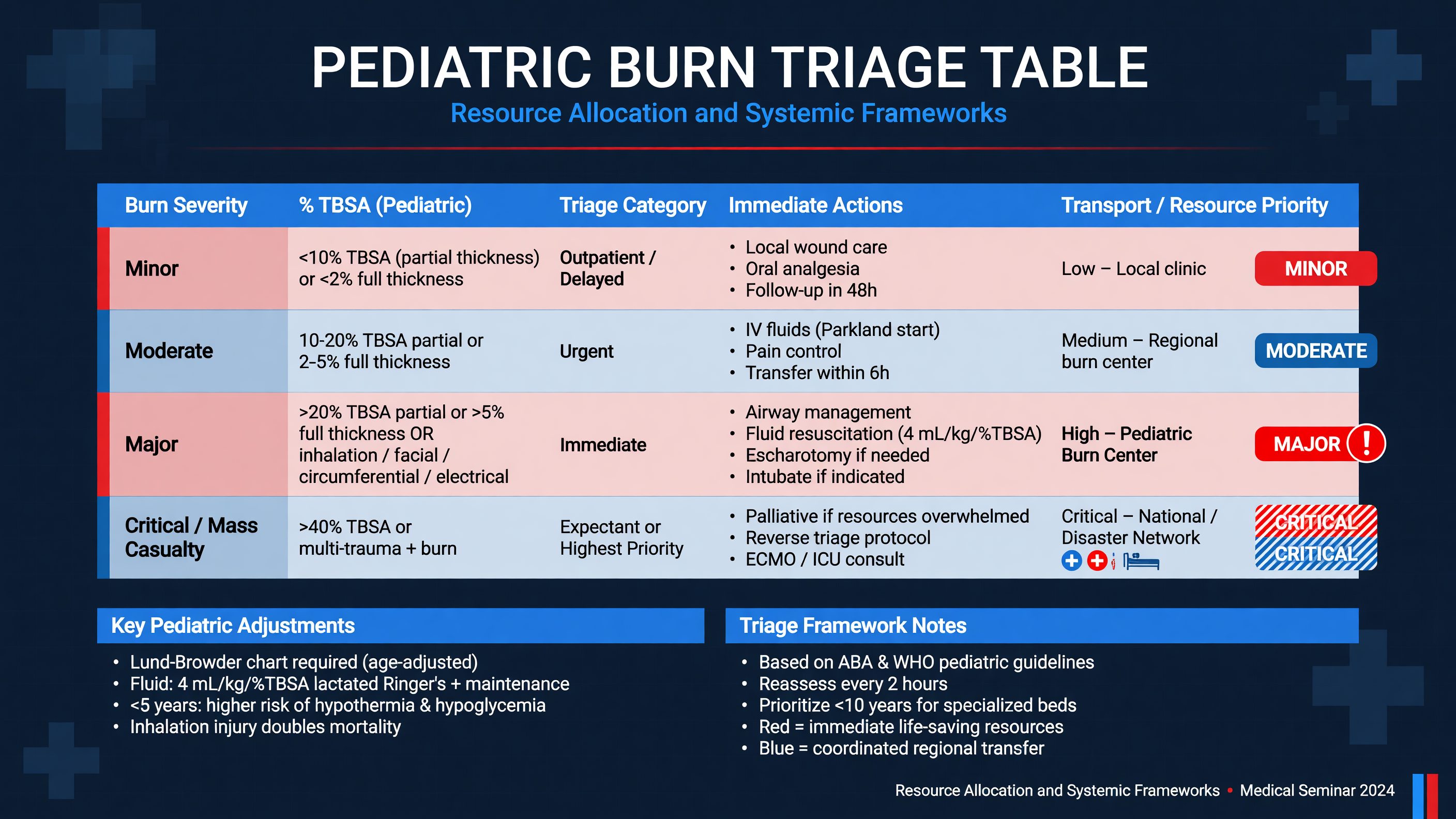 Resource allocation begins in routine operations and scales through surge, mass casualty, and crisis standards. The useful organizing categories are staff, stuff, space, and systems: trained responders; pediatric medications, airway devices, blood, and monitoring equipment; clinical areas that can expand safely; and incident-command links to EMS, trauma centers, burn centers, PICUs, poison control, transport, public health, and family-reunification services.
**Framework:** Separate three decisions that are often conflated: physiologic triage, immediate stabilization, and allocation of scarce specialty resources. A mass-casualty triage algorithm asks who needs intervention first; burn-allocation guidance asks who should receive a limited burn-center bed. Neither replaces reassessment.
A transition from conventional to contingency or crisis practice should be declared through institutional incident command and regional authority. It should not arise from isolated bedside rationing. Conventional care uses usual spaces, staff, and standards. Contingency operations adapt functionally equivalent resources—for example, creating pediatric observation capacity or using tele-burn support. Crisis operations involve a substantial departure from usual practice because demand overwhelms available capability. Even in crisis, clinicians retain duties to provide analgesia, palliation, communication, reassessment, and equitable care.
JumpSTART is one pediatric mass-casualty option, although validation is limited and local systems may use alternatives. Ambulatory children are initially tagged minor. An apneic child with a pulse receives airway repositioning and five rescue breaths because respiratory arrest may precede cardiac arrest; return of breathing triggers immediate classification. Respiratory extremes, absent pulses, or inappropriate mental status similarly trigger high priority. Triage tags are provisional. Children can deteriorate from airway edema, hemorrhage, hypothermia, toxin exposure, or delayed shock and must be re-triaged.
**MUST ACT:** For a burn, stop the burning process, remove hot or wet clothing and jewelry, brush away dry chemicals before irrigation, irrigate liquid chemical exposure while protecting staff, and prevent hypothermia. Do not apply ice. Cover the wound with clean, dry material and complete ABCDE assessment before detailed wound care.
Estimate burn size with an age-adjusted Lund–Browder chart because children have proportionally larger heads and smaller legs than adults. Count partial- and full-thickness injury, not simple erythema. The child’s entire palmar surface including fingers approximates 1% total body surface area and is most useful for scattered small burns. Overestimating TBSA promotes “fluid creep,” with airway edema, pulmonary dysfunction, and extremity or abdominal compartment syndromes.
Suspected inhalation injury requires 100% oxygen and early expert airway planning. Normal pulse oximetry cannot exclude carbon monoxide poisoning because standard devices do not distinguish oxyhemoglobin from carboxyhemoglobin; obtain co-oximetry. Progressive hoarseness, stridor, oral edema, respiratory fatigue, or worsening gas exchange supports intubation before edema makes the airway inaccessible. Facial soot or singed hair alone is not an automatic indication, but it warrants close serial assessment. Severe altered consciousness, cardiovascular collapse, or marked lactic acidosis after an enclosed-space fire should raise concern for cyanide toxicity; hydroxocobalamin may be given at 70 mg/kg IV, maximum 5 g, under the relevant toxicology protocol.
**Decision Point:** Hypotension immediately after a burn should not automatically be labeled burn shock. Significant burn-related capillary leak evolves over time; early hypotension demands evaluation for hemorrhage, tension pneumothorax, neurogenic or cardiogenic shock, carbon monoxide or cyanide toxicity, and medication effects.
Children with substantial partial- or full-thickness burns require warmed crystalloid using a pediatric burn-center protocol. Formulas are starting estimates, not endpoints. Many pediatric protocols use approximately 3–4 mL/kg/%TBSA over the first 24 hours, with half calculated from the time of injury through hour eight, plus dextrose-containing maintenance fluid in smaller children. Titrate to perfusion, glucose, acid-base status, and urine output—commonly near 1 mL/kg/hour below 30 kg—rather than repeatedly escalating fluid for any single abnormal number.
Kearns and colleagues’ revised American Burn Association mass-casualty tables address conventional, contingency, and crisis allocation across age groups, including pediatric bands. They are a practice guideline, not a clinical trial or a pediatric-only triage system. The tables help prioritize scarce burn-center resources according to age, burn size, and system capacity, but they do not fully incorporate associated trauma or comorbidity and must not be applied mechanically ([PMID: 32298453](https://pubmed.ncbi.nlm.nih.gov/32298453/)).
**Nuance:** Under ordinary conditions, full-thickness burns, partial-thickness burns of at least 10% TBSA, deep burns involving critical areas, inhalation injury, chemical or high-voltage injury, associated trauma, uncontrolled pain, and significant comorbidity warrant immediate burn-center consultation. The American Burn Association notes that all pediatric burns may benefit from consultation because of dressing, rehabilitation, caregiver, and nonaccidental-trauma needs ([ABA referral guidance](https://www.ameriburn.org/burn-care-team/resources/guidelines-for-burn-patient-referral)).
Avoid prophylactic systemic antibiotics for an uncomplicated acute burn. Reassess circumferential full-thickness burns with Doppler signals, capillary refill, neurologic examination, and ventilatory mechanics. Escharotomy is indicated when rigid eschar compromises distal perfusion or chest excursion; it is not prophylactic, and fasciotomy addresses a different, deeper compartment process.
**Teaching Point:** Ethical allocation requires transparency, consistency, disability-conscious and bias-aware criteria, regional coordination, documentation, and repeated attempts to expand capacity. Age alone should never become an informal reason to withhold care.
**Audience Poll:** Does your disaster plan clearly identify who can declare contingency or crisis practice, which pediatric triage method will be used, and how children will be tracked and reunited with caregivers?
---
## Integrating Multidisciplinary Approaches
Resource allocation begins in routine operations and scales through surge, mass casualty, and crisis standards. The useful organizing categories are staff, stuff, space, and systems: trained responders; pediatric medications, airway devices, blood, and monitoring equipment; clinical areas that can expand safely; and incident-command links to EMS, trauma centers, burn centers, PICUs, poison control, transport, public health, and family-reunification services.
**Framework:** Separate three decisions that are often conflated: physiologic triage, immediate stabilization, and allocation of scarce specialty resources. A mass-casualty triage algorithm asks who needs intervention first; burn-allocation guidance asks who should receive a limited burn-center bed. Neither replaces reassessment.
A transition from conventional to contingency or crisis practice should be declared through institutional incident command and regional authority. It should not arise from isolated bedside rationing. Conventional care uses usual spaces, staff, and standards. Contingency operations adapt functionally equivalent resources—for example, creating pediatric observation capacity or using tele-burn support. Crisis operations involve a substantial departure from usual practice because demand overwhelms available capability. Even in crisis, clinicians retain duties to provide analgesia, palliation, communication, reassessment, and equitable care.
JumpSTART is one pediatric mass-casualty option, although validation is limited and local systems may use alternatives. Ambulatory children are initially tagged minor. An apneic child with a pulse receives airway repositioning and five rescue breaths because respiratory arrest may precede cardiac arrest; return of breathing triggers immediate classification. Respiratory extremes, absent pulses, or inappropriate mental status similarly trigger high priority. Triage tags are provisional. Children can deteriorate from airway edema, hemorrhage, hypothermia, toxin exposure, or delayed shock and must be re-triaged.
**MUST ACT:** For a burn, stop the burning process, remove hot or wet clothing and jewelry, brush away dry chemicals before irrigation, irrigate liquid chemical exposure while protecting staff, and prevent hypothermia. Do not apply ice. Cover the wound with clean, dry material and complete ABCDE assessment before detailed wound care.
Estimate burn size with an age-adjusted Lund–Browder chart because children have proportionally larger heads and smaller legs than adults. Count partial- and full-thickness injury, not simple erythema. The child’s entire palmar surface including fingers approximates 1% total body surface area and is most useful for scattered small burns. Overestimating TBSA promotes “fluid creep,” with airway edema, pulmonary dysfunction, and extremity or abdominal compartment syndromes.
Suspected inhalation injury requires 100% oxygen and early expert airway planning. Normal pulse oximetry cannot exclude carbon monoxide poisoning because standard devices do not distinguish oxyhemoglobin from carboxyhemoglobin; obtain co-oximetry. Progressive hoarseness, stridor, oral edema, respiratory fatigue, or worsening gas exchange supports intubation before edema makes the airway inaccessible. Facial soot or singed hair alone is not an automatic indication, but it warrants close serial assessment. Severe altered consciousness, cardiovascular collapse, or marked lactic acidosis after an enclosed-space fire should raise concern for cyanide toxicity; hydroxocobalamin may be given at 70 mg/kg IV, maximum 5 g, under the relevant toxicology protocol.
**Decision Point:** Hypotension immediately after a burn should not automatically be labeled burn shock. Significant burn-related capillary leak evolves over time; early hypotension demands evaluation for hemorrhage, tension pneumothorax, neurogenic or cardiogenic shock, carbon monoxide or cyanide toxicity, and medication effects.
Children with substantial partial- or full-thickness burns require warmed crystalloid using a pediatric burn-center protocol. Formulas are starting estimates, not endpoints. Many pediatric protocols use approximately 3–4 mL/kg/%TBSA over the first 24 hours, with half calculated from the time of injury through hour eight, plus dextrose-containing maintenance fluid in smaller children. Titrate to perfusion, glucose, acid-base status, and urine output—commonly near 1 mL/kg/hour below 30 kg—rather than repeatedly escalating fluid for any single abnormal number.
Kearns and colleagues’ revised American Burn Association mass-casualty tables address conventional, contingency, and crisis allocation across age groups, including pediatric bands. They are a practice guideline, not a clinical trial or a pediatric-only triage system. The tables help prioritize scarce burn-center resources according to age, burn size, and system capacity, but they do not fully incorporate associated trauma or comorbidity and must not be applied mechanically ([PMID: 32298453](https://pubmed.ncbi.nlm.nih.gov/32298453/)).
**Nuance:** Under ordinary conditions, full-thickness burns, partial-thickness burns of at least 10% TBSA, deep burns involving critical areas, inhalation injury, chemical or high-voltage injury, associated trauma, uncontrolled pain, and significant comorbidity warrant immediate burn-center consultation. The American Burn Association notes that all pediatric burns may benefit from consultation because of dressing, rehabilitation, caregiver, and nonaccidental-trauma needs ([ABA referral guidance](https://www.ameriburn.org/burn-care-team/resources/guidelines-for-burn-patient-referral)).
Avoid prophylactic systemic antibiotics for an uncomplicated acute burn. Reassess circumferential full-thickness burns with Doppler signals, capillary refill, neurologic examination, and ventilatory mechanics. Escharotomy is indicated when rigid eschar compromises distal perfusion or chest excursion; it is not prophylactic, and fasciotomy addresses a different, deeper compartment process.
**Teaching Point:** Ethical allocation requires transparency, consistency, disability-conscious and bias-aware criteria, regional coordination, documentation, and repeated attempts to expand capacity. Age alone should never become an informal reason to withhold care.
**Audience Poll:** Does your disaster plan clearly identify who can declare contingency or crisis practice, which pediatric triage method will be used, and how children will be tracked and reunited with caregivers?
---
## Integrating Multidisciplinary Approaches
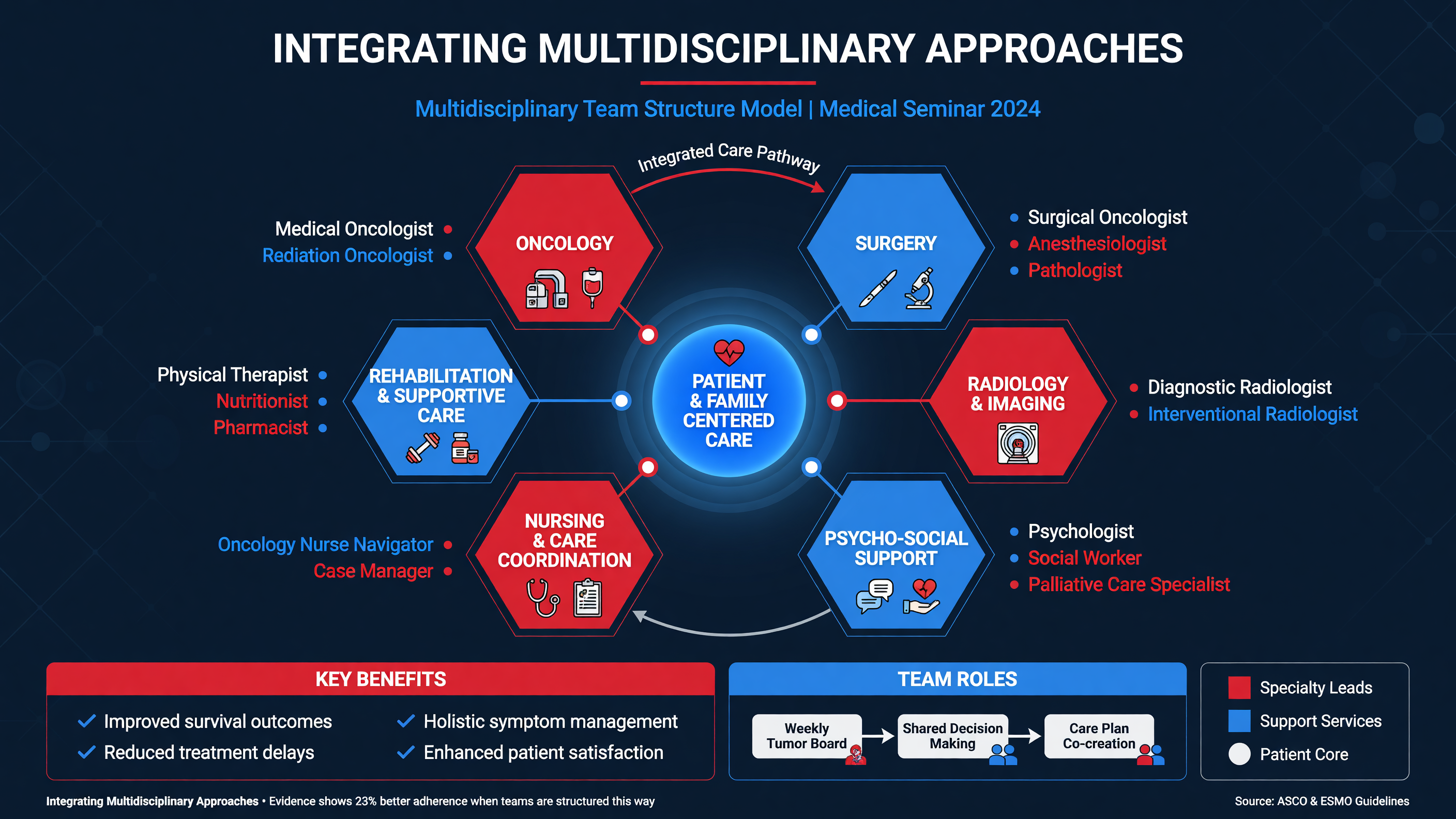 Multidisciplinary care is disciplined coordination, not simply the presence of multiple consultants. Before arrival, a brief huddle should identify the likely syndrome, immediate threats, required equipment, local capability, and destination options. Assign a leader, airway clinician, respiratory therapist, vascular-access nurse, medication nurse or pharmacist, procedural clinician, monitor or defibrillator operator, recorder, and family liaison. The leader should remain hands-off when possible, state priorities aloud, request periodic summaries, and announce changes in diagnosis or disposition.
**Framework:** Use closed-loop orders that contain the kilogram weight, medication, dose, route, and task owner: “Alex, give fentanyl 1 microgram/kg IV—24 micrograms.” The receiver repeats the order, the leader confirms it, and the receiver announces completion.
Respiratory therapy should help select oxygen interfaces, airway adjuncts, tracheostomy supplies, capnography, and ventilator settings. Pharmacy can independently verify high-alert doses, maximums, concentrations, compatibility, and infusion preparation. Nursing tracks time-zero events, cumulative fluids, temperature, glucose, urine output, medication response, and caregiver contact. Laboratory and blood-bank staff anticipate small-volume tubes, warmed products, massive-transfusion logistics, and the risk that repeated sampling may be consequential in an infant.
**MUST ACT:** Consultation must proceed in parallel with stabilization. Calling anesthesia, surgery, PICU, toxicology, or a transfer center must not delay ventilation, hemorrhage control, IO access, seizure medication, decompression of tension physiology, or treatment of hypoglycemia.
The differential diagnosis should remain visible to the whole team. A wheezing child may have asthma, anaphylaxis, foreign-body aspiration, bronchiolitis, pneumonia, cardiac failure, or airway compression. Shock may be hypovolemic, distributive, cardiogenic, obstructive, or mixed. Tachycardia may be compensatory sinus rhythm rather than SVT. Making the diagnostic model explicit prevents different disciplines from acting on incompatible assumptions. The leader can periodically summarize: “We think this is primarily septic shock, but myocarditis remains possible because of hepatomegaly and poor response to fluid; we are limiting additional boluses and starting vasoactive support.”
**Teaching Point:** When teams disagree, return to physiology and time sensitivity. Ask what can kill the child in the next five minutes, which intervention is reversible, and what new information would change management now.
Children with medical complexity especially benefit from caregiver partnership. For a child with a tracheostomy, home ventilator, gastrostomy, congenital heart disease, or neurologic impairment, ask what baseline appearance and interaction look like, the usual device size and settings, the emergency replacement plan, recent secretions or feeds, medication changes, and prior difficult-airway history. Do not let familiarity with the chronic diagnosis narrow the differential. Hypoxemia in a tracheostomy-dependent child may reflect mucus plugging, displacement, pneumonia, aspiration, pneumothorax, equipment failure, or sepsis. Pulmonology, ENT, gastroenterology, surgery, and cardiology may clarify device- or disease-specific management, but the emergency team must first oxygenate, ventilate, and restore perfusion.
**Nuance:** Family presence during resuscitation is appropriate when desired and operationally safe if a trained team member explains events and supports the caregiver. Parents often provide indispensable history, reduce a child’s fear, and identify deviations from baseline.
Use a professional interpreter for high-stakes communication rather than a sibling or the ill child. Child-life specialists can reduce procedural distress and improve cooperation. Social workers support safeguarding, transport, family reunification, bereavement, and practical barriers. Trauma-informed care includes early analgesia, developmentally appropriate explanations, privacy, minimizing unnecessary separation, and avoiding coercive restraint whenever safer alternatives exist.
Safeguarding is also multidisciplinary clinical work. Burns with sharply demarcated immersion patterns, inconsistent histories, unexplained delay, or injuries incompatible with developmental ability require neutral documentation, complete examination, child-protection consultation, and mandated reporting. Stabilization and analgesia should never be delayed while the history is investigated.
**Decision Point:** State contingency plans before deterioration: “If two IV attempts fail, place IO”; “if work of breathing worsens, begin two-person bag-mask ventilation”; “if hoarseness progresses, proceed with the difficult-airway plan”; “if the pediatric center cannot accept, activate the regional alternative-destination pathway.”
Transfer handoff should include weight, baseline function, mechanism and timing, serial vital signs, airway difficulty, medications and fluids, urine output, imaging, associated injuries, safeguarding concerns, family location, pending tests, and response to treatment. The transport team should confirm that airway, vascular access, medications, warming, and monitoring are sustainable during travel.
**Audience Poll:** During your last pediatric resuscitation, was someone explicitly assigned to pharmacy verification, family communication, transfer coordination, and documentation—or were those functions assumed?
---
## Case Studies and Scenario-Based Learning
Multidisciplinary care is disciplined coordination, not simply the presence of multiple consultants. Before arrival, a brief huddle should identify the likely syndrome, immediate threats, required equipment, local capability, and destination options. Assign a leader, airway clinician, respiratory therapist, vascular-access nurse, medication nurse or pharmacist, procedural clinician, monitor or defibrillator operator, recorder, and family liaison. The leader should remain hands-off when possible, state priorities aloud, request periodic summaries, and announce changes in diagnosis or disposition.
**Framework:** Use closed-loop orders that contain the kilogram weight, medication, dose, route, and task owner: “Alex, give fentanyl 1 microgram/kg IV—24 micrograms.” The receiver repeats the order, the leader confirms it, and the receiver announces completion.
Respiratory therapy should help select oxygen interfaces, airway adjuncts, tracheostomy supplies, capnography, and ventilator settings. Pharmacy can independently verify high-alert doses, maximums, concentrations, compatibility, and infusion preparation. Nursing tracks time-zero events, cumulative fluids, temperature, glucose, urine output, medication response, and caregiver contact. Laboratory and blood-bank staff anticipate small-volume tubes, warmed products, massive-transfusion logistics, and the risk that repeated sampling may be consequential in an infant.
**MUST ACT:** Consultation must proceed in parallel with stabilization. Calling anesthesia, surgery, PICU, toxicology, or a transfer center must not delay ventilation, hemorrhage control, IO access, seizure medication, decompression of tension physiology, or treatment of hypoglycemia.
The differential diagnosis should remain visible to the whole team. A wheezing child may have asthma, anaphylaxis, foreign-body aspiration, bronchiolitis, pneumonia, cardiac failure, or airway compression. Shock may be hypovolemic, distributive, cardiogenic, obstructive, or mixed. Tachycardia may be compensatory sinus rhythm rather than SVT. Making the diagnostic model explicit prevents different disciplines from acting on incompatible assumptions. The leader can periodically summarize: “We think this is primarily septic shock, but myocarditis remains possible because of hepatomegaly and poor response to fluid; we are limiting additional boluses and starting vasoactive support.”
**Teaching Point:** When teams disagree, return to physiology and time sensitivity. Ask what can kill the child in the next five minutes, which intervention is reversible, and what new information would change management now.
Children with medical complexity especially benefit from caregiver partnership. For a child with a tracheostomy, home ventilator, gastrostomy, congenital heart disease, or neurologic impairment, ask what baseline appearance and interaction look like, the usual device size and settings, the emergency replacement plan, recent secretions or feeds, medication changes, and prior difficult-airway history. Do not let familiarity with the chronic diagnosis narrow the differential. Hypoxemia in a tracheostomy-dependent child may reflect mucus plugging, displacement, pneumonia, aspiration, pneumothorax, equipment failure, or sepsis. Pulmonology, ENT, gastroenterology, surgery, and cardiology may clarify device- or disease-specific management, but the emergency team must first oxygenate, ventilate, and restore perfusion.
**Nuance:** Family presence during resuscitation is appropriate when desired and operationally safe if a trained team member explains events and supports the caregiver. Parents often provide indispensable history, reduce a child’s fear, and identify deviations from baseline.
Use a professional interpreter for high-stakes communication rather than a sibling or the ill child. Child-life specialists can reduce procedural distress and improve cooperation. Social workers support safeguarding, transport, family reunification, bereavement, and practical barriers. Trauma-informed care includes early analgesia, developmentally appropriate explanations, privacy, minimizing unnecessary separation, and avoiding coercive restraint whenever safer alternatives exist.
Safeguarding is also multidisciplinary clinical work. Burns with sharply demarcated immersion patterns, inconsistent histories, unexplained delay, or injuries incompatible with developmental ability require neutral documentation, complete examination, child-protection consultation, and mandated reporting. Stabilization and analgesia should never be delayed while the history is investigated.
**Decision Point:** State contingency plans before deterioration: “If two IV attempts fail, place IO”; “if work of breathing worsens, begin two-person bag-mask ventilation”; “if hoarseness progresses, proceed with the difficult-airway plan”; “if the pediatric center cannot accept, activate the regional alternative-destination pathway.”
Transfer handoff should include weight, baseline function, mechanism and timing, serial vital signs, airway difficulty, medications and fluids, urine output, imaging, associated injuries, safeguarding concerns, family location, pending tests, and response to treatment. The transport team should confirm that airway, vascular access, medications, warming, and monitoring are sustainable during travel.
**Audience Poll:** During your last pediatric resuscitation, was someone explicitly assigned to pharmacy verification, family communication, transfer coordination, and documentation—or were those functions assumed?
---
## Case Studies and Scenario-Based Learning
 ### Clinical Case: The Child Who Changes Category
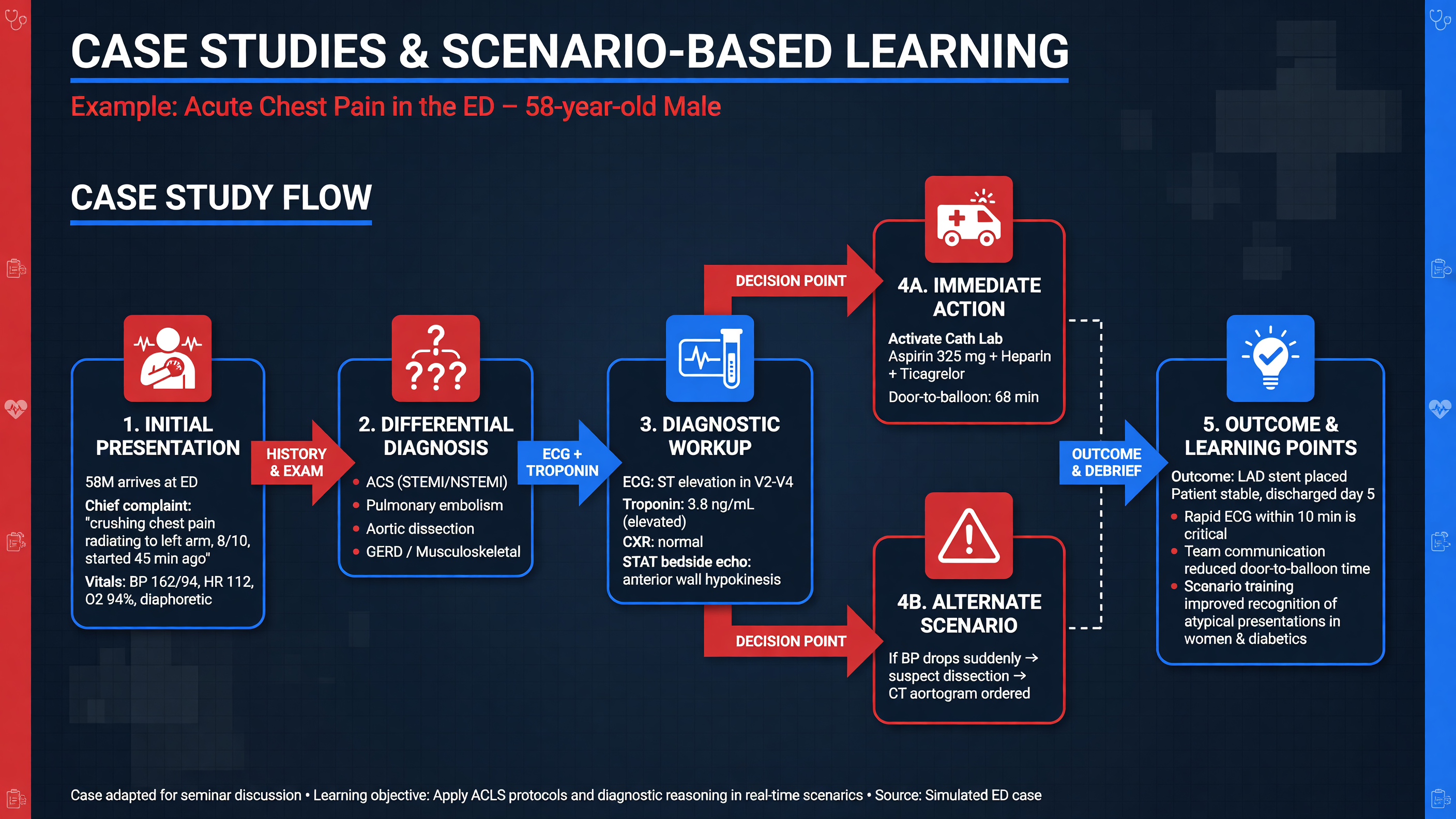
A school-bus collision causes an enclosed-space fire and sends 12 children to a community emergency department. A 7-year-old, 24-kg child arrives one hour after injury. She cannot walk because of pain but is alert. Her heart rate is 148/min, respiratory rate 34/min, blood pressure 90/54 mm Hg, temperature 35.7°C, and oxygen saturation 100% on a nonrebreather. She has soot at the nares, a hoarse voice, partial-thickness burns of the face and anterior trunk, and a circumferential deep burn of the left forearm.
**Audience Poll:** At the initial field sort, is she minor, delayed, or immediate?
Using JumpSTART physiology literally, she may initially be classified delayed: she is nonambulatory, has a respiratory rate within the algorithm’s intermediate range, a palpable pulse, and appropriate mentation. That label is provisional. Pulse oximetry is falsely reassuring during carbon monoxide exposure, facial burns can evolve, and a triage tag is neither a diagnosis nor a destination.
Ten minutes later, her hoarseness worsens. She develops drooling, suprasternal retractions, and less purposeful interaction.
**Decision Point:** She is now immediate priority. Provide 100% oxygen, call the most experienced airway clinician, and prepare video laryngoscopy, suction, a cuffed tube with a smaller backup, waveform capnography, and a failed-airway plan. Do not wait for imaging. Obtain carboxyhemoglobin by co-oximetry while continuing oxygen regardless of the displayed saturation.
A reasonable institution-specific rapid-sequence approach might include ketamine 1–2 mg/kg IV and rocuronium 1.2 mg/kg IV, but drug choice must reflect hemodynamics, local expertise, and the difficult-airway plan. Intubation itself can precipitate arrest if preoxygenation, positioning, hemodynamic support, and rescue ventilation are inadequate.
Two peripheral IV attempts fail during the surge. The nurse announces the failure, and the leader directs proximal tibial IO placement.
**MUST ACT:** Do not permit serial low-yield IV attempts to consume the airway or perfusion window. Once IO access is confirmed and secured, give emergency medications and fluids at IV-equivalent doses while monitoring for extravasation.
Point-of-care glucose is 58 mg/dL. The team treats hypoglycemia with D10W 5 mL/kg—120 mL—then rechecks glucose. Blood gas, lactate, electrolytes, CBC, type and screen, and co-oximetry are obtained. The trauma survey continues because the collision could have produced intracranial, thoracic, abdominal, pelvic, or long-bone injury. Early hypotension should not be attributed reflexively to an 18% burn.
**Nuance:** In this child, altered interaction and tachycardia could reflect hypoxemia, carbon monoxide or cyanide toxicity, hypoglycemia, pain, hypothermia, hemorrhage, or evolving burn shock. More than one mechanism may be present.
An age-adjusted Lund–Browder assessment, excluding superficial erythema, estimates 18% TBSA. The burn center recommends its pediatric starting formula of 3 mL/kg/%TBSA over 24 hours plus dextrose-containing maintenance fluid. The burn component is:
3 × 24 kg × 18 = 1,296 mL of warmed lactated Ringer’s during the first 24 hours.
Half—648 mL—is allocated to the first eight hours from injury. Because one hour has already elapsed, the initial burn-component rate is approximately 93 mL/hour over the next seven hours. Maintenance by the 4-2-1 method is 64 mL/hour, producing an initial combined rate near 157 mL/hour. This is a starting calculation, not an instruction to infuse blindly. The team titrates to mental status, pulses, capillary refill, blood pressure, lactate trend, glucose, pulmonary examination, and urine output near 1 mL/kg/hour. If shock worsens, it searches for occult hemorrhage, thoracic injury, myocardial dysfunction, or toxin exposure rather than simply increasing crystalloid.
Analgesia is delivered through the IO while respiratory status is monitored—for example, fentanyl 1 microgram/kg, or 24 micrograms, titrated to effect. The room, patient, and fluids are warmed. Tetanus status is reviewed. The wounds are covered cleanly; prophylactic systemic antibiotics are not given.
Two hours later, the left forearm is tense, capillary refill is prolonged, and the radial Doppler signal is weaker.
**Decision Point:** Elevate the limb, remove constrictive material, reassess systemic perfusion, and contact the burn surgeon. Progressive Doppler loss, neurologic compromise, or worsening distal perfusion from circumferential full-thickness eschar supports escharotomy. Fasciotomy is reserved for deeper muscle-compartment pathology and is not interchangeable with escharotomy.
The child meets ordinary burn-center criteria through burn size, facial involvement, suspected inhalation injury, and a circumferential deep burn. The nearest burn center has no available bed.
**Framework:** Stabilize locally, activate incident command, obtain tele-burn guidance, and use the regional transfer network to locate another verified burn or pediatric trauma center. Failure of the first transfer request does not authorize an individual clinician to invent crisis-allocation criteria.
The PECC assists with the dosing guide, equipment, family tracking, and regional contacts. Pharmacy verifies concentrations. Respiratory therapy prepares transport ventilation. Social work locates the caregiver. The recorder documents injury time, fluids received before arrival, serial physiology, airway findings, burn calculation, urine output, analgesia, and consultations.
**Teaching Point:** The case is not about memorizing one sequence. Physiology, resource state, and destination evolve simultaneously. High-performing teams repeatedly state what has changed, what now threatens life, and which constraint requires escalation.
The post-event debrief uses observable questions: Was the child re-triaged? Did the normal saturation encourage anchoring? How long elapsed to 100% oxygen, airway planning, IO access, glucose treatment, analgesia, TBSA calculation, and burn-center activation? Were fluids timed from injury rather than ED arrival? Were simulation-identified defects still present? Did family identification and reunification remain intact?
**Audience Poll:** Which single intervention most changed this child’s trajectory: repeated reassessment, early airway planning, rapid IO access, recognition of unreliable pulse oximetry, or regional coordination?
---
## Tonight on Shift
1. Verify the pediatric cart, defibrillator interface, airway equipment, IO device, standard medication concentrations, and dosing aid before they are needed.
2. Confirm that every child is weighed in kilograms and that abnormal age-adjusted vital signs trigger documented reassessment.
3. Identify the physician and nurse PECC—or the accountable interim owners of pediatric equipment, competency, quality review, and transfer pathways.
4. Rehearse a 10-minute scenario involving two-person bag-mask ventilation, weight-based medication read-back, IO access, and early consultation.
5. Validate the current pediatric transport, PICU, trauma, burn-center, poison-control, interpreter, and safeguarding contact pathways.
6. After the next high-risk pediatric case, conduct a brief debrief, assign each safety defect to an owner, and verify that corrective action is completed.
### Clinical Case: The Child Who Changes Category
A school-bus collision causes an enclosed-space fire and sends 12 children to a community emergency department. A 7-year-old, 24-kg child arrives one hour after injury. She cannot walk because of pain but is alert. Her heart rate is 148/min, respiratory rate 34/min, blood pressure 90/54 mm Hg, temperature 35.7°C, and oxygen saturation 100% on a nonrebreather. She has soot at the nares, a hoarse voice, partial-thickness burns of the face and anterior trunk, and a circumferential deep burn of the left forearm.
**Audience Poll:** At the initial field sort, is she minor, delayed, or immediate?
Using JumpSTART physiology literally, she may initially be classified delayed: she is nonambulatory, has a respiratory rate within the algorithm’s intermediate range, a palpable pulse, and appropriate mentation. That label is provisional. Pulse oximetry is falsely reassuring during carbon monoxide exposure, facial burns can evolve, and a triage tag is neither a diagnosis nor a destination.
Ten minutes later, her hoarseness worsens. She develops drooling, suprasternal retractions, and less purposeful interaction.
**Decision Point:** She is now immediate priority. Provide 100% oxygen, call the most experienced airway clinician, and prepare video laryngoscopy, suction, a cuffed tube with a smaller backup, waveform capnography, and a failed-airway plan. Do not wait for imaging. Obtain carboxyhemoglobin by co-oximetry while continuing oxygen regardless of the displayed saturation.
A reasonable institution-specific rapid-sequence approach might include ketamine 1–2 mg/kg IV and rocuronium 1.2 mg/kg IV, but drug choice must reflect hemodynamics, local expertise, and the difficult-airway plan. Intubation itself can precipitate arrest if preoxygenation, positioning, hemodynamic support, and rescue ventilation are inadequate.
Two peripheral IV attempts fail during the surge. The nurse announces the failure, and the leader directs proximal tibial IO placement.
**MUST ACT:** Do not permit serial low-yield IV attempts to consume the airway or perfusion window. Once IO access is confirmed and secured, give emergency medications and fluids at IV-equivalent doses while monitoring for extravasation.
Point-of-care glucose is 58 mg/dL. The team treats hypoglycemia with D10W 5 mL/kg—120 mL—then rechecks glucose. Blood gas, lactate, electrolytes, CBC, type and screen, and co-oximetry are obtained. The trauma survey continues because the collision could have produced intracranial, thoracic, abdominal, pelvic, or long-bone injury. Early hypotension should not be attributed reflexively to an 18% burn.
**Nuance:** In this child, altered interaction and tachycardia could reflect hypoxemia, carbon monoxide or cyanide toxicity, hypoglycemia, pain, hypothermia, hemorrhage, or evolving burn shock. More than one mechanism may be present.
An age-adjusted Lund–Browder assessment, excluding superficial erythema, estimates 18% TBSA. The burn center recommends its pediatric starting formula of 3 mL/kg/%TBSA over 24 hours plus dextrose-containing maintenance fluid. The burn component is:
3 × 24 kg × 18 = 1,296 mL of warmed lactated Ringer’s during the first 24 hours.
Half—648 mL—is allocated to the first eight hours from injury. Because one hour has already elapsed, the initial burn-component rate is approximately 93 mL/hour over the next seven hours. Maintenance by the 4-2-1 method is 64 mL/hour, producing an initial combined rate near 157 mL/hour. This is a starting calculation, not an instruction to infuse blindly. The team titrates to mental status, pulses, capillary refill, blood pressure, lactate trend, glucose, pulmonary examination, and urine output near 1 mL/kg/hour. If shock worsens, it searches for occult hemorrhage, thoracic injury, myocardial dysfunction, or toxin exposure rather than simply increasing crystalloid.
Analgesia is delivered through the IO while respiratory status is monitored—for example, fentanyl 1 microgram/kg, or 24 micrograms, titrated to effect. The room, patient, and fluids are warmed. Tetanus status is reviewed. The wounds are covered cleanly; prophylactic systemic antibiotics are not given.
Two hours later, the left forearm is tense, capillary refill is prolonged, and the radial Doppler signal is weaker.
**Decision Point:** Elevate the limb, remove constrictive material, reassess systemic perfusion, and contact the burn surgeon. Progressive Doppler loss, neurologic compromise, or worsening distal perfusion from circumferential full-thickness eschar supports escharotomy. Fasciotomy is reserved for deeper muscle-compartment pathology and is not interchangeable with escharotomy.
The child meets ordinary burn-center criteria through burn size, facial involvement, suspected inhalation injury, and a circumferential deep burn. The nearest burn center has no available bed.
**Framework:** Stabilize locally, activate incident command, obtain tele-burn guidance, and use the regional transfer network to locate another verified burn or pediatric trauma center. Failure of the first transfer request does not authorize an individual clinician to invent crisis-allocation criteria.
The PECC assists with the dosing guide, equipment, family tracking, and regional contacts. Pharmacy verifies concentrations. Respiratory therapy prepares transport ventilation. Social work locates the caregiver. The recorder documents injury time, fluids received before arrival, serial physiology, airway findings, burn calculation, urine output, analgesia, and consultations.
**Teaching Point:** The case is not about memorizing one sequence. Physiology, resource state, and destination evolve simultaneously. High-performing teams repeatedly state what has changed, what now threatens life, and which constraint requires escalation.
The post-event debrief uses observable questions: Was the child re-triaged? Did the normal saturation encourage anchoring? How long elapsed to 100% oxygen, airway planning, IO access, glucose treatment, analgesia, TBSA calculation, and burn-center activation? Were fluids timed from injury rather than ED arrival? Were simulation-identified defects still present? Did family identification and reunification remain intact?
**Audience Poll:** Which single intervention most changed this child’s trajectory: repeated reassessment, early airway planning, rapid IO access, recognition of unreliable pulse oximetry, or regional coordination?
---
## Tonight on Shift
1. Verify the pediatric cart, defibrillator interface, airway equipment, IO device, standard medication concentrations, and dosing aid before they are needed.
2. Confirm that every child is weighed in kilograms and that abnormal age-adjusted vital signs trigger documented reassessment.
3. Identify the physician and nurse PECC—or the accountable interim owners of pediatric equipment, competency, quality review, and transfer pathways.
4. Rehearse a 10-minute scenario involving two-person bag-mask ventilation, weight-based medication read-back, IO access, and early consultation.
5. Validate the current pediatric transport, PICU, trauma, burn-center, poison-control, interpreter, and safeguarding contact pathways.
6. After the next high-risk pediatric case, conduct a brief debrief, assign each safety defect to an owner, and verify that corrective action is completed.