# Emerging Therapies and Novel Targets in Migraine Management
## Learning Objectives
1. **Explain** the role of CGRP and PACAP in migraine pathophysiology and how they operate through distinct but overlapping neurovascular pathways
2. **Evaluate** the efficacy and safety profiles of CGRP monoclonal antibodies, gepants, and emerging PACAP antagonists for acute and preventive migraine treatment
3. **Analyze** the findings of recent clinical trials — including the Lu AG09222 success and the LY3451838 failure — and their implications for clinical practice
4. **Discuss** the implications of failed migraine trials for drug development, biomarker discovery, and personalized medicine approaches
5. **Apply** current evidence-based guidelines to construct individualized treatment algorithms for patients with episodic and chronic migraine
---
## Section 1: Introduction — The Migraine Burden and the Neuropeptide Revolution
**Duration:** 10 min | **Content Tier: MUST ACT**
 Migraine is not just a headache. It is a complex, disabling neurovascular disorder that affects more than one billion people worldwide, making it the second leading cause of years lived with disability globally. For decades, our understanding of migraine was limited to vascular theories and empiric treatments — triptans, beta-blockers, anticonvulsants. But the last decade has witnessed a genuine revolution: the identification of specific neuropeptide targets that drive migraine pathophysiology and the development of precision therapies directed at these targets.
**MUST ACT:** The two neuropeptides at the center of this revolution are calcitonin gene-related peptide (CGRP) and pituitary adenylate cyclase-activating polypeptide (PACAP). Understanding their distinct roles is not optional — it is the foundation upon which all modern migraine therapeutics are built.
**Teaching Point:** CGRP has been validated as a migraine mediator through three independent lines of evidence: (1) CGRP levels are elevated in the jugular venous blood during migraine attacks, (2) intravenous CGRP infusion triggers migraine-like attacks in susceptible individuals, and (3) CGRP-targeted therapies — both monoclonal antibodies and small-molecule antagonists (gepants) — are effective in both acute treatment and prevention (PMID: 40931761). This is one of the most thoroughly validated therapeutic targets in all of neurology.
PACAP, meanwhile, represents the next frontier. Like CGRP, PACAP can trigger migraine-like attacks when infused intravenously. However, PACAP operates through substantially different anatomical and molecular pathways — predominantly through parasympathetic ganglia and PAC1 receptors, rather than the trigeminal vascular system (PMID: 40931761, 36481434). This distinction has profound implications for treatment, because patients who fail CGRP-targeted therapy may respond to PACAP-directed approaches.
**Say Out Loud:** "We are living through the most significant advance in migraine treatment in 30 years. CGRP changed the game. PACAP may change it again."
**Nuance:** The relationship between CGRP and PACAP is not straightforward. Pietra et al. demonstrated in mouse models that PACAP-induced migraine-like behaviors persist even when CGRP signaling is blocked, indicating that PACAP acts through independent mechanisms — not simply as an upstream activator of CGRP release (PMID: 40931761). This independence is what makes PACAP an attractive target for patients refractory to CGRP therapies.
**Audience Poll:** How confident are you in explaining the neurobiology of migraines to a patient?
- A) Very confident — I understand the CGRP pathway well
- B) Somewhat confident — I know the basics
- C) Not confident — this is new to me
- D) I've never heard of CGRP or PACAP
---
## Section 2: The Trigeminovascular System — Where Migraine Begins
**Duration:** 10 min | **Content Tier: Teaching Point**
Migraine is not just a headache. It is a complex, disabling neurovascular disorder that affects more than one billion people worldwide, making it the second leading cause of years lived with disability globally. For decades, our understanding of migraine was limited to vascular theories and empiric treatments — triptans, beta-blockers, anticonvulsants. But the last decade has witnessed a genuine revolution: the identification of specific neuropeptide targets that drive migraine pathophysiology and the development of precision therapies directed at these targets.
**MUST ACT:** The two neuropeptides at the center of this revolution are calcitonin gene-related peptide (CGRP) and pituitary adenylate cyclase-activating polypeptide (PACAP). Understanding their distinct roles is not optional — it is the foundation upon which all modern migraine therapeutics are built.
**Teaching Point:** CGRP has been validated as a migraine mediator through three independent lines of evidence: (1) CGRP levels are elevated in the jugular venous blood during migraine attacks, (2) intravenous CGRP infusion triggers migraine-like attacks in susceptible individuals, and (3) CGRP-targeted therapies — both monoclonal antibodies and small-molecule antagonists (gepants) — are effective in both acute treatment and prevention (PMID: 40931761). This is one of the most thoroughly validated therapeutic targets in all of neurology.
PACAP, meanwhile, represents the next frontier. Like CGRP, PACAP can trigger migraine-like attacks when infused intravenously. However, PACAP operates through substantially different anatomical and molecular pathways — predominantly through parasympathetic ganglia and PAC1 receptors, rather than the trigeminal vascular system (PMID: 40931761, 36481434). This distinction has profound implications for treatment, because patients who fail CGRP-targeted therapy may respond to PACAP-directed approaches.
**Say Out Loud:** "We are living through the most significant advance in migraine treatment in 30 years. CGRP changed the game. PACAP may change it again."
**Nuance:** The relationship between CGRP and PACAP is not straightforward. Pietra et al. demonstrated in mouse models that PACAP-induced migraine-like behaviors persist even when CGRP signaling is blocked, indicating that PACAP acts through independent mechanisms — not simply as an upstream activator of CGRP release (PMID: 40931761). This independence is what makes PACAP an attractive target for patients refractory to CGRP therapies.
**Audience Poll:** How confident are you in explaining the neurobiology of migraines to a patient?
- A) Very confident — I understand the CGRP pathway well
- B) Somewhat confident — I know the basics
- C) Not confident — this is new to me
- D) I've never heard of CGRP or PACAP
---
## Section 2: The Trigeminovascular System — Where Migraine Begins
**Duration:** 10 min | **Content Tier: Teaching Point**
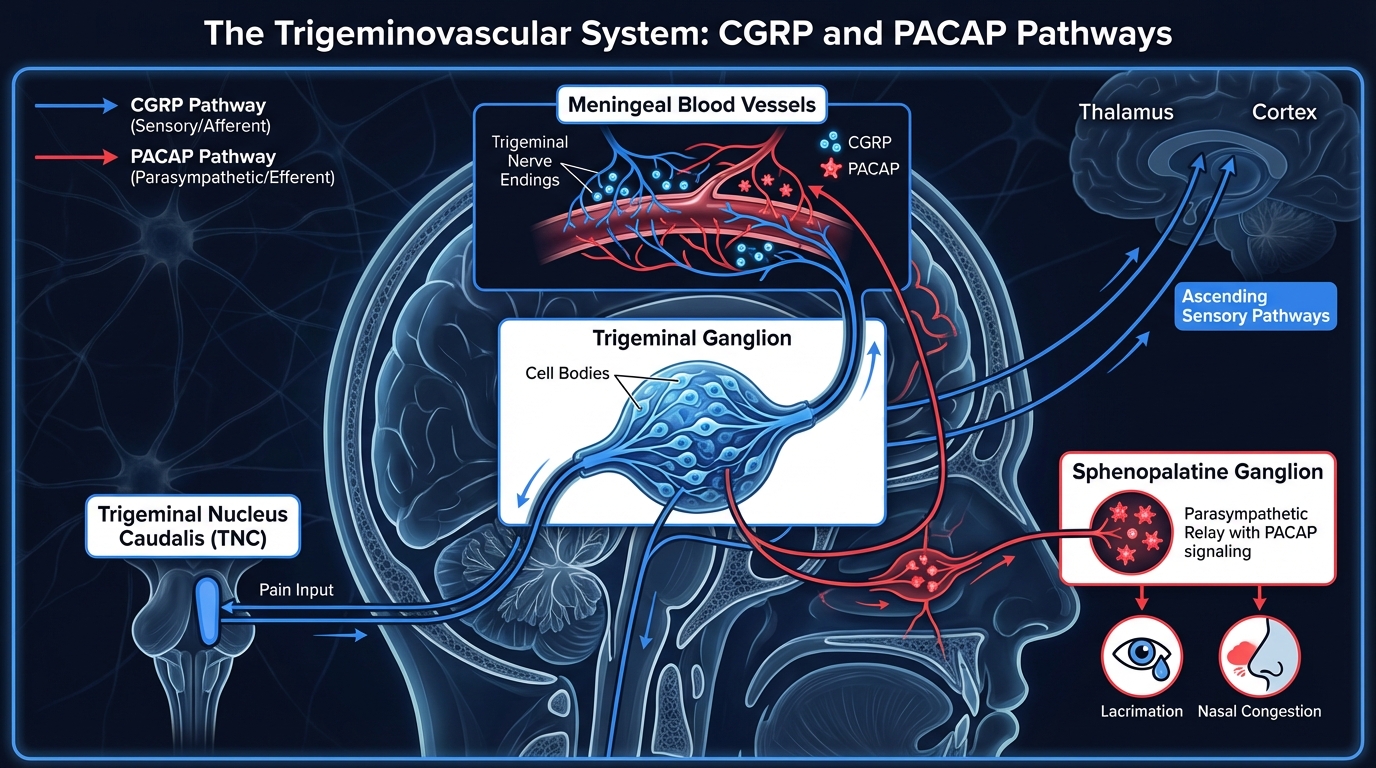 To understand why CGRP and PACAP matter, you need to understand the trigeminovascular system — the anatomical and functional network that generates and propagates migraine.
**Teaching Point:** The trigeminovascular system comprises three key elements: (1) the trigeminal ganglion, which houses the primary sensory neurons whose peripheral branches innervate the meninges and cerebral blood vessels, (2) the trigeminal nucleus caudalis (TNC) in the brainstem, which receives and processes nociceptive input from these neurons, and (3) higher-order thalamic and cortical networks that generate the conscious experience of headache and associated symptoms (PMID: 32192818).
### The CGRP Pathway
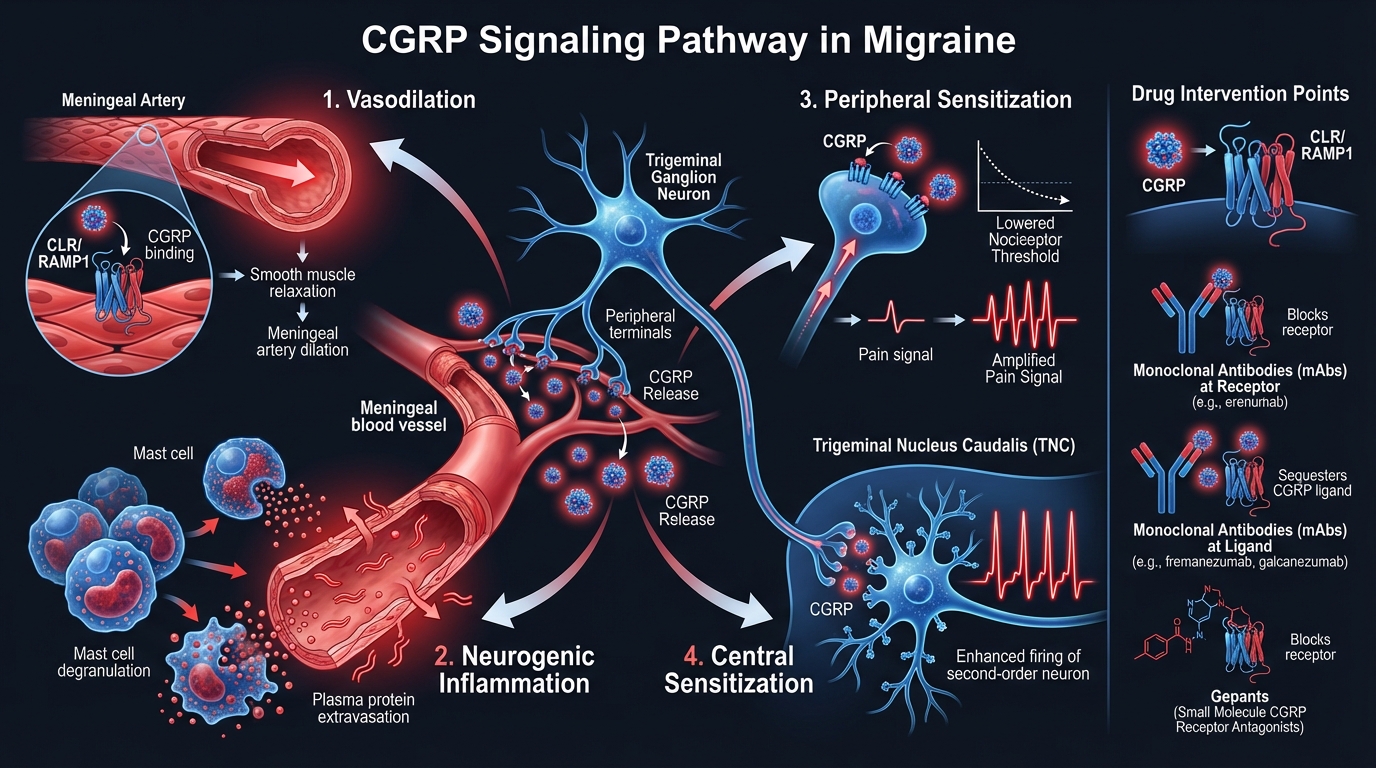
When the trigeminovascular system is activated — whether by cortical spreading depression, peripheral sensitization, or central mechanisms — trigeminal sensory neurons release CGRP from their peripheral terminals surrounding meningeal blood vessels. CGRP then:
1. **Causes vasodilation** of meningeal arteries via smooth muscle CGRP receptors (CLR/RAMP1 complex)
2. **Induces neurogenic inflammation** with mast cell degranulation and plasma protein extravasation
3. **Sensitizes peripheral nociceptors**, lowering the threshold for pain signaling
4. **Activates second-order neurons** in the TNC, driving central sensitization
**Nuance:** The vascular component of CGRP's action — vasodilation — was historically considered the primary mechanism. We now understand that the neurosensory effects (peripheral and central sensitization) are likely more important for migraine pain generation. This is supported by the observation that CGRP receptor antagonists relieve migraine pain without causing vasoconstriction, unlike triptans (PMID: 37998384, 35066541).
### The PACAP Pathway
PACAP exists in two biologically active forms: PACAP-38 (38 amino acids) and PACAP-27 (27 amino acids). Only PACAP-38 reliably triggers migraine when infused intravenously. PACAP signals through three receptors:
- **PAC1** — specific to PACAP; highly expressed in parasympathetic ganglia (sphenopalatine and otic ganglia), trigeminal ganglion, and brain regions involved in migraine
- **VPAC1 and VPAC2** — shared with vasoactive intestinal peptide (VIP); widely distributed
**Decision Point:** The receptor specificity matters clinically. VIP infusion does *not* trigger migraine despite binding VPAC1/VPAC2, which strongly suggests that PAC1 is the migraine-relevant receptor (PMID: 36481434). This has directed drug development toward PAC1-specific or PACAP-specific approaches rather than broad VPAC antagonists.
**Teaching Point:** A critical difference between CGRP and PACAP pathways: CGRP operates predominantly within the trigeminal sensory system (afferent pathway), while PACAP operates predominantly within the parasympathetic system (efferent pathway) — particularly the sphenopalatine ganglion, which mediates the autonomic symptoms of migraine (lacrimation, nasal congestion, facial flushing) (PMID: 40931761, 33840777). This dual-pathway model explains why some patients have prominent autonomic features and may preferentially respond to PACAP-targeted therapy.
**Say Out Loud:** "CGRP and PACAP are not redundant pathways. They are parallel, independent systems that both contribute to migraine. Blocking one doesn't necessarily block the other."
---
## Section 3: CGRP-Targeted Therapies — The Current Standard
**Duration:** 15 min | **Content Tier: MUST ACT**
To understand why CGRP and PACAP matter, you need to understand the trigeminovascular system — the anatomical and functional network that generates and propagates migraine.
**Teaching Point:** The trigeminovascular system comprises three key elements: (1) the trigeminal ganglion, which houses the primary sensory neurons whose peripheral branches innervate the meninges and cerebral blood vessels, (2) the trigeminal nucleus caudalis (TNC) in the brainstem, which receives and processes nociceptive input from these neurons, and (3) higher-order thalamic and cortical networks that generate the conscious experience of headache and associated symptoms (PMID: 32192818).
### The CGRP Pathway
When the trigeminovascular system is activated — whether by cortical spreading depression, peripheral sensitization, or central mechanisms — trigeminal sensory neurons release CGRP from their peripheral terminals surrounding meningeal blood vessels. CGRP then:
1. **Causes vasodilation** of meningeal arteries via smooth muscle CGRP receptors (CLR/RAMP1 complex)
2. **Induces neurogenic inflammation** with mast cell degranulation and plasma protein extravasation
3. **Sensitizes peripheral nociceptors**, lowering the threshold for pain signaling
4. **Activates second-order neurons** in the TNC, driving central sensitization
**Nuance:** The vascular component of CGRP's action — vasodilation — was historically considered the primary mechanism. We now understand that the neurosensory effects (peripheral and central sensitization) are likely more important for migraine pain generation. This is supported by the observation that CGRP receptor antagonists relieve migraine pain without causing vasoconstriction, unlike triptans (PMID: 37998384, 35066541).
### The PACAP Pathway
PACAP exists in two biologically active forms: PACAP-38 (38 amino acids) and PACAP-27 (27 amino acids). Only PACAP-38 reliably triggers migraine when infused intravenously. PACAP signals through three receptors:
- **PAC1** — specific to PACAP; highly expressed in parasympathetic ganglia (sphenopalatine and otic ganglia), trigeminal ganglion, and brain regions involved in migraine
- **VPAC1 and VPAC2** — shared with vasoactive intestinal peptide (VIP); widely distributed
**Decision Point:** The receptor specificity matters clinically. VIP infusion does *not* trigger migraine despite binding VPAC1/VPAC2, which strongly suggests that PAC1 is the migraine-relevant receptor (PMID: 36481434). This has directed drug development toward PAC1-specific or PACAP-specific approaches rather than broad VPAC antagonists.
**Teaching Point:** A critical difference between CGRP and PACAP pathways: CGRP operates predominantly within the trigeminal sensory system (afferent pathway), while PACAP operates predominantly within the parasympathetic system (efferent pathway) — particularly the sphenopalatine ganglion, which mediates the autonomic symptoms of migraine (lacrimation, nasal congestion, facial flushing) (PMID: 40931761, 33840777). This dual-pathway model explains why some patients have prominent autonomic features and may preferentially respond to PACAP-targeted therapy.
**Say Out Loud:** "CGRP and PACAP are not redundant pathways. They are parallel, independent systems that both contribute to migraine. Blocking one doesn't necessarily block the other."
---
## Section 3: CGRP-Targeted Therapies — The Current Standard
**Duration:** 15 min | **Content Tier: MUST ACT**
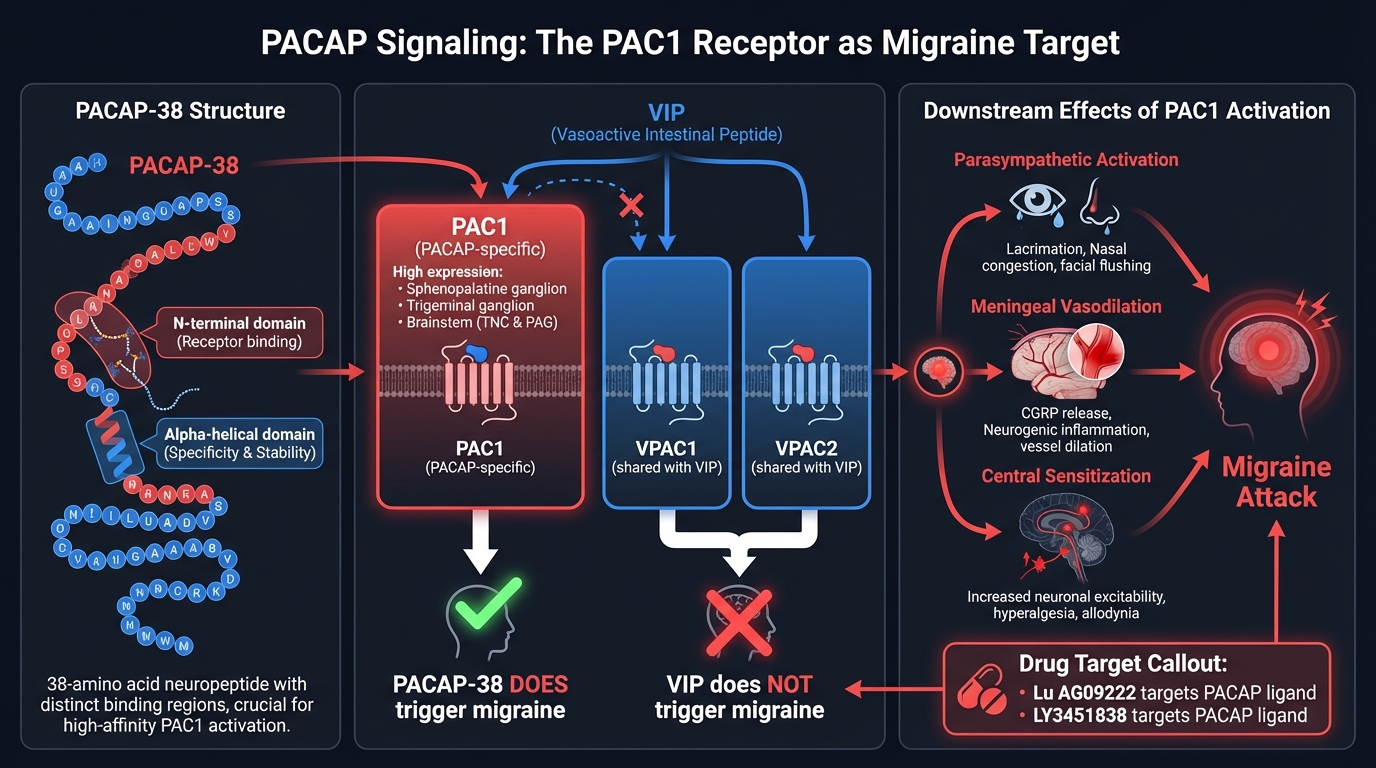 **MUST ACT:** CGRP-targeted therapies have transformed migraine management. There are two classes: monoclonal antibodies (mAbs) that target CGRP or its receptor, and small-molecule CGRP receptor antagonists (gepants). Every clinician managing migraine patients must understand when and how to use these agents.
### Monoclonal Antibodies
Four CGRP-pathway mAbs are approved for migraine prevention:
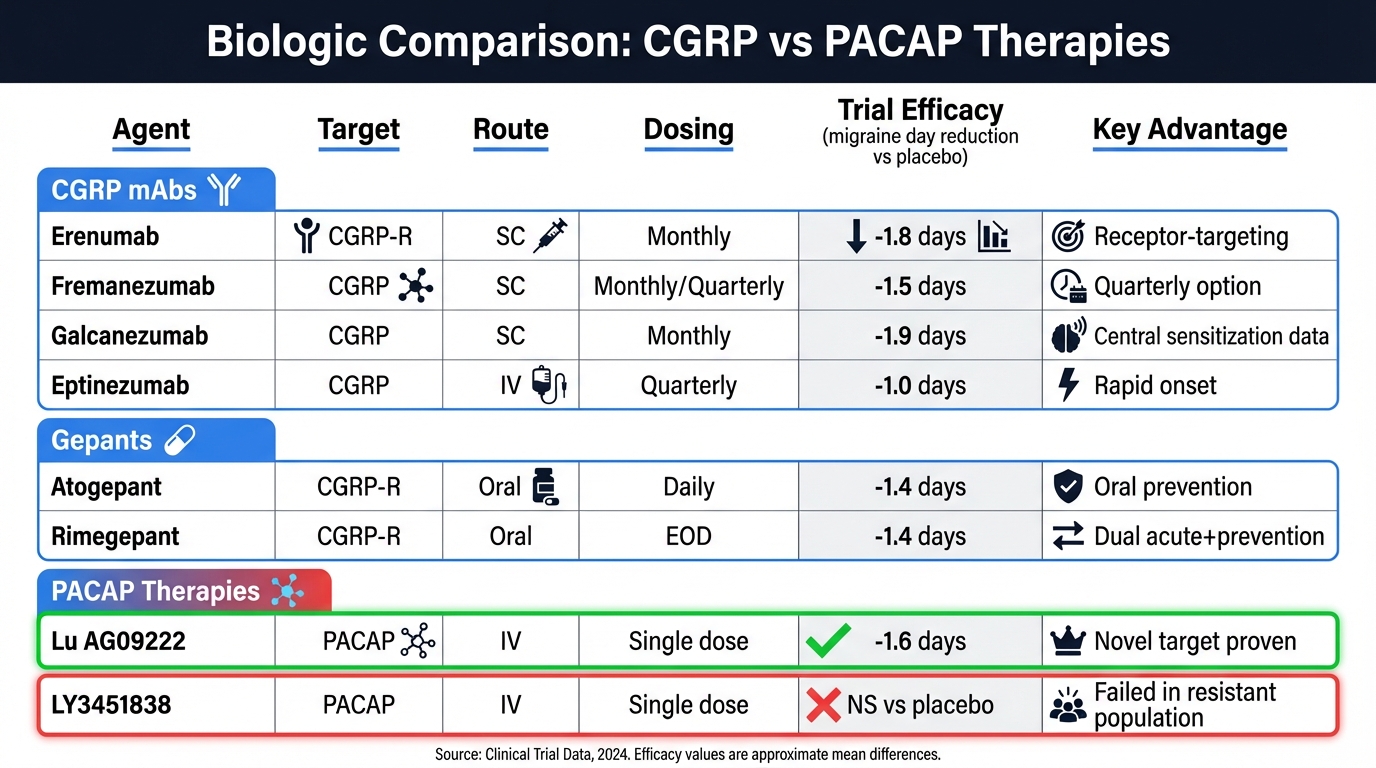
| Agent | Target | Route | Dosing | Key Trial |
|-------|--------|-------|--------|-----------|
| Erenumab | CGRP receptor | SC | 70-140 mg monthly | ARISE, STRIVE |
| Fremanezumab | CGRP ligand | SC | 225 mg monthly or 675 mg quarterly | HALO |
| Galcanezumab | CGRP ligand | SC | 120 mg monthly (240 mg loading) | EVOLVE-1/2 |
| Eptinezumab | CGRP ligand | IV | 100-300 mg quarterly | PROMISE-1/2 |
**Teaching Point:** The mAbs share several favorable properties: long half-lives allowing monthly or quarterly dosing, minimal drug interactions (they are not metabolized by CYP450 enzymes), no hepatotoxicity monitoring required, and no evidence of medication-overuse headache. Their tolerability profiles are generally excellent, with injection-site reactions and constipation being the most common adverse effects (PMID: 35690723).
**Nuance:** Despite their shared mechanism, the mAbs are not identical. Erenumab targets the CGRP receptor rather than the ligand, which may have theoretical advantages in blocking both CGRP-alpha and CGRP-beta signaling. Eptinezumab is the only IV formulation, offering rapid onset (significant efficacy within 24 hours in some trials) — making it potentially useful for patients requiring fast preventive coverage. Danno et al. demonstrated that galcanezumab significantly reduced central sensitization markers, suggesting that CGRP mAbs may have disease-modifying properties beyond simple symptom suppression (PMID: 39294310).
### Gepants — Small-Molecule CGRP Receptor Antagonists
Gepants represent a paradigm shift because they serve dual roles — both acute treatment and prevention — in a single medication class:
- **Ubrogepant** (acute): 50-100 mg PO, onset within 2 hours
- **Rimegepant** (acute + preventive): 75 mg PO, can be used every-other-day for prevention
- **Atogepant** (preventive): 30-60 mg daily
**Teaching Point:** Goadsby et al. in the landmark phase 2b/3 trial of atogepant demonstrated statistically significant and clinically meaningful reductions in mean monthly migraine days across all doses (10 mg, 30 mg, 60 mg) versus placebo. The 60 mg dose reduced migraine days by 3.9 days compared to 2.5 for placebo (p<0.0001). The safety profile was favorable, with nausea (up to 12%) being the most common adverse event (PMID: 32822633).
**Decision Point:** When should you choose a mAb versus a gepant for prevention?
| Factor | Favors mAb | Favors Gepant |
|--------|------------|---------------|
| Adherence concerns | Monthly/quarterly injection | Daily oral dosing |
| Onset speed needed | Eptinezumab (IV, fast) | Gradual over weeks |
| Dual acute + prevention | Not applicable | Rimegepant |
| Drug interactions | Minimal | Minimal |
| Cost | Higher (biologics) | Variable |
| Patient preference | Set-and-forget | Daily pill |
| Hepatic concerns | No monitoring | Some monitoring (atogepant) |
### CGRP Therapy for Medication Overuse Headache
**MUST ACT:** One of the most impactful applications of CGRP mAbs is in medication overuse headache (MOH). Traditionally, MOH required withdrawal of the overused analgesic — a process that is painful, disruptive, and has high relapse rates. CGRP mAbs offer a new paradigm: starting preventive therapy *without* mandating medication withdrawal.
Sirilertmekasakul et al. conducted a systematic review and meta-analysis of phase 3 RCTs examining the transition from medication overuse status to non-overuse status after receiving anti-CGRP monoclonal antibodies. The analysis demonstrated that CGRP mAbs significantly increased the probability of transitioning out of medication overuse, across all categories of overused acute medications — triptans, NSAIDs, and combination analgesics (PMID: 38564060).
**Say Out Loud:** "If your patient has chronic migraine with medication overuse, you do not have to make them stop their acute medication first. Start a CGRP mAb, and the overuse often resolves on its own as migraine frequency decreases."
**Audience Poll:** Which CGRP-targeted therapy are you most familiar with?
- A) Erenumab (Aimovig)
- B) Fremanezumab (Ajovy)
- C) Galcanezumab (Emgality)
- D) A gepant (ubrogepant, rimegepant, or atogepant)
- E) None of the above
---
## Section 4: Beyond CGRP — PACAP as a Novel Therapeutic Target
**Duration:** 15 min | **Content Tier: Teaching Point**
**MUST ACT:** CGRP-targeted therapies have transformed migraine management. There are two classes: monoclonal antibodies (mAbs) that target CGRP or its receptor, and small-molecule CGRP receptor antagonists (gepants). Every clinician managing migraine patients must understand when and how to use these agents.
### Monoclonal Antibodies
Four CGRP-pathway mAbs are approved for migraine prevention:
| Agent | Target | Route | Dosing | Key Trial |
|-------|--------|-------|--------|-----------|
| Erenumab | CGRP receptor | SC | 70-140 mg monthly | ARISE, STRIVE |
| Fremanezumab | CGRP ligand | SC | 225 mg monthly or 675 mg quarterly | HALO |
| Galcanezumab | CGRP ligand | SC | 120 mg monthly (240 mg loading) | EVOLVE-1/2 |
| Eptinezumab | CGRP ligand | IV | 100-300 mg quarterly | PROMISE-1/2 |
**Teaching Point:** The mAbs share several favorable properties: long half-lives allowing monthly or quarterly dosing, minimal drug interactions (they are not metabolized by CYP450 enzymes), no hepatotoxicity monitoring required, and no evidence of medication-overuse headache. Their tolerability profiles are generally excellent, with injection-site reactions and constipation being the most common adverse effects (PMID: 35690723).
**Nuance:** Despite their shared mechanism, the mAbs are not identical. Erenumab targets the CGRP receptor rather than the ligand, which may have theoretical advantages in blocking both CGRP-alpha and CGRP-beta signaling. Eptinezumab is the only IV formulation, offering rapid onset (significant efficacy within 24 hours in some trials) — making it potentially useful for patients requiring fast preventive coverage. Danno et al. demonstrated that galcanezumab significantly reduced central sensitization markers, suggesting that CGRP mAbs may have disease-modifying properties beyond simple symptom suppression (PMID: 39294310).
### Gepants — Small-Molecule CGRP Receptor Antagonists
Gepants represent a paradigm shift because they serve dual roles — both acute treatment and prevention — in a single medication class:
- **Ubrogepant** (acute): 50-100 mg PO, onset within 2 hours
- **Rimegepant** (acute + preventive): 75 mg PO, can be used every-other-day for prevention
- **Atogepant** (preventive): 30-60 mg daily
**Teaching Point:** Goadsby et al. in the landmark phase 2b/3 trial of atogepant demonstrated statistically significant and clinically meaningful reductions in mean monthly migraine days across all doses (10 mg, 30 mg, 60 mg) versus placebo. The 60 mg dose reduced migraine days by 3.9 days compared to 2.5 for placebo (p<0.0001). The safety profile was favorable, with nausea (up to 12%) being the most common adverse event (PMID: 32822633).
**Decision Point:** When should you choose a mAb versus a gepant for prevention?
| Factor | Favors mAb | Favors Gepant |
|--------|------------|---------------|
| Adherence concerns | Monthly/quarterly injection | Daily oral dosing |
| Onset speed needed | Eptinezumab (IV, fast) | Gradual over weeks |
| Dual acute + prevention | Not applicable | Rimegepant |
| Drug interactions | Minimal | Minimal |
| Cost | Higher (biologics) | Variable |
| Patient preference | Set-and-forget | Daily pill |
| Hepatic concerns | No monitoring | Some monitoring (atogepant) |
### CGRP Therapy for Medication Overuse Headache
**MUST ACT:** One of the most impactful applications of CGRP mAbs is in medication overuse headache (MOH). Traditionally, MOH required withdrawal of the overused analgesic — a process that is painful, disruptive, and has high relapse rates. CGRP mAbs offer a new paradigm: starting preventive therapy *without* mandating medication withdrawal.
Sirilertmekasakul et al. conducted a systematic review and meta-analysis of phase 3 RCTs examining the transition from medication overuse status to non-overuse status after receiving anti-CGRP monoclonal antibodies. The analysis demonstrated that CGRP mAbs significantly increased the probability of transitioning out of medication overuse, across all categories of overused acute medications — triptans, NSAIDs, and combination analgesics (PMID: 38564060).
**Say Out Loud:** "If your patient has chronic migraine with medication overuse, you do not have to make them stop their acute medication first. Start a CGRP mAb, and the overuse often resolves on its own as migraine frequency decreases."
**Audience Poll:** Which CGRP-targeted therapy are you most familiar with?
- A) Erenumab (Aimovig)
- B) Fremanezumab (Ajovy)
- C) Galcanezumab (Emgality)
- D) A gepant (ubrogepant, rimegepant, or atogepant)
- E) None of the above
---
## Section 4: Beyond CGRP — PACAP as a Novel Therapeutic Target
**Duration:** 15 min | **Content Tier: Teaching Point**
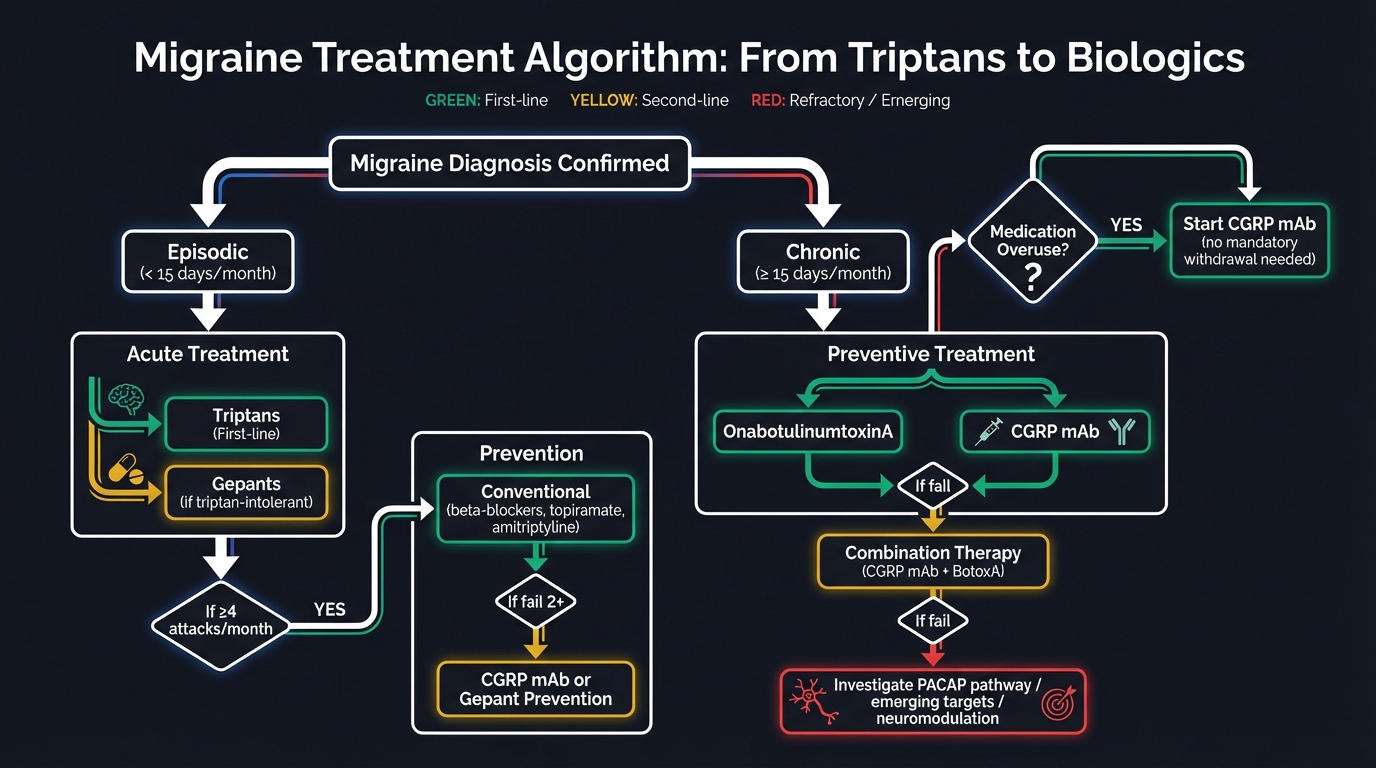 The success of CGRP-targeted therapy naturally raised the question: are there other neuropeptides that could serve as therapeutic targets? PACAP emerged as the leading candidate, supported by three key observations:
1. **PACAP-38 infusion triggers migraine** in susceptible individuals with a latency of several hours — suggesting a mechanism distinct from CGRP's more rapid onset
2. **Plasma PACAP levels are elevated** during spontaneous migraine attacks, particularly during the ictal phase
3. **PACAP-38, but not VIP, triggers migraine** — implicating the PAC1 receptor specifically rather than VPAC1/VPAC2 receptors shared with VIP
**Teaching Point:** Al-Hassany et al. provided an excellent overview of future targets beyond CGRP, identifying PACAP/PAC1, glutamate receptors, orexin receptors, and delta opioid receptors as the most promising candidates. They emphasized that PACAP stands out because of its provocation study data and its role in parasympathetic pathways that may be particularly relevant to patients with prominent cranial autonomic symptoms (PMID: 37370051).
### The Unique Role of PACAP in Parasympathetic Pathways
**Nuance:** Pellesi et al. expanded the therapeutic scope of PACAP targeting beyond migraine to cluster headache, menstrual migraine, and post-traumatic headache. Their review highlighted that PACAP is abundantly expressed in the sphenopalatine ganglion — a key relay in the trigeminal-autonomic reflex — and that PACAP levels correlate with the severity of autonomic symptoms during attacks. This suggests that PACAP antagonists could be particularly effective for trigeminal autonomic cephalalgias and migraine subtypes with prominent autonomic features (PMID: 40100309).
**Teaching Point:** Rees et al. identified an important but often overlooked complexity: the CGRP receptor and PAC1 receptor both exist as multiple splice variants with different signaling properties and tissue distributions. The therapeutic implications are significant — a drug designed against one splice variant may have limited efficacy against another. This "blind spot" in migraine research may partly explain why some patients respond to CGRP therapy and others do not, and may also influence the design of PACAP-targeted drugs (PMID: 37543479).
### The Lu AG09222 Trial — A Breakthrough
The most exciting development in PACAP-targeted therapy came from the phase 2 trial of Lu AG09222, a monoclonal antibody targeting PACAP, published in the New England Journal of Medicine by Ashina et al.
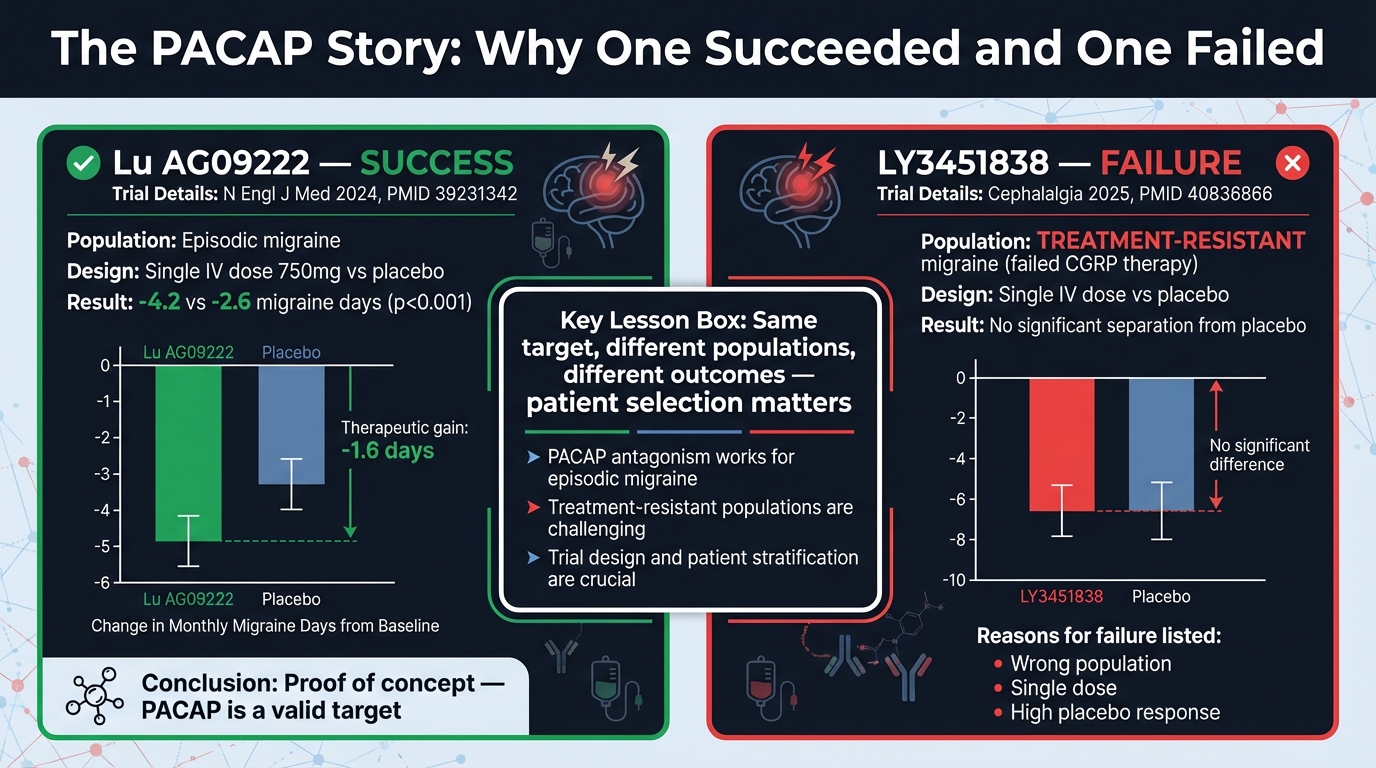
**Trial Design:** Randomized, double-blind, placebo-controlled trial in adults with episodic migraine (4-14 migraine days per month). Participants received a single intravenous dose of Lu AG09222 (750 mg) or placebo and were followed for 12 weeks.
**Primary Outcome:** Change from baseline in mean monthly migraine days over weeks 1-4.
**Key Results:**
- Lu AG09222 reduced monthly migraine days by **-4.2 days** vs **-2.6 days** for placebo (difference: -1.6 days, p<0.001)
- The therapeutic gain (difference from placebo) was maintained through week 12
- The most common adverse events were injection-site reactions and upper respiratory tract infections
- No serious safety signals were identified
**Teaching Point:** This trial is landmark for two reasons. First, it provides proof-of-concept that targeting PACAP — independent of CGRP — is effective for migraine prevention. Second, the magnitude of the therapeutic gain (-1.6 days) is comparable to early CGRP mAb trials, suggesting that PACAP antagonism has genuine clinical potential (PMID: 39231342).
**Say Out Loud:** "Lu AG09222 proved that PACAP is not just a research curiosity — it is a validated therapeutic target. For the first time, we have a non-CGRP biologic that works for migraine prevention."
---
## Section 5: The LY3451838 Story — Learning from Failure
**Duration:** 15 min | **Content Tier: Nuance**
The success of CGRP-targeted therapy naturally raised the question: are there other neuropeptides that could serve as therapeutic targets? PACAP emerged as the leading candidate, supported by three key observations:
1. **PACAP-38 infusion triggers migraine** in susceptible individuals with a latency of several hours — suggesting a mechanism distinct from CGRP's more rapid onset
2. **Plasma PACAP levels are elevated** during spontaneous migraine attacks, particularly during the ictal phase
3. **PACAP-38, but not VIP, triggers migraine** — implicating the PAC1 receptor specifically rather than VPAC1/VPAC2 receptors shared with VIP
**Teaching Point:** Al-Hassany et al. provided an excellent overview of future targets beyond CGRP, identifying PACAP/PAC1, glutamate receptors, orexin receptors, and delta opioid receptors as the most promising candidates. They emphasized that PACAP stands out because of its provocation study data and its role in parasympathetic pathways that may be particularly relevant to patients with prominent cranial autonomic symptoms (PMID: 37370051).
### The Unique Role of PACAP in Parasympathetic Pathways
**Nuance:** Pellesi et al. expanded the therapeutic scope of PACAP targeting beyond migraine to cluster headache, menstrual migraine, and post-traumatic headache. Their review highlighted that PACAP is abundantly expressed in the sphenopalatine ganglion — a key relay in the trigeminal-autonomic reflex — and that PACAP levels correlate with the severity of autonomic symptoms during attacks. This suggests that PACAP antagonists could be particularly effective for trigeminal autonomic cephalalgias and migraine subtypes with prominent autonomic features (PMID: 40100309).
**Teaching Point:** Rees et al. identified an important but often overlooked complexity: the CGRP receptor and PAC1 receptor both exist as multiple splice variants with different signaling properties and tissue distributions. The therapeutic implications are significant — a drug designed against one splice variant may have limited efficacy against another. This "blind spot" in migraine research may partly explain why some patients respond to CGRP therapy and others do not, and may also influence the design of PACAP-targeted drugs (PMID: 37543479).
### The Lu AG09222 Trial — A Breakthrough
The most exciting development in PACAP-targeted therapy came from the phase 2 trial of Lu AG09222, a monoclonal antibody targeting PACAP, published in the New England Journal of Medicine by Ashina et al.
**Trial Design:** Randomized, double-blind, placebo-controlled trial in adults with episodic migraine (4-14 migraine days per month). Participants received a single intravenous dose of Lu AG09222 (750 mg) or placebo and were followed for 12 weeks.
**Primary Outcome:** Change from baseline in mean monthly migraine days over weeks 1-4.
**Key Results:**
- Lu AG09222 reduced monthly migraine days by **-4.2 days** vs **-2.6 days** for placebo (difference: -1.6 days, p<0.001)
- The therapeutic gain (difference from placebo) was maintained through week 12
- The most common adverse events were injection-site reactions and upper respiratory tract infections
- No serious safety signals were identified
**Teaching Point:** This trial is landmark for two reasons. First, it provides proof-of-concept that targeting PACAP — independent of CGRP — is effective for migraine prevention. Second, the magnitude of the therapeutic gain (-1.6 days) is comparable to early CGRP mAb trials, suggesting that PACAP antagonism has genuine clinical potential (PMID: 39231342).
**Say Out Loud:** "Lu AG09222 proved that PACAP is not just a research curiosity — it is a validated therapeutic target. For the first time, we have a non-CGRP biologic that works for migraine prevention."
---
## Section 5: The LY3451838 Story — Learning from Failure
**Duration:** 15 min | **Content Tier: Nuance**
 Not all PACAP-targeted therapies have succeeded. The story of LY3451838 is as instructive as the success of Lu AG09222 — perhaps more so.
**Nuance:** Johnson et al. published the comprehensive preclinical and clinical evaluation of LY3451838, a PACAP-neutralizing monoclonal antibody developed by Eli Lilly, in Cephalalgia. The program included phase 1 (healthy volunteers) and phase 2 (treatment-resistant migraine) studies.
### What Happened
**Phase 1 Results:** LY3451838 was safe and well-tolerated in healthy adults. It demonstrated excellent pharmacokinetic properties with a long half-life suitable for monthly or quarterly dosing. Importantly, it successfully neutralized PACAP-38 in a provocation study — blocking PACAP-38-induced vasodilation in healthy volunteers.
**Phase 2 Results:** In adults with treatment-resistant migraine (defined as failure of at least two prior preventive medications, including at least one CGRP-targeted therapy), LY3451838 *failed to demonstrate efficacy*. The primary endpoint — change in monthly migraine headache days — did not show statistically significant separation from placebo (PMID: 40836866).
### Why Did It Fail?
**Decision Point:** There are several possible explanations, and understanding them is crucial for future drug development:
1. **Population selection:** The trial enrolled treatment-resistant patients who had already failed CGRP therapy. This may represent a population in whom migraine is driven by neither CGRP nor PACAP, but by other mechanisms entirely (glutamate, orexin, or other pathways).
2. **Dose selection:** The phase 2 trial used a single IV dose. It is possible that sustained PACAP neutralization over multiple doses is required for efficacy, as seen with CGRP mAbs where treatment effect builds over months.
3. **PACAP-38 versus PACAP-27 neutralization:** LY3451838 was designed to neutralize PACAP-38 but also binds PACAP-27. If PACAP-27 has protective or compensatory roles, neutralizing it could attenuate the therapeutic benefit.
4. **PAC1 receptor versus ligand:** Lu AG09222 also targets the PACAP ligand, yet it succeeded. The critical difference may be the trial population — Lu AG09222 was tested in a general episodic migraine population, not treatment-resistant patients.
5. **Sample size:** The phase 2 study may have been underpowered to detect a treatment effect in a highly refractory population with substantial placebo response rates.
**Teaching Point:** The contrast between Lu AG09222 and LY3451838 illustrates a fundamental principle of clinical trial design: *the same drug class can succeed or fail depending on population selection, dosing strategy, and trial design*. The PACAP pathway remains a valid target — but identifying which patients will respond requires biomarker development and more refined phenotyping (PMID: 40836866).
**Nuance:** Dominguez-Moreno et al. emphasized that the field should not interpret the LY3451838 failure as evidence against PACAP as a target. Rather, it highlights the need for predictive biomarkers — perhaps serum PACAP levels, genetic PAC1 receptor variants, or autonomic symptom burden — to identify patients most likely to benefit from PACAP-targeted therapy (PMID: 35066541).
**Audience Poll:** How should the failure of LY3451838 influence your view of PACAP as a therapeutic target?
- A) PACAP is no longer a viable target — the trial failed
- B) The target is valid, but the trial design was flawed
- C) We need biomarkers to identify the right patients
- D) Both B and C
---
## Section 6: Current Guidelines and Treatment Integration
**Duration:** 10 min | **Content Tier: MUST ACT**
**MUST ACT:** With the expansion of the therapeutic armamentarium, clinicians need clear guidance on how to integrate these new therapies into practice. Several major guidelines have been updated recently.
### International Headache Society (IHS) Guidelines — 2024
Puledda et al. published the IHS global practice recommendations for both acute and preventive pharmacological treatment of migraine. Key recommendations include:
- **Acute treatment:** Triptans remain first-line for moderate-to-severe migraine attacks. Gepants (ubrogepant, rimegepant) are recommended as alternatives for patients who cannot tolerate or have contraindications to triptans (cardiovascular disease, uncontrolled hypertension) (PMID: 39133176).
- **Preventive treatment:** CGRP mAbs are positioned as options after failure of at least one conventional preventive (beta-blocker, anticonvulsant, or antidepressant), though the guidelines acknowledge that some experts advocate for earlier use in patients with high disease burden (PMID: 39262214).
### American College of Physicians (ACP) Guidelines — 2025
Qaseem et al. provided updated ACP guidelines for episodic migraine prevention in outpatient settings. The key recommendation was to initiate monotherapy with one of the approved preventive agents, with shared decision-making between clinician and patient regarding agent selection. The evidence for CGRP mAbs was rated as low-certainty but with conditional strength of recommendation — reflecting the relatively short follow-up duration in pivotal trials (PMID: 39899861).
For acute treatment, the ACP recommended triptans as first-line, with gepants as second-line options. NSAIDs were recommended for mild-to-moderate attacks (PMID: 40096690).
### European Headache Federation (EHF) Guidelines — 2022 Update
Sacco et al. updated the EHF guideline on CGRP mAb use, establishing clear criteria for initiation, response assessment, and discontinuation. Key recommendations include:
- **Initiation criteria:** Failure of at least two preventive medications from different pharmacological classes
- **Response assessment:** Evaluate at 3 months; continue if ≥50% reduction in monthly migraine days (episodic) or ≥30% reduction (chronic migraine)
- **Discontinuation trial:** After 6-12 months of good response, attempt a drug holiday to assess ongoing need (PMID: 35690723)
### Emergency Department Management
The American Headache Society's 2025 guideline update for acute migraine treatment in the emergency department provided updated evidence assessments for parenteral therapies. The review emphasized the role of metoclopramide, prochlorperazine, and ketorolac as first-line parenteral agents, while noting that subcutaneous sumatriptan remains effective when oral route is not feasible (PMID: 41321235).
**Teaching Point:** The VA/DoD Clinical Practice Guideline for headache management (2024) provides a useful stepped-care model: lifestyle modifications and acute treatment optimization first, then conventional preventives, then CGRP-targeted therapy for patients who fail conventional approaches (PMID: 39467289).
**Say Out Loud:** "The guidelines are converging: triptans first for acute, conventional preventives first for prevention, CGRP therapies when those fail. But the conversation is shifting toward earlier CGRP therapy access for patients with high disease burden."
---
## Section 7: Comparison of Biologics and Emerging Agents
**Duration:** 10 min | **Content Tier: Teaching Point**
Not all PACAP-targeted therapies have succeeded. The story of LY3451838 is as instructive as the success of Lu AG09222 — perhaps more so.
**Nuance:** Johnson et al. published the comprehensive preclinical and clinical evaluation of LY3451838, a PACAP-neutralizing monoclonal antibody developed by Eli Lilly, in Cephalalgia. The program included phase 1 (healthy volunteers) and phase 2 (treatment-resistant migraine) studies.
### What Happened
**Phase 1 Results:** LY3451838 was safe and well-tolerated in healthy adults. It demonstrated excellent pharmacokinetic properties with a long half-life suitable for monthly or quarterly dosing. Importantly, it successfully neutralized PACAP-38 in a provocation study — blocking PACAP-38-induced vasodilation in healthy volunteers.
**Phase 2 Results:** In adults with treatment-resistant migraine (defined as failure of at least two prior preventive medications, including at least one CGRP-targeted therapy), LY3451838 *failed to demonstrate efficacy*. The primary endpoint — change in monthly migraine headache days — did not show statistically significant separation from placebo (PMID: 40836866).
### Why Did It Fail?
**Decision Point:** There are several possible explanations, and understanding them is crucial for future drug development:
1. **Population selection:** The trial enrolled treatment-resistant patients who had already failed CGRP therapy. This may represent a population in whom migraine is driven by neither CGRP nor PACAP, but by other mechanisms entirely (glutamate, orexin, or other pathways).
2. **Dose selection:** The phase 2 trial used a single IV dose. It is possible that sustained PACAP neutralization over multiple doses is required for efficacy, as seen with CGRP mAbs where treatment effect builds over months.
3. **PACAP-38 versus PACAP-27 neutralization:** LY3451838 was designed to neutralize PACAP-38 but also binds PACAP-27. If PACAP-27 has protective or compensatory roles, neutralizing it could attenuate the therapeutic benefit.
4. **PAC1 receptor versus ligand:** Lu AG09222 also targets the PACAP ligand, yet it succeeded. The critical difference may be the trial population — Lu AG09222 was tested in a general episodic migraine population, not treatment-resistant patients.
5. **Sample size:** The phase 2 study may have been underpowered to detect a treatment effect in a highly refractory population with substantial placebo response rates.
**Teaching Point:** The contrast between Lu AG09222 and LY3451838 illustrates a fundamental principle of clinical trial design: *the same drug class can succeed or fail depending on population selection, dosing strategy, and trial design*. The PACAP pathway remains a valid target — but identifying which patients will respond requires biomarker development and more refined phenotyping (PMID: 40836866).
**Nuance:** Dominguez-Moreno et al. emphasized that the field should not interpret the LY3451838 failure as evidence against PACAP as a target. Rather, it highlights the need for predictive biomarkers — perhaps serum PACAP levels, genetic PAC1 receptor variants, or autonomic symptom burden — to identify patients most likely to benefit from PACAP-targeted therapy (PMID: 35066541).
**Audience Poll:** How should the failure of LY3451838 influence your view of PACAP as a therapeutic target?
- A) PACAP is no longer a viable target — the trial failed
- B) The target is valid, but the trial design was flawed
- C) We need biomarkers to identify the right patients
- D) Both B and C
---
## Section 6: Current Guidelines and Treatment Integration
**Duration:** 10 min | **Content Tier: MUST ACT**
**MUST ACT:** With the expansion of the therapeutic armamentarium, clinicians need clear guidance on how to integrate these new therapies into practice. Several major guidelines have been updated recently.
### International Headache Society (IHS) Guidelines — 2024
Puledda et al. published the IHS global practice recommendations for both acute and preventive pharmacological treatment of migraine. Key recommendations include:
- **Acute treatment:** Triptans remain first-line for moderate-to-severe migraine attacks. Gepants (ubrogepant, rimegepant) are recommended as alternatives for patients who cannot tolerate or have contraindications to triptans (cardiovascular disease, uncontrolled hypertension) (PMID: 39133176).
- **Preventive treatment:** CGRP mAbs are positioned as options after failure of at least one conventional preventive (beta-blocker, anticonvulsant, or antidepressant), though the guidelines acknowledge that some experts advocate for earlier use in patients with high disease burden (PMID: 39262214).
### American College of Physicians (ACP) Guidelines — 2025
Qaseem et al. provided updated ACP guidelines for episodic migraine prevention in outpatient settings. The key recommendation was to initiate monotherapy with one of the approved preventive agents, with shared decision-making between clinician and patient regarding agent selection. The evidence for CGRP mAbs was rated as low-certainty but with conditional strength of recommendation — reflecting the relatively short follow-up duration in pivotal trials (PMID: 39899861).
For acute treatment, the ACP recommended triptans as first-line, with gepants as second-line options. NSAIDs were recommended for mild-to-moderate attacks (PMID: 40096690).
### European Headache Federation (EHF) Guidelines — 2022 Update
Sacco et al. updated the EHF guideline on CGRP mAb use, establishing clear criteria for initiation, response assessment, and discontinuation. Key recommendations include:
- **Initiation criteria:** Failure of at least two preventive medications from different pharmacological classes
- **Response assessment:** Evaluate at 3 months; continue if ≥50% reduction in monthly migraine days (episodic) or ≥30% reduction (chronic migraine)
- **Discontinuation trial:** After 6-12 months of good response, attempt a drug holiday to assess ongoing need (PMID: 35690723)
### Emergency Department Management
The American Headache Society's 2025 guideline update for acute migraine treatment in the emergency department provided updated evidence assessments for parenteral therapies. The review emphasized the role of metoclopramide, prochlorperazine, and ketorolac as first-line parenteral agents, while noting that subcutaneous sumatriptan remains effective when oral route is not feasible (PMID: 41321235).
**Teaching Point:** The VA/DoD Clinical Practice Guideline for headache management (2024) provides a useful stepped-care model: lifestyle modifications and acute treatment optimization first, then conventional preventives, then CGRP-targeted therapy for patients who fail conventional approaches (PMID: 39467289).
**Say Out Loud:** "The guidelines are converging: triptans first for acute, conventional preventives first for prevention, CGRP therapies when those fail. But the conversation is shifting toward earlier CGRP therapy access for patients with high disease burden."
---
## Section 7: Comparison of Biologics and Emerging Agents
**Duration:** 10 min | **Content Tier: Teaching Point**
 **Teaching Point:** Understanding how the various biologic agents compare — both CGRP-targeted and PACAP-targeted — is essential for informed prescribing and patient counseling.
### Head-to-Head: CGRP mAbs vs Traditional Preventives
Overeem et al. conducted an indirect comparison of topiramate versus CGRP mAbs for episodic migraine prophylaxis. The meta-analysis showed comparable efficacy between the two classes, but CGRP mAbs had significantly better tolerability profiles with lower discontinuation rates due to adverse events. This finding supports CGRP mAbs as a reasonable alternative for patients intolerant of traditional preventives (PMID: 34272688).
### Trial Efficacy Measures — A Critical Perspective
**Nuance:** Tfelt-Hansen et al. raised important concerns about how efficacy is presented in CGRP mAb trials. They noted that the commonly reported "50% responder rate" — the proportion of patients achieving ≥50% reduction in migraine days — can obscure meaningful differences in absolute migraine day reduction. They advocated for reporting mean change in migraine days and headache hours as primary outcomes, arguing that these measures are more clinically relevant and less susceptible to threshold effects (PMID: 31547694).
### Combination Therapy — The Next Frontier
Scuteri et al. proposed a clinical trial protocol examining the combination of CGRP mAbs (eptinezumab, erenumab) or atogepant with onabotulinumtoxinA in refractory chronic migraine. This approach reflects the clinical reality that many patients with chronic migraine have insufficient response to either monotherapy, and combination strategies targeting different mechanisms may provide additive benefit (PMID: 40169386).
### The Migraine-Depression Comorbidity
**Nuance:** Viudez-Martinez et al. explored the biological relationship between migraine and depression, identifying shared pathways involving serotonin, CGRP, PACAP, substance P, neuropeptide Y, and orexins. This has clinical implications: treatments targeting these shared pathways may benefit both conditions simultaneously. CGRP mAbs have shown improvement in patient-reported outcomes related to mood and function, though whether this reflects direct neurobiological effects or simply reduced migraine burden remains debated (PMID: 38397400).
---
## Clinical Cases
### Case 1: Chronic Migraine with Medication Overuse — The CGRP Transition
**Teaching Point:** Understanding how the various biologic agents compare — both CGRP-targeted and PACAP-targeted — is essential for informed prescribing and patient counseling.
### Head-to-Head: CGRP mAbs vs Traditional Preventives
Overeem et al. conducted an indirect comparison of topiramate versus CGRP mAbs for episodic migraine prophylaxis. The meta-analysis showed comparable efficacy between the two classes, but CGRP mAbs had significantly better tolerability profiles with lower discontinuation rates due to adverse events. This finding supports CGRP mAbs as a reasonable alternative for patients intolerant of traditional preventives (PMID: 34272688).
### Trial Efficacy Measures — A Critical Perspective
**Nuance:** Tfelt-Hansen et al. raised important concerns about how efficacy is presented in CGRP mAb trials. They noted that the commonly reported "50% responder rate" — the proportion of patients achieving ≥50% reduction in migraine days — can obscure meaningful differences in absolute migraine day reduction. They advocated for reporting mean change in migraine days and headache hours as primary outcomes, arguing that these measures are more clinically relevant and less susceptible to threshold effects (PMID: 31547694).
### Combination Therapy — The Next Frontier
Scuteri et al. proposed a clinical trial protocol examining the combination of CGRP mAbs (eptinezumab, erenumab) or atogepant with onabotulinumtoxinA in refractory chronic migraine. This approach reflects the clinical reality that many patients with chronic migraine have insufficient response to either monotherapy, and combination strategies targeting different mechanisms may provide additive benefit (PMID: 40169386).
### The Migraine-Depression Comorbidity
**Nuance:** Viudez-Martinez et al. explored the biological relationship between migraine and depression, identifying shared pathways involving serotonin, CGRP, PACAP, substance P, neuropeptide Y, and orexins. This has clinical implications: treatments targeting these shared pathways may benefit both conditions simultaneously. CGRP mAbs have shown improvement in patient-reported outcomes related to mood and function, though whether this reflects direct neurobiological effects or simply reduced migraine burden remains debated (PMID: 38397400).
---
## Clinical Cases
### Case 1: Chronic Migraine with Medication Overuse — The CGRP Transition
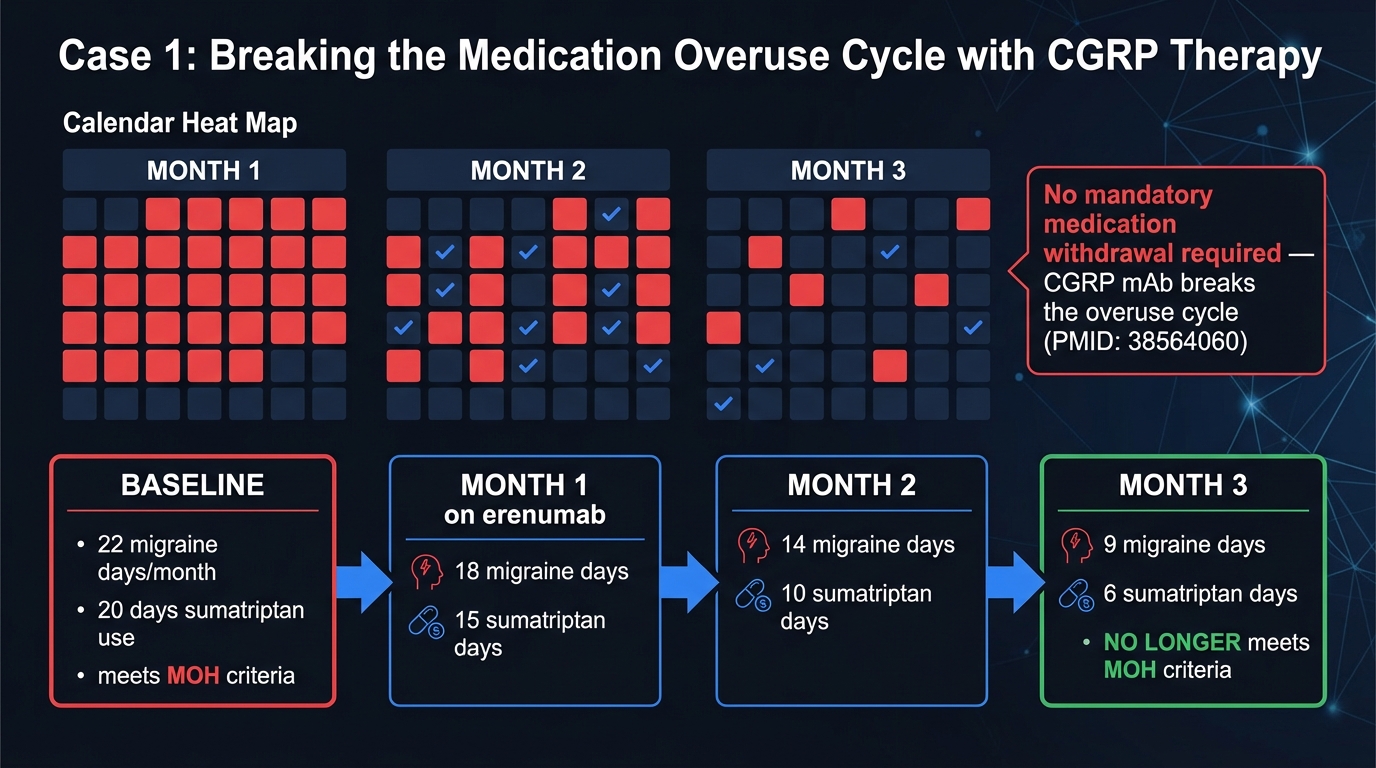 **Presentation:** A 45-year-old woman presents with daily headaches for the past 8 months. She has a 20-year history of episodic migraine that has progressively worsened. She is currently taking sumatriptan 100 mg on 18-20 days per month, plus over-the-counter analgesics (ibuprofen/acetaminophen combination) on the remaining days. She has tried and failed topiramate (cognitive side effects) and amitriptyline (weight gain). Her neurological examination is normal.
**Decision Point:** This patient meets criteria for chronic migraine (≥15 headache days/month for ≥3 months, with ≥8 meeting migraine criteria) *and* medication overuse headache (acute medication use ≥10 days/month for ≥3 months).
**Audience Poll:** What is your next step?
- A) Mandate withdrawal of all acute medications before starting preventive therapy
- B) Start a CGRP mAb while allowing continued acute medication use
- C) Add onabotulinumtoxinA (Botox)
- D) Refer to a headache specialist
**The Teaching:** Traditional teaching mandated acute medication withdrawal before starting preventive therapy. This approach is supported by the theory that medication overuse perpetuates headache through central sensitization and receptor upregulation. However, the meta-analysis by Sirilertmekasakul et al. demonstrated that CGRP mAbs effectively transition patients out of medication overuse *without* mandatory withdrawal. In the pooled analysis of phase 3 trials, patients receiving CGRP mAbs showed significant reductions in both acute medication use and headache frequency, with the overuse pattern resolving spontaneously as migraine frequency decreased (PMID: 38564060).
**Management:** Erenumab 140 mg SC monthly is started. The patient is counseled to continue her acute medications as needed but to aim for gradual reduction. At 3-month follow-up: migraine days have decreased from 22 to 9 per month, sumatriptan use has decreased from 20 to 6 days per month, and she no longer meets criteria for medication overuse.
**Key Teaching Point:** CGRP mAbs can break the cycle of medication overuse headache without the trauma of mandatory withdrawal. This has changed clinical practice for many headache specialists.
---
### Case 2: Episodic Migraine with Autonomic Features — A PACAP Candidate
**Presentation:** A 38-year-old man presents with episodic migraine averaging 10 attacks per month. Each attack features severe unilateral headache with prominent autonomic symptoms: ipsilateral lacrimation, nasal congestion, and facial flushing. He has trialed sumatriptan (effective but causes chest tightness), topiramate (failed), and erenumab 140 mg monthly for 6 months (reduced attacks from 10 to 7 per month — partial response).
**Teaching Point:** This patient's prominent cranial autonomic symptoms — lacrimation, congestion, facial flushing — suggest significant parasympathetic activation during attacks. The sphenopalatine ganglion, which mediates these symptoms, is rich in PACAP (PMID: 40100309). This clinical phenotype may represent the ideal candidate for PACAP-targeted therapy.
**The Discussion:** With only a partial response to CGRP therapy, several options exist:
1. **Switch to a different CGRP mAb** — ligand-targeting (galcanezumab, fremanezumab) vs receptor-targeting (erenumab)
2. **Add a gepant** for acute treatment (rimegepant)
3. **Consider combination therapy** — CGRP mAb + onabotulinumtoxinA
4. **Await PACAP-targeted therapy** — if Lu AG09222 progresses through phase 3
**Nuance:** Pietra et al. noted that in mouse models, PACAP-induced allodynia was *not blocked* by CGRP antagonism, supporting the hypothesis that patients with PACAP-driven migraine may not fully respond to CGRP therapy (PMID: 40931761). The autonomic phenotype could serve as a clinical biomarker for PACAP-pathway involvement.
---
### Case 3: Treatment-Resistant Migraine — When CGRP Fails
**Presentation:** A 52-year-old woman with chronic migraine (22 headache days/month) has failed multiple preventive therapies: topiramate, venlafaxine, erenumab (6 months), galcanezumab (4 months), and onabotulinumtoxinA (3 cycles). She is functional only 8 days per month. Her PHQ-9 score is 14 (moderately severe depression).
**Decision Point:** This patient represents the clinical reality for many headache specialists: true treatment resistance. What are the options?
**The Teaching:** The failure of LY3451838 in a treatment-resistant population (PMID: 40836866) suggests that treatment-resistant migraine may involve mechanisms beyond both CGRP and PACAP. Emerging targets under investigation include:
- **Glutamate pathway:** mGluR5 antagonists and NMDA receptor modulators
- **Orexin system:** Orexin receptor antagonists (already approved for insomnia) are being evaluated for migraine
- **Delta opioid receptors:** SNC80 and related compounds show efficacy in preclinical migraine models without the addiction risk of mu-opioid agonists
- **TRPV1/TRPA1 channels:** Peripheral sensitization mediators with potential for topical or targeted delivery
- **Neuromodulation:** Non-invasive vagus nerve stimulation (nVNS), single-pulse transcranial magnetic stimulation (sTMS), and remote electrical neuromodulation (REN) (PMID: 37370051)
**Management:** Combination approach: continue onabotulinumtoxinA + start atogepant 60 mg daily (gepant mechanism may complement antibody mechanism even in the same pathway). Refer for psychological support for comorbid depression. Consider neuromodulation devices.
---
### Case 4: Migraine in the Emergency Department
**Presentation:** A 29-year-old woman presents to the ED with a severe migraine that has been continuous for 72 hours despite home treatment with sumatriptan 100 mg x2 and ibuprofen. She is nauseated, photophobic, and requesting "something strong for the pain." Her migraine history is notable for 6-8 attacks per month, and she is not on preventive therapy.
**MUST ACT:** This is status migrainosus — a migraine attack lasting >72 hours. The ED management should follow the AHS 2025 guidelines (PMID: 41321235).
**Management Algorithm:**
1. **First-line:** IV metoclopramide 10-20 mg + IV ketorolac 30 mg
2. **If inadequate:** Subcutaneous sumatriptan 6 mg (if not used within 24 hours)
3. **Rescue:** IV magnesium sulfate 2g, IV dexamethasone 10 mg (to prevent recurrence)
4. **Avoid:** Opioids (worsen long-term outcomes, increase ED revisits) and butalbital-containing compounds
**Teaching Point:** The critical ED intervention is not just treating the acute attack — it is recognizing the *preventive therapy gap*. This patient has 6-8 attacks per month and is on no prevention. The French Headache Society position paper emphasizes that the ED visit represents a critical intervention point for initiating or recommending preventive therapy (PMID: 39406556).
**Say Out Loud:** "Every migraine patient discharged from the ED should leave with a plan for prevention, not just acute relief."
---
### Case 5: Personalized Medicine — The Biomarker Future
**Presentation:** A 55-year-old man with episodic migraine (8 days/month) presents to the neurology clinic. He has comorbid hypertension, type 2 diabetes, and coronary artery disease. Triptans are contraindicated (CAD). He has tried propranolol (limited by diabetes-related hypoglycemia) and candesartan (insufficient efficacy).
**Decision Point:** This patient illustrates the need for personalized migraine medicine. His cardiovascular comorbidities limit traditional options, making CGRP-targeted therapy particularly appealing — gepants and mAbs have no cardiovascular vasoconstrictor effects.
**The Teaching:** The ACP guidelines recommend shared decision-making for preventive agent selection, incorporating patient comorbidities, preferences, and insurance coverage (PMID: 39899861). For this patient:
- **Rimegepant 75 mg every other day** offers both acute and preventive coverage with no cardiovascular contraindications
- **Erenumab 140 mg monthly** is an alternative with convenient dosing
- **Atogepant 60 mg daily** is another oral preventive option
**Nuance:** Long-term cardiovascular safety data for CGRP-targeted therapies remain limited (most trials had 1-year follow-up). CGRP plays a role in cardiovascular homeostasis — it is a potent vasodilator and has cardioprotective properties. Theoretical concerns about chronic CGRP blockade increasing cardiovascular risk have not been substantiated in clinical trials to date, but ongoing pharmacovigilance is warranted, particularly in patients with pre-existing cardiovascular disease (PMID: 37998384).
---
## Section 8: Future Directions — What's Coming
**Duration:** 8 min | **Content Tier: Teaching Point**
### The Pipeline
The migraine therapeutic pipeline extends well beyond CGRP and PACAP:
- **Lu AG09222 Phase 3:** If the phase 2 results (PMID: 39231342) are confirmed in larger studies, the first PACAP-targeted therapy could reach the market by 2028-2029
- **PAC1 receptor antagonists:** Small molecules targeting the PAC1 receptor specifically are in preclinical development
- **Dual-mechanism approaches:** Antibodies or small molecules that simultaneously target CGRP and PACAP pathways
- **Gene therapy:** Targeted CGRP gene silencing using antisense oligonucleotides or siRNA
- **Digital therapeutics:** Prescription digital therapeutics combining behavioral interventions with neuromodulation
- **Predictive biomarkers:** Serum CGRP and PACAP levels, genetic profiling of receptor variants, and neuroimaging biomarkers to guide therapy selection
### The Personalized Medicine Vision
**Teaching Point:** The future of migraine management is not a single best drug — it is matching the right drug to the right patient based on their specific migraine phenotype and underlying biology. Wells-Gatnik et al. reviewed emerging experimental drugs in clinical trials and emphasized the need for companion diagnostics that can predict treatment response before initiating expensive biologic therapy (PMID: 37672405).
**Audience Poll:** What should be prioritized in future migraine research?
- A) More effective drugs
- B) Biomarkers to predict treatment response
- C) Combination therapy trials
- D) Understanding treatment-resistant migraine mechanisms
---
## Tonight on Shift
**When you see your next migraine patient, remember these eight things:**
1. **CGRP is a validated, proven target** — CGRP mAbs and gepants are effective for both acute treatment and prevention. They have transformed outcomes for patients who failed traditional therapies (PMID: 40931761).
2. **PACAP is the next frontier** — Lu AG09222 proved that PACAP-targeted therapy works for migraine prevention. Patients with prominent autonomic symptoms may be the best candidates (PMID: 39231342).
3. **Not all PACAP trials succeeded** — LY3451838 failed in treatment-resistant patients, highlighting the importance of patient selection and trial design. The target is valid; the right population needs to be identified (PMID: 40836866).
4. **Medication overuse headache responds to CGRP mAbs** — You do not have to mandate acute medication withdrawal before starting preventive therapy. CGRP mAbs can break the overuse cycle (PMID: 38564060).
5. **Guidelines are converging** — Triptans first for acute, conventional preventives first for prevention, CGRP therapies for those who fail. But the conversation is shifting toward earlier access for high-burden patients (PMID: 39899861, 40277321).
6. **Gepants serve dual roles** — Rimegepant can be used for both acute treatment and prevention. This simplifies regimens and is particularly useful for patients who prefer oral medications (PMID: 32822633).
7. **Every ED migraine patient needs a prevention plan** — The ED visit is a critical intervention point. Discharge with more than just pain relief (PMID: 41321235).
8. **Personalized medicine is coming** — Biomarkers, receptor phenotyping, and clinical subtyping will eventually guide therapy selection. Until then, empiric trials with systematic response assessment remain the standard.
---
## References
1. Pietra AD, Kuburas A, Russo AF. PACAP versus CGRP in migraine: From mouse models to clinical translation. *Cephalalgia*. 2025. PMID: 40931761.
2. Ashina M, Phul R, Khodaie M, et al. A Monoclonal Antibody to PACAP for Migraine Prevention. *N Engl J Med*. 2024. PMID: 39231342.
3. Johnson MP, Krikke-Workel J, Patel CN, et al. Preclinical and clinical evaluation of LY3451838, a PACAP-neutralizing monoclonal antibody. *Cephalalgia*. 2025. PMID: 40836866.
4. Sirilertmekasakul C, et al. Transition of medication overuse status after anti-CGRP monoclonal antibodies: systematic review and meta-analysis. *Neurol Sci*. 2024. PMID: 38564060.
5. Goadsby PJ, Dodick DW, Ailani J, et al. Atogepant for the prevention of episodic migraine: phase 2b/3 trial. *Lancet Neurol*. 2020. PMID: 32822633.
6. Guo S, Jansen-Olesen I, Olesen J, et al. Role of PACAP in migraine: An alternative to CGRP? *Neurobiol Dis*. 2023. PMID: 36481434.
7. Qubty W, Patniyot I. Migraine Pathophysiology. *Pediatric Neurology*. 2020. PMID: 32192818.
8. Al-Hassany L, Boucherie DM, Creeney H, et al. Future targets for migraine treatment beyond CGRP. *J Headache Pain*. 2023. PMID: 37370051.
9. Pellesi L, Chalmer MA, Guo S, et al. Targeting PACAP: Beyond Migraine to Cluster, Menstrual, and Post-traumatic Headaches. *Adv Ther*. 2025. PMID: 40100309.
10. Dominguez-Moreno R, Do TP, Ashina M. CGRP and PACAP in migraine treatment. *Curr Opin Endocrinol Diabetes Obes*. 2022. PMID: 35066541.
11. Tanaka M, et al. From CGRP to PACAP, VIP, and Beyond: Unraveling the Next Chapters in Migraine Treatment. *Cells*. 2023. PMID: 37998384.
12. Moreno-Ajona D, Villar-Martinez MD, Goadsby PJ. Targets for migraine treatment: beyond CGRP. *Curr Opin Neurol*. 2021. PMID: 33840777.
13. Rees TA, Labastida-Ramirez A, Rubio-Beltran E. Calcitonin/PAC1 receptor splice variants: a blind spot in migraine research. *Trends Pharmacol Sci*. 2023. PMID: 37543479.
14. Viudez-Martinez A, et al. Understanding the Biological Relationship between Migraine and Depression. *Biomolecules*. 2024. PMID: 38397400.
15. Danno D, Imai N, Kitamura S, et al. Efficacy of galcanezumab in migraine central sensitization. *Sci Rep*. 2024. PMID: 39294310.
16. Overeem LH, et al. Indirect Comparison of Topiramate and CGRP mAbs for Episodic Migraine Prophylaxis. *CNS Drugs*. 2021. PMID: 34272688.
17. Tfelt-Hansen P, Diener HC, Steiner TJ. Problematic presentation of efficacy measures in CGRP mAb trials. *Cephalalgia*. 2020. PMID: 31547694.
18. Scuteri D, et al. Efficacy and safety of CGRP mAbs or atogepant in combination with onabotulinumtoxinA in refractory chronic migraine. *Pain Manag*. 2025. PMID: 40169386.
19. Wells-Gatnik WD, et al. Emerging experimental drugs in clinical trials for migraine. *Expert Opin Investig Drugs*. 2023. PMID: 37672405.
20. Ornello R, et al. Evidence-based guidelines for the pharmacological treatment of migraine, summary version. *Cephalalgia*. 2025. PMID: 40277321.
21. Puledda F, et al. IHS global practice recommendations for acute pharmacological treatment of migraine. *Cephalalgia*. 2024. PMID: 39133176.
22. Puledda F, et al. IHS Global Practice Recommendations for Preventive Pharmacological Treatment of Migraine. *Cephalalgia*. 2024. PMID: 39262214.
23. Ornello R, et al. Evidence-based guidelines for the pharmacological treatment of migraine. *Cephalalgia*. 2025. PMID: 40277319.
24. Qaseem A, et al. Prevention of Episodic Migraine Headache: ACP Clinical Guideline. *Ann Intern Med*. 2025. PMID: 39899861.
25. Sacco S, et al. EHF guideline on CGRP mAbs for migraine prevention — 2022 update. *J Headache Pain*. 2022. PMID: 35690723.
26. Moisset X, et al. Migraine treatment: Position paper of the French Headache Society. *Rev Neurol*. 2024. PMID: 39406556.
27. Robblee J, et al. 2025 AHS guideline update for acute migraine treatment in the ED. *Headache*. 2026. PMID: 41321235.
28. Sico JJ, et al. 2023 VA/DoD Clinical Practice Guideline for Headache Management. *Ann Intern Med*. 2024. PMID: 39467289.
29. Qaseem A, et al. Pharmacologic Treatments of Acute Episodic Migraine: ACP Guideline. *Ann Intern Med*. 2025. PMID: 40096690.
**Presentation:** A 45-year-old woman presents with daily headaches for the past 8 months. She has a 20-year history of episodic migraine that has progressively worsened. She is currently taking sumatriptan 100 mg on 18-20 days per month, plus over-the-counter analgesics (ibuprofen/acetaminophen combination) on the remaining days. She has tried and failed topiramate (cognitive side effects) and amitriptyline (weight gain). Her neurological examination is normal.
**Decision Point:** This patient meets criteria for chronic migraine (≥15 headache days/month for ≥3 months, with ≥8 meeting migraine criteria) *and* medication overuse headache (acute medication use ≥10 days/month for ≥3 months).
**Audience Poll:** What is your next step?
- A) Mandate withdrawal of all acute medications before starting preventive therapy
- B) Start a CGRP mAb while allowing continued acute medication use
- C) Add onabotulinumtoxinA (Botox)
- D) Refer to a headache specialist
**The Teaching:** Traditional teaching mandated acute medication withdrawal before starting preventive therapy. This approach is supported by the theory that medication overuse perpetuates headache through central sensitization and receptor upregulation. However, the meta-analysis by Sirilertmekasakul et al. demonstrated that CGRP mAbs effectively transition patients out of medication overuse *without* mandatory withdrawal. In the pooled analysis of phase 3 trials, patients receiving CGRP mAbs showed significant reductions in both acute medication use and headache frequency, with the overuse pattern resolving spontaneously as migraine frequency decreased (PMID: 38564060).
**Management:** Erenumab 140 mg SC monthly is started. The patient is counseled to continue her acute medications as needed but to aim for gradual reduction. At 3-month follow-up: migraine days have decreased from 22 to 9 per month, sumatriptan use has decreased from 20 to 6 days per month, and she no longer meets criteria for medication overuse.
**Key Teaching Point:** CGRP mAbs can break the cycle of medication overuse headache without the trauma of mandatory withdrawal. This has changed clinical practice for many headache specialists.
---
### Case 2: Episodic Migraine with Autonomic Features — A PACAP Candidate
**Presentation:** A 38-year-old man presents with episodic migraine averaging 10 attacks per month. Each attack features severe unilateral headache with prominent autonomic symptoms: ipsilateral lacrimation, nasal congestion, and facial flushing. He has trialed sumatriptan (effective but causes chest tightness), topiramate (failed), and erenumab 140 mg monthly for 6 months (reduced attacks from 10 to 7 per month — partial response).
**Teaching Point:** This patient's prominent cranial autonomic symptoms — lacrimation, congestion, facial flushing — suggest significant parasympathetic activation during attacks. The sphenopalatine ganglion, which mediates these symptoms, is rich in PACAP (PMID: 40100309). This clinical phenotype may represent the ideal candidate for PACAP-targeted therapy.
**The Discussion:** With only a partial response to CGRP therapy, several options exist:
1. **Switch to a different CGRP mAb** — ligand-targeting (galcanezumab, fremanezumab) vs receptor-targeting (erenumab)
2. **Add a gepant** for acute treatment (rimegepant)
3. **Consider combination therapy** — CGRP mAb + onabotulinumtoxinA
4. **Await PACAP-targeted therapy** — if Lu AG09222 progresses through phase 3
**Nuance:** Pietra et al. noted that in mouse models, PACAP-induced allodynia was *not blocked* by CGRP antagonism, supporting the hypothesis that patients with PACAP-driven migraine may not fully respond to CGRP therapy (PMID: 40931761). The autonomic phenotype could serve as a clinical biomarker for PACAP-pathway involvement.
---
### Case 3: Treatment-Resistant Migraine — When CGRP Fails
**Presentation:** A 52-year-old woman with chronic migraine (22 headache days/month) has failed multiple preventive therapies: topiramate, venlafaxine, erenumab (6 months), galcanezumab (4 months), and onabotulinumtoxinA (3 cycles). She is functional only 8 days per month. Her PHQ-9 score is 14 (moderately severe depression).
**Decision Point:** This patient represents the clinical reality for many headache specialists: true treatment resistance. What are the options?
**The Teaching:** The failure of LY3451838 in a treatment-resistant population (PMID: 40836866) suggests that treatment-resistant migraine may involve mechanisms beyond both CGRP and PACAP. Emerging targets under investigation include:
- **Glutamate pathway:** mGluR5 antagonists and NMDA receptor modulators
- **Orexin system:** Orexin receptor antagonists (already approved for insomnia) are being evaluated for migraine
- **Delta opioid receptors:** SNC80 and related compounds show efficacy in preclinical migraine models without the addiction risk of mu-opioid agonists
- **TRPV1/TRPA1 channels:** Peripheral sensitization mediators with potential for topical or targeted delivery
- **Neuromodulation:** Non-invasive vagus nerve stimulation (nVNS), single-pulse transcranial magnetic stimulation (sTMS), and remote electrical neuromodulation (REN) (PMID: 37370051)
**Management:** Combination approach: continue onabotulinumtoxinA + start atogepant 60 mg daily (gepant mechanism may complement antibody mechanism even in the same pathway). Refer for psychological support for comorbid depression. Consider neuromodulation devices.
---
### Case 4: Migraine in the Emergency Department
**Presentation:** A 29-year-old woman presents to the ED with a severe migraine that has been continuous for 72 hours despite home treatment with sumatriptan 100 mg x2 and ibuprofen. She is nauseated, photophobic, and requesting "something strong for the pain." Her migraine history is notable for 6-8 attacks per month, and she is not on preventive therapy.
**MUST ACT:** This is status migrainosus — a migraine attack lasting >72 hours. The ED management should follow the AHS 2025 guidelines (PMID: 41321235).
**Management Algorithm:**
1. **First-line:** IV metoclopramide 10-20 mg + IV ketorolac 30 mg
2. **If inadequate:** Subcutaneous sumatriptan 6 mg (if not used within 24 hours)
3. **Rescue:** IV magnesium sulfate 2g, IV dexamethasone 10 mg (to prevent recurrence)
4. **Avoid:** Opioids (worsen long-term outcomes, increase ED revisits) and butalbital-containing compounds
**Teaching Point:** The critical ED intervention is not just treating the acute attack — it is recognizing the *preventive therapy gap*. This patient has 6-8 attacks per month and is on no prevention. The French Headache Society position paper emphasizes that the ED visit represents a critical intervention point for initiating or recommending preventive therapy (PMID: 39406556).
**Say Out Loud:** "Every migraine patient discharged from the ED should leave with a plan for prevention, not just acute relief."
---
### Case 5: Personalized Medicine — The Biomarker Future
**Presentation:** A 55-year-old man with episodic migraine (8 days/month) presents to the neurology clinic. He has comorbid hypertension, type 2 diabetes, and coronary artery disease. Triptans are contraindicated (CAD). He has tried propranolol (limited by diabetes-related hypoglycemia) and candesartan (insufficient efficacy).
**Decision Point:** This patient illustrates the need for personalized migraine medicine. His cardiovascular comorbidities limit traditional options, making CGRP-targeted therapy particularly appealing — gepants and mAbs have no cardiovascular vasoconstrictor effects.
**The Teaching:** The ACP guidelines recommend shared decision-making for preventive agent selection, incorporating patient comorbidities, preferences, and insurance coverage (PMID: 39899861). For this patient:
- **Rimegepant 75 mg every other day** offers both acute and preventive coverage with no cardiovascular contraindications
- **Erenumab 140 mg monthly** is an alternative with convenient dosing
- **Atogepant 60 mg daily** is another oral preventive option
**Nuance:** Long-term cardiovascular safety data for CGRP-targeted therapies remain limited (most trials had 1-year follow-up). CGRP plays a role in cardiovascular homeostasis — it is a potent vasodilator and has cardioprotective properties. Theoretical concerns about chronic CGRP blockade increasing cardiovascular risk have not been substantiated in clinical trials to date, but ongoing pharmacovigilance is warranted, particularly in patients with pre-existing cardiovascular disease (PMID: 37998384).
---
## Section 8: Future Directions — What's Coming
**Duration:** 8 min | **Content Tier: Teaching Point**
### The Pipeline
The migraine therapeutic pipeline extends well beyond CGRP and PACAP:
- **Lu AG09222 Phase 3:** If the phase 2 results (PMID: 39231342) are confirmed in larger studies, the first PACAP-targeted therapy could reach the market by 2028-2029
- **PAC1 receptor antagonists:** Small molecules targeting the PAC1 receptor specifically are in preclinical development
- **Dual-mechanism approaches:** Antibodies or small molecules that simultaneously target CGRP and PACAP pathways
- **Gene therapy:** Targeted CGRP gene silencing using antisense oligonucleotides or siRNA
- **Digital therapeutics:** Prescription digital therapeutics combining behavioral interventions with neuromodulation
- **Predictive biomarkers:** Serum CGRP and PACAP levels, genetic profiling of receptor variants, and neuroimaging biomarkers to guide therapy selection
### The Personalized Medicine Vision
**Teaching Point:** The future of migraine management is not a single best drug — it is matching the right drug to the right patient based on their specific migraine phenotype and underlying biology. Wells-Gatnik et al. reviewed emerging experimental drugs in clinical trials and emphasized the need for companion diagnostics that can predict treatment response before initiating expensive biologic therapy (PMID: 37672405).
**Audience Poll:** What should be prioritized in future migraine research?
- A) More effective drugs
- B) Biomarkers to predict treatment response
- C) Combination therapy trials
- D) Understanding treatment-resistant migraine mechanisms
---
## Tonight on Shift
**When you see your next migraine patient, remember these eight things:**
1. **CGRP is a validated, proven target** — CGRP mAbs and gepants are effective for both acute treatment and prevention. They have transformed outcomes for patients who failed traditional therapies (PMID: 40931761).
2. **PACAP is the next frontier** — Lu AG09222 proved that PACAP-targeted therapy works for migraine prevention. Patients with prominent autonomic symptoms may be the best candidates (PMID: 39231342).
3. **Not all PACAP trials succeeded** — LY3451838 failed in treatment-resistant patients, highlighting the importance of patient selection and trial design. The target is valid; the right population needs to be identified (PMID: 40836866).
4. **Medication overuse headache responds to CGRP mAbs** — You do not have to mandate acute medication withdrawal before starting preventive therapy. CGRP mAbs can break the overuse cycle (PMID: 38564060).
5. **Guidelines are converging** — Triptans first for acute, conventional preventives first for prevention, CGRP therapies for those who fail. But the conversation is shifting toward earlier access for high-burden patients (PMID: 39899861, 40277321).
6. **Gepants serve dual roles** — Rimegepant can be used for both acute treatment and prevention. This simplifies regimens and is particularly useful for patients who prefer oral medications (PMID: 32822633).
7. **Every ED migraine patient needs a prevention plan** — The ED visit is a critical intervention point. Discharge with more than just pain relief (PMID: 41321235).
8. **Personalized medicine is coming** — Biomarkers, receptor phenotyping, and clinical subtyping will eventually guide therapy selection. Until then, empiric trials with systematic response assessment remain the standard.
---
## References
1. Pietra AD, Kuburas A, Russo AF. PACAP versus CGRP in migraine: From mouse models to clinical translation. *Cephalalgia*. 2025. PMID: 40931761.
2. Ashina M, Phul R, Khodaie M, et al. A Monoclonal Antibody to PACAP for Migraine Prevention. *N Engl J Med*. 2024. PMID: 39231342.
3. Johnson MP, Krikke-Workel J, Patel CN, et al. Preclinical and clinical evaluation of LY3451838, a PACAP-neutralizing monoclonal antibody. *Cephalalgia*. 2025. PMID: 40836866.
4. Sirilertmekasakul C, et al. Transition of medication overuse status after anti-CGRP monoclonal antibodies: systematic review and meta-analysis. *Neurol Sci*. 2024. PMID: 38564060.
5. Goadsby PJ, Dodick DW, Ailani J, et al. Atogepant for the prevention of episodic migraine: phase 2b/3 trial. *Lancet Neurol*. 2020. PMID: 32822633.
6. Guo S, Jansen-Olesen I, Olesen J, et al. Role of PACAP in migraine: An alternative to CGRP? *Neurobiol Dis*. 2023. PMID: 36481434.
7. Qubty W, Patniyot I. Migraine Pathophysiology. *Pediatric Neurology*. 2020. PMID: 32192818.
8. Al-Hassany L, Boucherie DM, Creeney H, et al. Future targets for migraine treatment beyond CGRP. *J Headache Pain*. 2023. PMID: 37370051.
9. Pellesi L, Chalmer MA, Guo S, et al. Targeting PACAP: Beyond Migraine to Cluster, Menstrual, and Post-traumatic Headaches. *Adv Ther*. 2025. PMID: 40100309.
10. Dominguez-Moreno R, Do TP, Ashina M. CGRP and PACAP in migraine treatment. *Curr Opin Endocrinol Diabetes Obes*. 2022. PMID: 35066541.
11. Tanaka M, et al. From CGRP to PACAP, VIP, and Beyond: Unraveling the Next Chapters in Migraine Treatment. *Cells*. 2023. PMID: 37998384.
12. Moreno-Ajona D, Villar-Martinez MD, Goadsby PJ. Targets for migraine treatment: beyond CGRP. *Curr Opin Neurol*. 2021. PMID: 33840777.
13. Rees TA, Labastida-Ramirez A, Rubio-Beltran E. Calcitonin/PAC1 receptor splice variants: a blind spot in migraine research. *Trends Pharmacol Sci*. 2023. PMID: 37543479.
14. Viudez-Martinez A, et al. Understanding the Biological Relationship between Migraine and Depression. *Biomolecules*. 2024. PMID: 38397400.
15. Danno D, Imai N, Kitamura S, et al. Efficacy of galcanezumab in migraine central sensitization. *Sci Rep*. 2024. PMID: 39294310.
16. Overeem LH, et al. Indirect Comparison of Topiramate and CGRP mAbs for Episodic Migraine Prophylaxis. *CNS Drugs*. 2021. PMID: 34272688.
17. Tfelt-Hansen P, Diener HC, Steiner TJ. Problematic presentation of efficacy measures in CGRP mAb trials. *Cephalalgia*. 2020. PMID: 31547694.
18. Scuteri D, et al. Efficacy and safety of CGRP mAbs or atogepant in combination with onabotulinumtoxinA in refractory chronic migraine. *Pain Manag*. 2025. PMID: 40169386.
19. Wells-Gatnik WD, et al. Emerging experimental drugs in clinical trials for migraine. *Expert Opin Investig Drugs*. 2023. PMID: 37672405.
20. Ornello R, et al. Evidence-based guidelines for the pharmacological treatment of migraine, summary version. *Cephalalgia*. 2025. PMID: 40277321.
21. Puledda F, et al. IHS global practice recommendations for acute pharmacological treatment of migraine. *Cephalalgia*. 2024. PMID: 39133176.
22. Puledda F, et al. IHS Global Practice Recommendations for Preventive Pharmacological Treatment of Migraine. *Cephalalgia*. 2024. PMID: 39262214.
23. Ornello R, et al. Evidence-based guidelines for the pharmacological treatment of migraine. *Cephalalgia*. 2025. PMID: 40277319.
24. Qaseem A, et al. Prevention of Episodic Migraine Headache: ACP Clinical Guideline. *Ann Intern Med*. 2025. PMID: 39899861.
25. Sacco S, et al. EHF guideline on CGRP mAbs for migraine prevention — 2022 update. *J Headache Pain*. 2022. PMID: 35690723.
26. Moisset X, et al. Migraine treatment: Position paper of the French Headache Society. *Rev Neurol*. 2024. PMID: 39406556.
27. Robblee J, et al. 2025 AHS guideline update for acute migraine treatment in the ED. *Headache*. 2026. PMID: 41321235.
28. Sico JJ, et al. 2023 VA/DoD Clinical Practice Guideline for Headache Management. *Ann Intern Med*. 2024. PMID: 39467289.
29. Qaseem A, et al. Pharmacologic Treatments of Acute Episodic Migraine: ACP Guideline. *Ann Intern Med*. 2025. PMID: 40096690.