Peptides: From Hormones to Therapeutics
A comprehensive special seminar on peptide biology, modern drugs, and clinical stewardship
Special Seminar · Special seminar · released July 16, 2026 · includes a discussion video
Insulin, GLP-1s, dual and triple agonists, peptide radiopharmaceuticals, antimicrobial peptides, compounding controversies, and the future of peptide drug design in one translational framework.
Learning Objectives
- Classify peptides by structure, source, receptor target, and therapeutic mechanism.
- Explain how sequence, folding, formulation, and delivery route shape peptide pharmacology.
- Compare major peptide drug classes across endocrinology, cardiometabolic medicine, oncology, infectious disease, and diagnostics.
- Interpret pivotal clinical evidence for GLP-1 receptor agonists, dual incretin agonists, oral peptides, and peptide receptor radionuclide therapy.
- Recognize adverse effects, contraindications, immunogenicity, compounding risks, and misuse patterns.
- Counsel patients using a practical framework that separates approved peptide therapeutics from wellness-market claims.
- Evaluate who is recommending grey-market peptides, what qualifications they actually have, and what conflicts or evidence gaps shape the recommendation.
Section 1: Peptides as a Drug Class
Duration: 10 min Content Tier: Teaching Point
Teaching Point: A peptide is not just a small protein. Clinically, peptides sit between small molecules and biologics: they can be highly specific, receptor-directed, and physiologic, but they are often fragile, hard to deliver orally, and dependent on formulation.
Peptides are short chains of amino acids, generally smaller than full proteins but large and polar enough to behave very differently from most oral small molecules. Their clinical appeal is obvious: many human signaling systems already use peptides. Insulin, glucagon-like peptide-1, vasopressin, gonadotropin-releasing hormone, parathyroid hormone, calcitonin, somatostatin, natriuretic peptides, antimicrobial peptides, and many neuropeptides all carry information between cells.
That biology creates a drug-development opportunity. If a disease is driven by absent signaling, excessive signaling, mistimed signaling, or targetable receptor expression, a peptide or peptide-like molecule may be able to restore, amplify, block, or deliver therapy through that pathway.
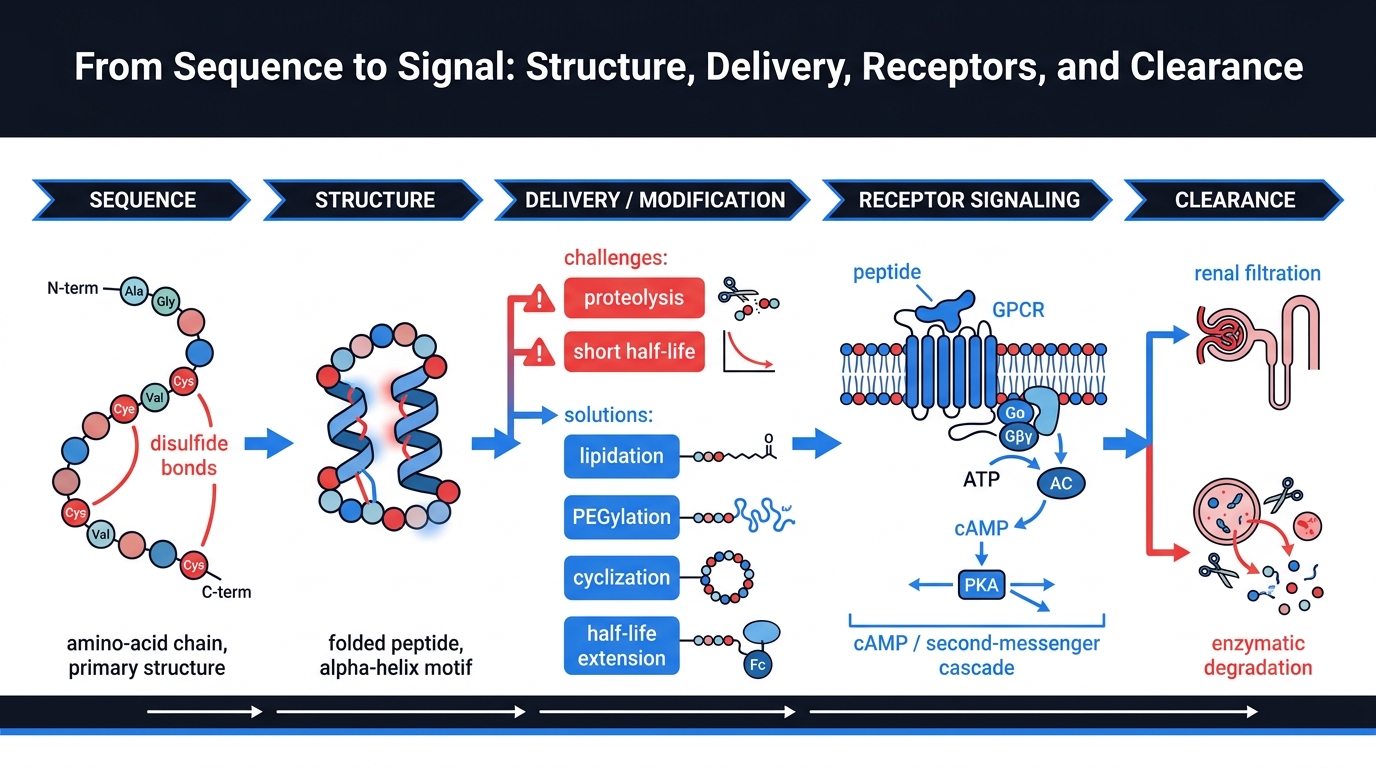
The problem is that the same features that make peptides precise also make them inconvenient. They are vulnerable to proteolysis, may be cleared quickly by the kidney, may not cross membranes easily, and usually have poor oral bioavailability. The modern peptide therapeutics field is largely the story of solving those problems: cyclization, lipidation, D-amino acid substitution, depot formulation, permeation enhancers, receptor-selective engineering, and conjugation.
Recent reviews of cyclic peptides emphasize that peptide structure can be engineered to improve stability and target engagement, while peptide-drug conjugates show how peptides can be used as delivery scaffolds for more complex therapeutic payloads (Ji et al., Angew Chem Int Ed 2024, PMID: 37870189; Dean et al., J Med Chem 2024, PMID: 38277480).
Framework: When evaluating any peptide therapy, ask six questions: What is the sequence or scaffold? What receptor or target does it bind? How is it delivered? How long does it last? What clinical endpoint does it change? What harms follow from the mechanism or formulation?
%%FIG0%% Audience Poll: Which property most limits peptide drug development: oral absorption, proteolysis, immunogenicity, or cost?
Section 2: From Sequence to Signal
Duration: 12 min Content Tier: Teaching Point
Peptides are structure-function medicines. A single amino acid substitution can change receptor affinity, duration, degradation, or immunogenicity. A fatty-acid side chain can bind albumin and extend half-life. Cyclization can protect against peptidases and constrain the molecule into a receptor-favorable shape. Depot formulations can convert a short-lived signal into weekly or monthly dosing.
The key pharmacokinetic barriers are predictable. Gastrointestinal proteases digest peptides. The intestinal epithelium resists large polar molecules. Plasma and tissue peptidases shorten exposure. The kidney clears smaller peptides. The immune system may notice repeated or modified exposure. Each barrier creates a design response.
Oral semaglutide illustrates this translation problem. The peptide itself is not naturally suited to routine oral delivery, so the formulation uses an absorption enhancer and requires careful dosing conditions. In PIONEER 6, oral semaglutide demonstrated cardiovascular safety in high-risk patients with type 2 diabetes, showing that oral peptide delivery can reach clinically meaningful exposure when formulation and instructions are engineered carefully (Husain et al., NEJM 2019, PMID: 31185157).
Decision Point: If a patient says a peptide is not working, first check the route and administration details. For oral peptide drugs, food, water volume, timing, and co-administered medications can matter. For injectable peptides, missed titration steps, device technique, storage, dose confusion, and compounded vial concentrations can matter.
Section 3: Core Clinical Peptide Classes
Duration: 14 min Content Tier: Framework
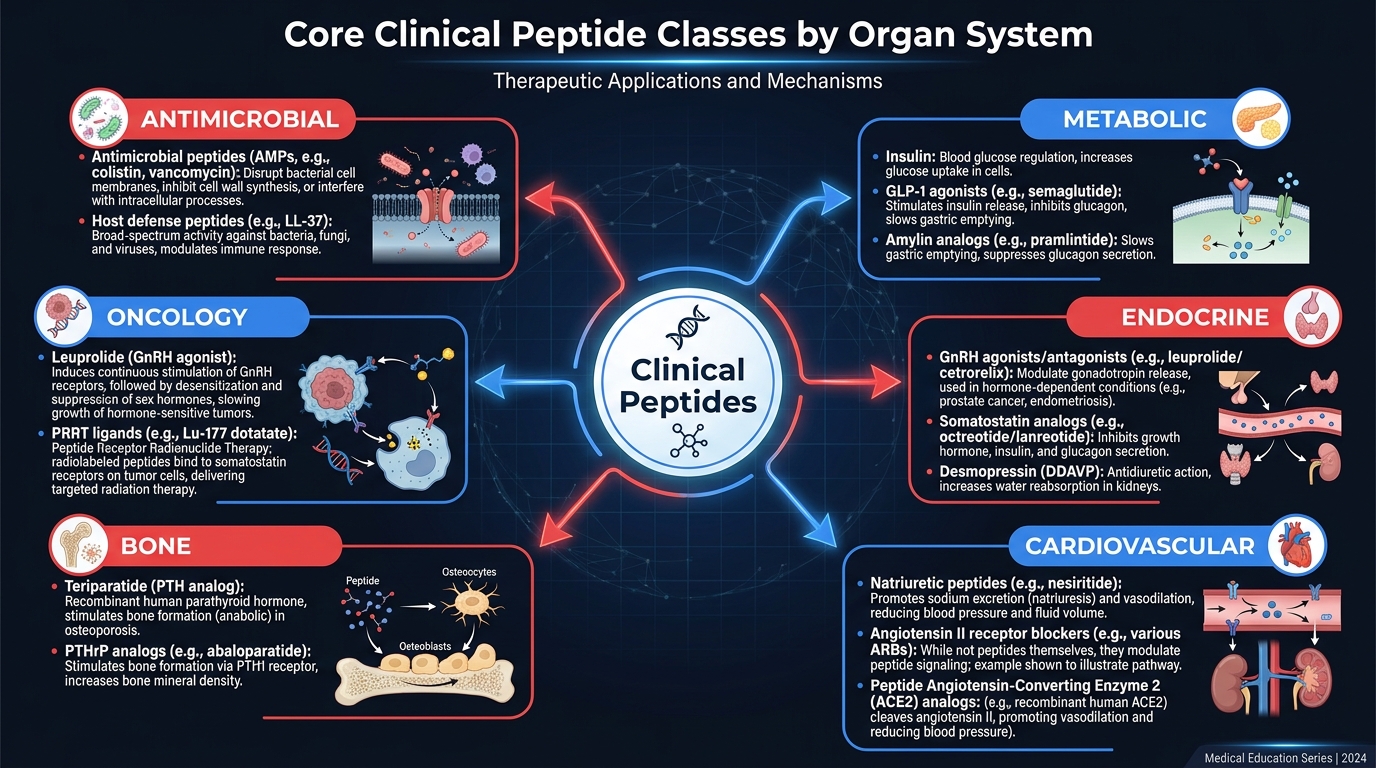
The easiest mistake is to treat peptides as one therapeutic category. Clinically, peptide drugs are better organized by function.
| Class | Examples | Core clinical idea |
|---|---|---|
| Replacement | Insulin analogs, vasopressin/desmopressin in selected contexts | Replace missing or insufficient signal |
| Receptor agonism | GLP-1 receptor agonists, dual GIP/GLP-1 agonists, PTH analogs | Amplify beneficial physiologic pathways |
| Receptor antagonism or suppression | GnRH analogs/antagonists | Suppress downstream endocrine axes |
| Targeted delivery | 177Lu-Dotatate, peptide-drug conjugates | Use receptor binding to deliver payload |
| Diagnostic or theranostic targeting | Somatostatin receptor imaging agents | Make receptor expression visible or actionable |
| Antimicrobial/host defense | Investigational antimicrobial peptides | Disrupt membranes or modulate host defense |
Teaching Point: The word peptide tells you the molecular family, not the clinical job. A peptide may be a hormone replacement, a metabolic signal, a cancer-targeting vehicle, a diagnostic ligand, or a future antimicrobial platform.
This matters for adverse effects. Insulin causes hypoglycemia because the mechanism lowers glucose independent of patient intent. GLP-1 receptor agonists cause nausea because gut-brain signaling is part of the mechanism. GnRH agents cause hypoestrogenic or hypoandrogenic effects because axis suppression is the goal. Somatostatin analogs can affect gallbladder function and glucose because somatostatin signaling is broad. Peptide receptor radionuclide therapy has marrow, renal, and radiation-safety implications because the peptide is carrying a radiotherapeutic payload.
Section 4: The Incretin Era
Duration: 18 min Content Tier: MUST ACT
MUST ACT: GLP-1 and incretin therapies should not be discussed as generic weight-loss injections. The indication, endpoint, dose, contraindications, adverse-effect plan, and product source must be explicit.
The modern peptide conversation is dominated by incretins. GLP-1 receptor agonists stimulate glucose-dependent insulin secretion, reduce glucagon secretion, slow gastric emptying, and influence appetite pathways. Dual GIP/GLP-1 agonism adds another incretin axis. Triple agonists under investigation add glucagon receptor activity, attempting to pair appetite and glycemic effects with energy-expenditure or hepatic-metabolic effects.
STEP 1 established the magnitude of weight loss possible with semaglutide 2.4 mg weekly in adults with overweight or obesity without diabetes. The mean body weight change at week 68 was -14.9% with semaglutide versus -2.4% with placebo, alongside lifestyle intervention (Wilding et al., NEJM 2021, PMID: 33567185). That result changed obesity pharmacotherapy because it moved expected drug efficacy closer to the range previously associated with procedural interventions.
SURMOUNT-1 then showed that tirzepatide, a dual GIP/GLP-1 agonist, produced substantial weight loss in adults with obesity or overweight without diabetes: mean percentage weight change at week 72 was -15.0%, -19.5%, and -20.9% for 5, 10, and 15 mg weekly doses, compared with -3.1% for placebo (Jastreboff et al., NEJM 2022, PMID: 35658024). In type 2 diabetes, SURPASS-2 compared tirzepatide with semaglutide 1 mg and found greater HbA1c and weight reductions with tirzepatide doses, with GI adverse effects remaining the most common tolerability issue (Frias et al., NEJM 2021, PMID: 34170647).
SELECT reframed semaglutide for a different endpoint. In patients with established cardiovascular disease, BMI at least 27, and no diabetes, semaglutide 2.4 mg reduced the composite of cardiovascular death, nonfatal MI, or nonfatal stroke compared with placebo over a mean follow-up of 39.8 months (Lincoff et al., NEJM 2023, PMID: 37952131). A subsequent SELECT glycemia analysis found greater regression to normoglycemia and less progression to biochemical diabetes, while noting that glycemic progression over time was not simply abolished (Kahn et al., Diabetes Care 2024, PMID: 38907683).
Nuance: The same drug can have different evidence frames: weight reduction, glycemic control, cardiovascular risk reduction, and diabetes prevention are related but not identical endpoints. A patient with established CVD and obesity is not the same counseling conversation as a young patient seeking cosmetic weight loss.
Say Out Loud: "The question is not 'Do you want a peptide?' The question is 'What disease endpoint are we treating, with which approved product, at what dose, and with what monitoring plan?'"
%%FIG3%% Audience Poll: Which patient feature most changes incretin counseling: diabetes, established CVD, pancreatitis history, gallbladder disease, pregnancy planning, cost/access, or product source?
Section 5: Peptides in Oncology and Precision Targeting
Duration: 10 min Content Tier: Nuance
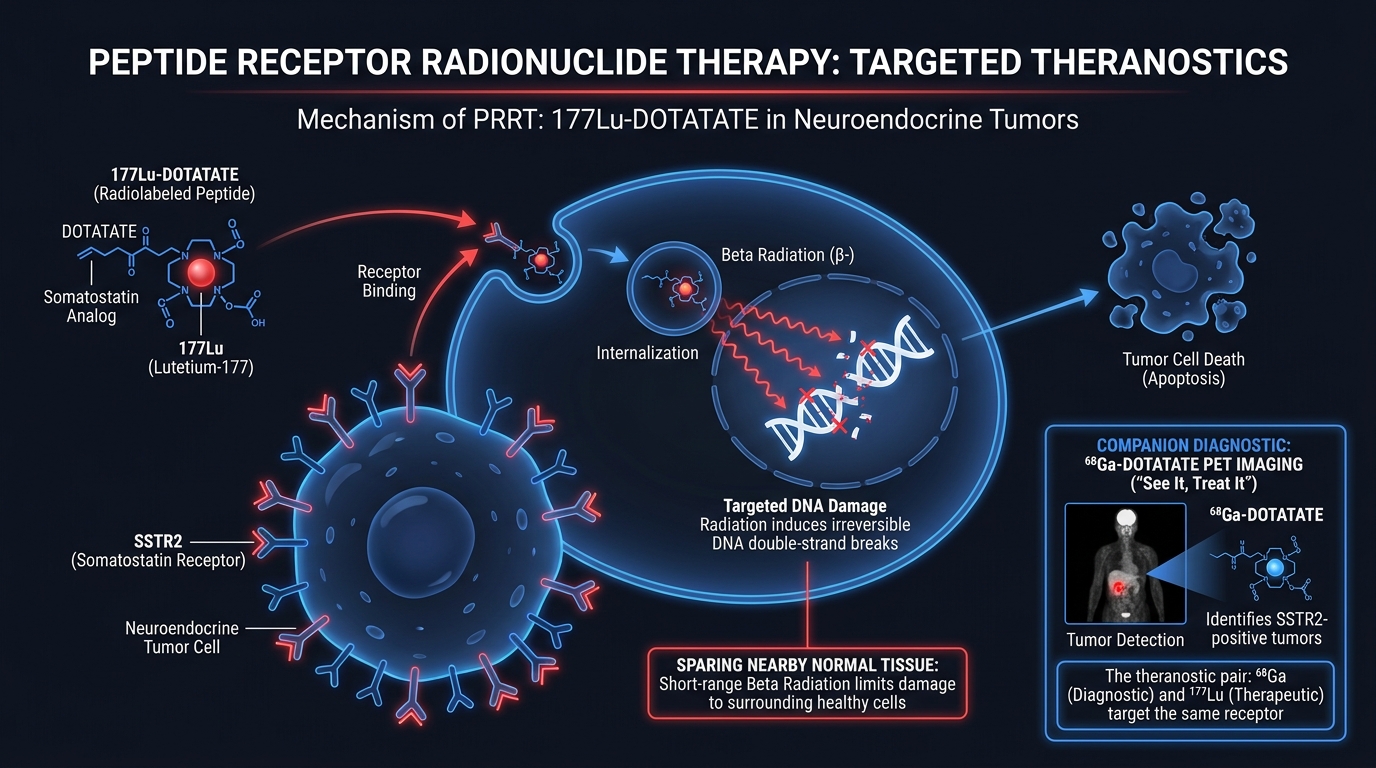
Peptides are not limited to metabolic disease. One of the cleanest examples of peptide targeting is somatostatin receptor-directed therapy for neuroendocrine tumors. Tumors that express somatostatin receptors can be imaged and treated using peptide ligands that bind those receptors.
177Lu-Dotatate is a radiolabeled somatostatin analog. The peptide directs the radionuclide to somatostatin receptor-positive tumor cells; the payload delivers radiation. This is not classic endocrine receptor agonism. It is receptor-targeted delivery.
NETTER-1 evaluated 177Lu-Dotatate plus long-acting octreotide versus high-dose long-acting octreotide in progressive, somatostatin receptor-positive midgut neuroendocrine tumors. The final analysis reported long-term safety and survival follow-up after the primary progression-free survival benefit had established the clinical relevance of peptide receptor radionuclide therapy (Strosberg et al., Lancet Oncol 2021, PMID: 34793718). Additional NETTER-1 analyses found progression-free survival benefit across liver tumor burden and other baseline subgroups (Strosberg et al., Eur J Nucl Med Mol Imaging 2020, PMID: 32123969).
Teaching Point: Peptide targeting is a platform idea. Once a receptor is reliably expressed by diseased tissue, the peptide can become a homing device for imaging, radiation, toxins, small molecules, or immune payloads.
Section 6: Safety, Stewardship, and Compounding
Duration: 14 min Content Tier: MUST ACT
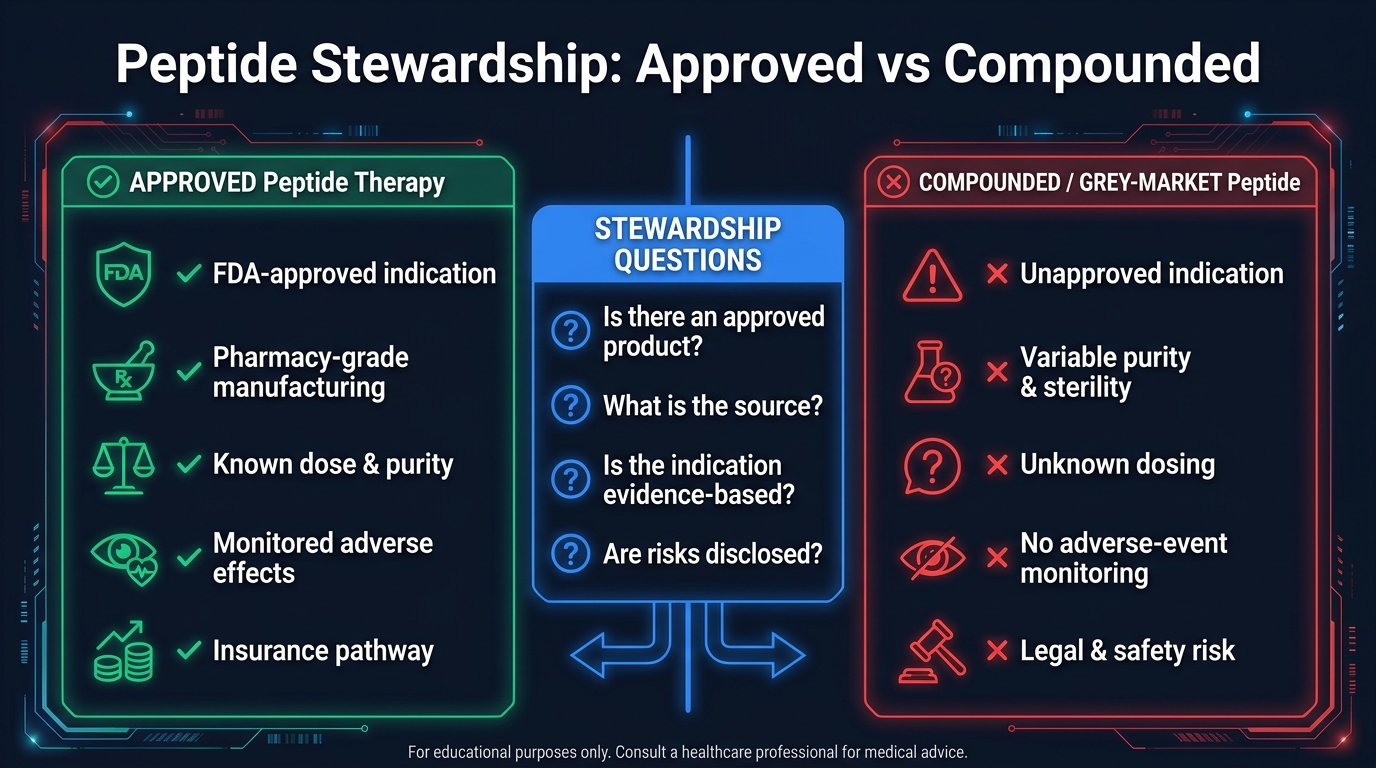
MUST ACT: Always ask patients where a peptide product came from. Prescription product, compounded product, research chemical, supplement, and spa-clinic vial are not interchangeable categories.
Peptide safety starts with mechanism. GLP-1 and incretin therapies commonly cause nausea, vomiting, diarrhea, constipation, reflux, reduced appetite, and dehydration risk. Dose escalation is not a formality; it is a tolerability intervention. Patients with insulin or sulfonylurea exposure need hypoglycemia planning. Patients with gallbladder disease, pancreatitis history, gastroparesis symptoms, kidney vulnerability from dehydration, pregnancy plans, or peri-procedural fasting need individualized counseling.
The second safety layer is formulation and source. FDA communications have raised concerns about unapproved GLP-1 products used for weight loss, including compounded semaglutide and tirzepatide, adverse event reports, dose errors, unapproved salt forms, and fraudulent or misleading products. FDA also specifically alerted clinicians and patients to dosing errors with compounded injectable semaglutide products, including cases in which patients sought care or required hospitalization.
This is not just a regulatory issue. It changes the bedside history:
- What exact molecule are you using?
- Is it FDA-approved, compounded, or sold as a research/wellness product?
- What is the concentration on the vial?
- What dose are you drawing up, in milligrams and in volume?
- Who prescribed it?
- What adverse effects have occurred?
- What are you using it for?
- What will you do if supply stops?
Decision Point: If a patient cannot tell you the molecule, concentration, and dose in milligrams, treat the exposure as a medication safety problem. Do not simply continue the listed dose in the chart.
Section 7: Grey-Market Peptides, "Stacks," and Aesthetic Claims
Duration: 32 min Content Tier: MUST ACT
MUST ACT: When a patient says they are using "peptides," do not stop at the word peptide. Ask for the exact name, source, route, concentration, dose in milligrams or micrograms, vial label, reconstitution volume, injection frequency, and reason for use. Grey-market peptide use is a medication reconciliation problem, a toxicology problem, a counseling problem, and sometimes an anti-doping problem.
The grey-market peptide world is built around a different vocabulary than the medical literature. Patients may not say "BPC-157" or "thymosin beta-4 fragment." They may say:
- "Wolverine stack" or "healing stack"
- "Glow stack" or "beauty stack"
- "CJC/ipa"
- "GH secretagogue stack"
- "research peptide"
- "recovery peptide"
- "mitochondrial peptide"
- "tanning peptide"
- "fat-loss fragment"
Those names are marketing shorthand, not pharmacology. They combine molecules with very different evidence bases, regulatory status, adverse-effect profiles, and biologic plausibility.
Who Is Recommending These Peptides?
The recommendation ecosystem matters because many patients will not arrive with a paper, label, or prescriber. They will arrive with a podcast clip, a clinic handout, an influencer protocol, a Reddit dosing thread, a friend at the gym, or a celebrity anecdote. The clinician's job is not to mock the source. The job is to determine whether the source has the right qualifications for the claim being made.
As of early 2026, mainstream medical reporting and the AMA describe a broad peptide promotion environment: wellness centers, online vendors, social media influencers, celebrities, podcasters, fitness communities, biohackers, and some licensed clinicians are all part of the signal. Medical associations and regulators are also speaking, but mostly in the opposite direction: cautioning that many newer injectable peptides lack FDA review, standardized dosing, manufacturing oversight, and meaningful human outcome data.
| Recommender group | Typical recommendation style | Qualifications they may have | What they usually are not qualified to prove | How to counsel |
|---|---|---|---|---|
| Academic researchers and drug developers | Mechanistic interest, trial development, warnings about overinterpretation | PhD/MD expertise in peptide biology, endocrinology, pharmacology, drug discovery, or clinical trials | That a grey-market vial is pure, sterile, correctly dosed, or clinically effective | Respect mechanistic expertise, but ask whether the exact product, route, dose, and indication have human outcome data |
| Medical societies, regulators, and safety experts | Caution, harm reduction, approval-status distinction | Population-level safety, regulation, clinical standards, adverse-event surveillance | Individualized off-label enthusiasm for unapproved products | Use these sources to frame risk, documentation, and product-source questions |
| Licensed longevity, integrative, sports, concierge, or aesthetic clinicians | "Supervised peptide protocols," optimization, recovery, appearance, anti-aging | May hold MD, DO, NP, PA, RN, PharmD, or clinic ownership credentials | Evidence of efficacy unless they cite trials; relevant subspecialty expertise unless specified; absence of commercial conflict | Verify license, specialty, board certification, product source, adverse-event plan, and financial relationship to the peptide |
| Compounding pharmacies, telehealth platforms, and peptide clinics | Access, convenience, protocolized treatment, pharmacy-quality framing | Pharmacy or prescribing infrastructure may exist | FDA approval, clinical efficacy for marketed wellness claims, or equivalence to trial products | Separate compounding capability from proof that the drug should be used |
| Podcasters, celebrities, athletes, and wellness brands | Personal anecdotes, "what worked for me," brand amplification | Audience reach, personal experience, sometimes fitness or entertainment expertise | Prescribing, pharmacology, clinical trial interpretation, safety monitoring | Treat as anecdote, not medical evidence |
| Biohacking, bodybuilding, looksmaxxing, Reddit, Discord, TikTok, and gym communities | Protocols, cycle plans, stack names, before/after stories, vendor advice | Lived experience and community pattern recognition | Causal inference, adverse-event attribution, dose safety, sterility, long-term risk | Assume selection bias, placebo effects, affiliate incentives, hidden co-interventions, and underreported harms |
| Political figures and advocacy groups | Access arguments, anti-regulatory framing, policy pressure | Policy authority or advocacy platform | Bedside prescribing expertise or proof of efficacy | Treat policy advocacy as policy advocacy, not a patient-specific medical recommendation |
Named public examples should be handled carefully. Joe Rogan is a podcaster and UFC commentator who has publicly discussed BPC-157 for injury recovery; that is an anecdote from a high-reach media figure, not clinical evidence. Gwyneth Paltrow and Jennifer Aniston are celebrities and wellness/brand figures who have been cited in reporting around peptide shots or peptide-related products; celebrity use may normalize the practice but does not establish dose, indication, or safety. Gary Brecka is widely described in reporting as a self-described longevity expert and peptide promoter with commercial peptide-related interests; that is a conflict to disclose, not a disqualifier by itself, but it lowers the evidentiary weight of claims unless paired with independent clinical data. Robert F. Kennedy Jr., as HHS Secretary in 2026, has policy influence and has publicly supported broader peptide access; policy authority is not the same as clinical trial evidence or patient-specific prescribing expertise.
There are also credentialed physicians and clinician-scientists discussing peptides. That does not make all recommendations equal. A licensed clinician can be qualified to diagnose tendinopathy, counsel about obesity therapy, or monitor adverse effects, yet still be extrapolating beyond evidence when recommending BPC-157, TB-500, CJC-1295/ipamorelin, MOTS-c, or injectable GHK-Cu for optimization. A PhD scientist may be deeply qualified to explain mitochondrial-derived peptides or wound-healing pathways, yet not qualified to vouch for a vendor vial. A compounding pharmacist may be qualified to discuss sterility and formulation standards, yet not to decide that a non-approved peptide has proven benefit for a wellness indication.
Framework: Recommendation authority has five layers:
- Credential: What training, license, board certification, or scientific expertise does the person have?
- Scope: Is the claim inside that person's scope of training?
- Evidence: Are they citing human outcome data, early pharmacology, animal data, mechanism, or anecdote?
- Conflict: Do they sell the product, receive affiliate revenue, own the clinic, promote the brand, or gain audience attention?
- Accountability: Are they responsible for diagnosis, consent, monitoring, adverse-event management, and follow-up?
MUST ACT: If the patient says "a doctor recommended it," clarify what kind of doctor, whether the doctor examined them, whether the recommendation was written as a prescription, whether a regulated pharmacy dispensed it, whether the clinician is monitoring labs or adverse effects, and whether the peptide is FDA-approved for the intended use. "Doctor recommended" is not enough.
Say Out Loud: "The source of the recommendation changes how much weight we give it. A podcast anecdote, a clinic protocol, and a randomized trial are not the same kind of evidence."
The "Wolverine Stack"
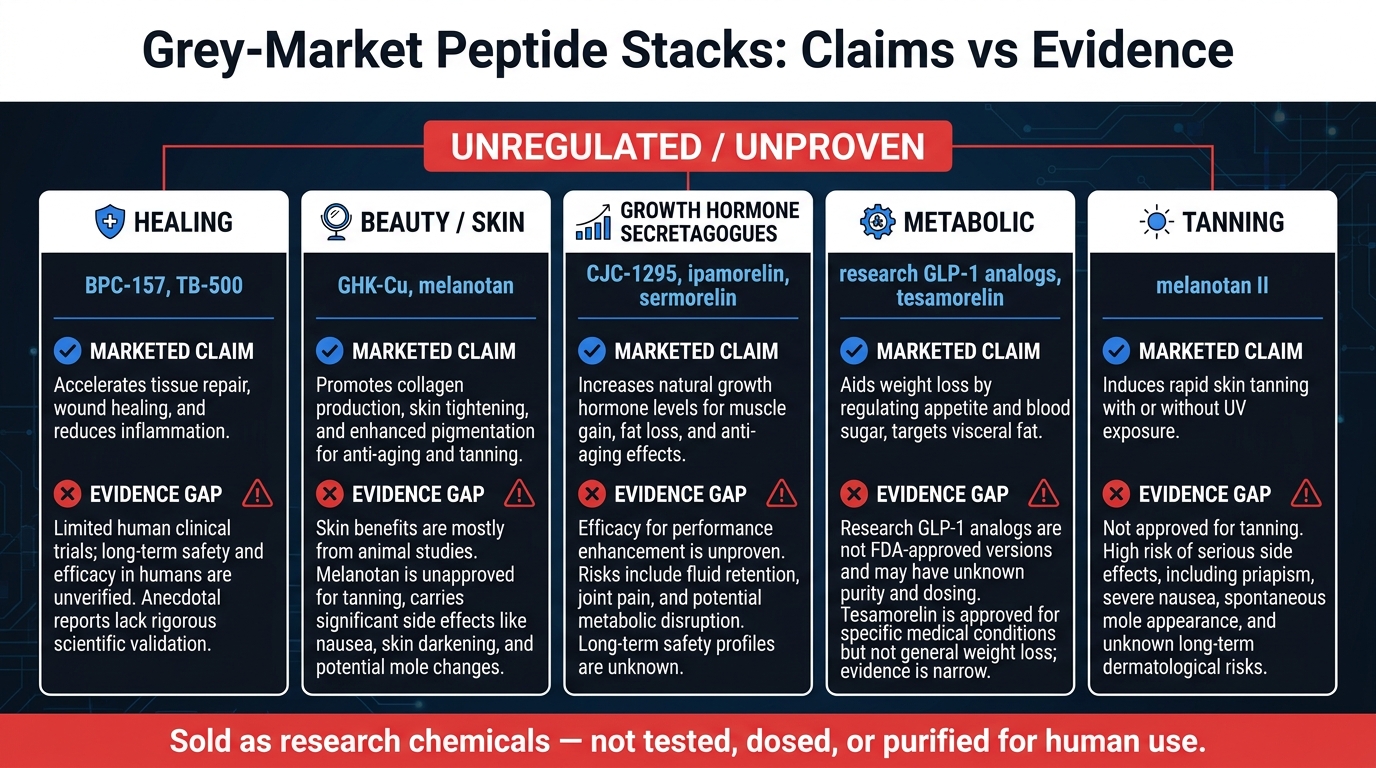
The so-called Wolverine stack usually refers to BPC-157 plus TB-500, often with GHK-Cu added. The marketing claim is accelerated healing of tendons, ligaments, muscle, joints, skin, and sometimes gut injury. The name implies comic-book regeneration; the evidence does not.
| Marketed component | What it is structurally | Claimed use | Evidence signal | Main caveat |
|---|---|---|---|---|
| BPC-157 | Synthetic pentadecapeptide; 15 amino acids; derived from a gastric body-protection compound sequence | Tendon, ligament, muscle, gut, joint healing | Strong preclinical signal; extremely limited human data | No FDA-approved product; FDA has cited immunogenicity, impurity/API characterization, and limited safety information concerns |
| TB-500 | Synthetic fragment related to thymosin beta-4; commonly described as the LKKTETQ active fragment | Tissue repair, wound healing, flexibility, recovery | Thymosin beta-4 biology has wound-healing data; TB-500 human exposure data are lacking | TB-500 is not equivalent to all thymosin beta-4 clinical research |
| GHK-Cu | Glycyl-L-histidyl-L-lysine copper complex; endogenous copper-binding tripeptide | Skin repair, collagen, hair, "glow," wound healing | Topical/cosmetic and preclinical wound-healing signals; injectable evidence is weak | Route matters: topical cosmetic use is not the same as injectable systemic use |
BPC-157 is probably the best example of why the grey-market conversation is hard. The biology is not absurd. A recent musculoskeletal review describes BPC-157 as a synthetic 15-amino-acid peptide with preclinical evidence involving angiogenesis, fibroblast activity, nitric oxide signaling, VEGFR2, Akt-eNOS, ERK1/2, anti-inflammatory pathways, and neuromuscular stabilization. But the same review emphasizes that human data are extremely limited, with only small pilot studies and no rigorous large-scale trials supporting routine clinical use (McGuire et al., Curr Rev Musculoskelet Med 2025, PMID: 40789979). Earlier reviews emphasize broad animal-model healing signals in GI, tendon, ligament, muscle, and bone models, but those are not a substitute for human efficacy and safety trials (Seiwerth et al., Curr Pharm Des 2018, PMID: 29998800).
Nuance: BPC-157 is not "obviously fake." It is biologically plausible and preclinically interesting. The clinical problem is that plausibility plus animal data plus anecdotes do not establish dose, route, purity, safety, or human efficacy.
TB-500 is even trickier because marketing often blurs it with thymosin beta-4. Thymosin beta-4 is an endogenous actin-sequestering protein with roles in cell migration, angiogenesis, inflammation, and wound repair. Reviews describe dermal and corneal wound-healing biology and early clinical wound-healing exploration (Goldstein et al., Trends Mol Med 2005, PMID: 16099219; Kleinman and Sosne, Vitam Horm 2016, PMID: 27450738). But TB-500 sold online is commonly a synthetic fragment, not necessarily the same molecule, formulation, route, or clinical-development product evaluated in thymosin beta-4 literature.
Teaching Point: Do not let a vendor borrow evidence from a parent molecule, animal model, or different formulation without proving that the sold product has the same molecule, exposure, target engagement, and clinical endpoint.
Beauty, Skin, Hair, and "Glow" Peptides
The common beauty stack usually centers on GHK-Cu, sometimes combined with BPC-157, TB-500, collagen peptides, or microneedling. GHK-Cu is more biologically grounded than many aesthetic peptides: it is an endogenous tripeptide-copper complex involved in wound repair and tissue remodeling. Reviews describe effects on skin regeneration pathways, collagen/glycosaminoglycan biology, wound healing, antioxidant and anti-inflammatory pathways, and gene-expression patterns (Pickart et al., Biomed Res Int 2015, PMID: 26236730; Pickart and Margolina, Int J Mol Sci 2018, PMID: 29986520).
The caveat is route and endpoint. Topical copper peptide cosmetics and wound-healing models are not the same as injectable grey-market GHK-Cu. Topical products may plausibly act locally if formulated to reach the relevant skin compartment, but even there, clinical outcomes vary by formulation, concentration, skin barrier, study design, and comparator. Injectable "beauty" use adds systemic exposure, sterility, dose, copper handling, immunogenicity, and purity questions that cosmetic studies do not answer.
Decision Point: If the patient is using topical GHK-Cu from a cosmetic product, the counseling conversation is usually about irritation, expectations, cost, and evidence limits. If the patient is injecting GHK-Cu from a research-peptide vial, the conversation changes to unapproved drug exposure, sterility, dose uncertainty, and systemic safety.
Other aesthetic or appearance-marketed peptides include:
- Melanotan II: an alpha-MSH analog marketed for tanning and libido. It activates melanocortin pathways. FDA has cited case reports of serious adverse events including melanoma, posterior reversible encephalopathy syndrome, sympathomimetic toxidrome, and priapism in relation to compounded Melanotan II risk assessment. It is not a sunscreen substitute.
- Palmitoyl peptides / cosmetic signal peptides: topical cosmetic peptides designed to influence skin appearance, often through matrikine-like signaling. These are generally a cosmetic-formulation question, not equivalent to injectable research peptides.
- Collagen peptides: oral hydrolyzed collagen products are dietary supplement/cosmetic-adjacent products rather than classic receptor-targeted therapeutic peptides. Evidence is formulation-specific and endpoint-specific, usually skin hydration/elasticity or joint symptoms, not tissue regeneration.
- GHK-Cu plus microneedling: plausible local delivery-enhancement logic, but outcomes depend on device depth, sterility, product sterility, inflammation, pigmentation risk, and post-procedure care.
Say Out Loud: "Topical cosmetic peptide, oral collagen supplement, and injected research peptide are three different risk categories. We should not discuss them as if they are the same intervention."
Growth Hormone Secretagogue Stacks: CJC-1295 plus Ipamorelin
The popular "CJC/ipa" stack pairs a GHRH analog (CJC-1295, or sometimes modified GRF 1-29) with a ghrelin/GH secretagogue receptor agonist (ipamorelin). The marketed claim is improved recovery, sleep, lean mass, fat loss, skin quality, or "anti-aging" through growth hormone and IGF-1.
CJC-1295 has real early human pharmacology. In healthy adults, subcutaneous CJC-1295 produced sustained, dose-dependent increases in growth hormone and IGF-1, with an estimated half-life of 5.8-8.1 days and no serious adverse reactions reported in short ascending-dose studies (Teichman et al., JCEM 2006, PMID: 16352683). Ipamorelin is a synthetic pentapeptide growth hormone secretagogue. Early pharmacology described GH release through a GHRP-like receptor, with less ACTH/cortisol stimulation than some older GHRPs in animal models (Raun et al., Eur J Endocrinol 1998, PMID: 9849822).
That is not the same as proving long-term anti-aging safety. Sustained GH/IGF-1 signaling can affect glucose metabolism, edema, carpal-tunnel symptoms, sleep apnea, blood pressure, cardiac structure, and theoretical neoplasia concerns in susceptible patients. Long-term combination safety for CJC-1295 plus ipamorelin in healthy adults seeking optimization is not established.
MUST ACT: In patients using GH secretagogues, ask about diabetes/prediabetes, edema, carpal tunnel symptoms, headaches, visual changes, sleep apnea, cancer history, active malignancy, prostate symptoms, cardiovascular disease, and concurrent anabolic agents. Check whether the patient is also using testosterone, insulin, thyroid hormone, or GLP-1 drugs.
Metabolic and "Longevity" Research Peptides
This category is highly marketed and weakly clinical.
AOD-9604 is a modified fragment of human growth hormone, often advertised as a fat-loss peptide without the anabolic or diabetogenic risks of full growth hormone. The human obesity evidence has not produced an approved obesity drug, and much of the online discussion relies on non-indexed, sponsor-linked, animal, or conference-level material. The practical comparison is straightforward: for obesity and cardiometabolic risk, semaglutide and tirzepatide have major randomized trial evidence and approved products; AOD-9604 does not.
MOTS-c is a mitochondrial-derived peptide linked to metabolic regulation. A 2024 systematic review and meta-analysis found associations between MOTS-c levels and metabolic states such as diabetes and obesity, but this is biomarker/association literature, not proof that injecting MOTS-c improves human outcomes (Zhou et al., Diabetol Metab Syndr 2024, PMID: 39160573). FDA has also noted lack of human exposure data for compounded MOTS-c in its safety-risk discussion.
Epitalon/epithalon is commonly marketed around telomeres, sleep, pineal biology, and longevity. Claims often outrun clinical evidence. Even if a peptide affects telomerase or aging pathways in a model system, that does not establish long-term human benefit; it may raise additional concerns about proliferative biology, malignancy risk, and unknown dose-response.
KPV, LL-37, Semax, Selank, DSIP, PEG-MGF, and similar compounds are often marketed with immune, antimicrobial, cognitive, sleep, anxiety, or tissue-repair claims. Some parent pathways are scientifically interesting. LL-37, for example, is the only human cathelicidin antimicrobial peptide and has antimicrobial, immunomodulatory, wound-healing, and proliferative roles in oral health and disease literature (Soman et al., Arch Oral Biol 2026, PMID: 41544412). But endogenous pathway biology does not make self-injection of a research peptide safe or effective.
Evidence Grading for Grey-Market Peptides
Use this hierarchy during counseling:
| Evidence tier | What it means | Examples in this seminar |
|---|---|---|
| Tier 1: Approved drug with outcome trials | Known molecule, regulated manufacturing, defined dose, indication, safety monitoring | Semaglutide, tirzepatide, insulin analogs, 177Lu-Dotatate |
| Tier 2: Approved drug for another indication or route | Real clinical drug, but off-label claims may be extrapolated | Tesamorelin for HIV lipodystrophy versus general "anti-aging" GH claims; bremelanotide for HSDD versus broad libido claims |
| Tier 3: Early human pharmacology | Human exposure and biomarker effect, but no outcomes for marketed use | CJC-1295 GH/IGF-1 studies |
| Tier 4: Preclinical plausibility | Animal/cell data; mechanism may be real, clinical use unproven | BPC-157 injury models; antimicrobial peptide platforms |
| Tier 5: Aesthetic/cosmetic formulation evidence | Local skin endpoints, formulation-specific, limited generalizability | Topical GHK-Cu or cosmetic signal peptides |
| Tier 6: Anecdote/vendor protocol | No reliable clinical evidence | Most stacks, dosing protocols, and "cycles" sold online |
Framework: A peptide stack is not evidence synergy. If BPC-157, TB-500, and GHK-Cu each lack strong human evidence for a given indication, combining them does not create strong evidence. It creates more uncertainty: more impurity risk, more immunogenicity risk, more injection exposure, more dose confusion, and more inability to attribute adverse effects.
Regulatory and Manufacturing Caveats
The FDA's Category 2 bulk-substance page is useful for clinical counseling because it explains the agency's recurring concerns: immunogenicity, aggregation, peptide-related impurities, API characterization, limited safety data, and lack of information about harm in humans. The page specifically discusses BPC-157, TB-500, CJC-1295, injectable GHK-Cu, ipamorelin, AOD-9604, Melanotan II, MOTS-c, LL-37, Epitalon, KPV, Semax, Selank, PEG-MGF, and related compounds as substances with potential significant safety concerns or withdrawn nominations (FDA, content current 04/22/2026).
That does not mean every peptide on the list has the same risk. It means clinicians should not confuse "available online" or "used by a clinic" with approved, characterized, sterile, stable, effective medication.
MUST ACT: For any injected grey-market peptide, assess:
- Identity: Is the molecule actually what the label says?
- Purity: Are there peptide-related impurities, degradation products, or wrong salt forms?
- Sterility: Was it manufactured for injection under appropriate controls?
- Dose: Is the patient using milligrams, micrograms, or "units" from an insulin syringe?
- Route: Topical, oral, intranasal, subcutaneous, intramuscular, and intravenous routes are not interchangeable.
- Evidence: Is there human outcome evidence for this indication?
- Interactions: Is it stacked with hormones, anabolic agents, GLP-1s, thyroid hormone, insulin, or stimulants?
- Harm signal: What symptoms started after use?
- Documentation: Can the patient provide vial photos, lot numbers, and the vendor/clinic?
Future Directions for the Grey-Market Space
Some grey-market peptides may eventually become legitimate drugs. That pathway requires molecule characterization, toxicology, pharmacokinetics, dose-finding, route-specific safety, randomized efficacy trials, manufacturing controls, and post-marketing surveillance. BPC-157, thymosin beta-4 derivatives, cyclic peptides, antimicrobial peptides, and peptide-drug conjugates are all scientifically interesting areas. The future is not "peptides are fake." The future is that interesting peptides need to pass through the same discipline as every other drug.
The likely direction is bifurcation. A small number of peptide platforms will mature into regulated therapies for specific indications. A larger number will remain wellness-market products supported by mechanistic diagrams, animal data, testimonials, and protocols that cannot answer the clinical question: does this improve patient-centered outcomes safely in humans?
Say Out Loud: "The standard is not whether a peptide has a mechanism. The standard is whether this exact product, at this dose and route, improves a meaningful human outcome with acceptable risk."
Section 8: Future Directions
Duration: 10 min Content Tier: Nuance
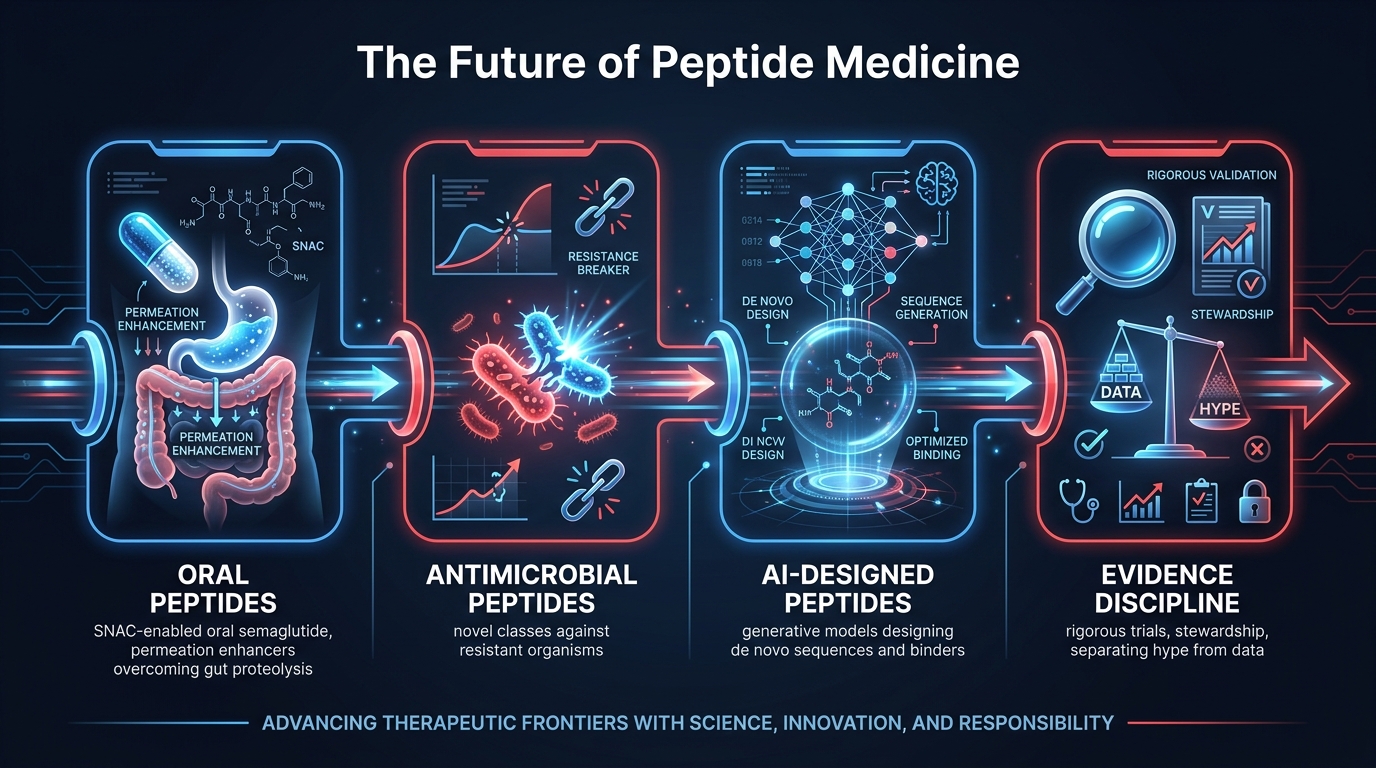
The future of peptide medicine is broader than GLP-1s. Cyclic peptides may allow access to targets that are difficult for small molecules and too small or intracellular-adjacent for antibodies. Peptide-drug conjugates may combine receptor targeting with payload design. Antimicrobial peptides are attractive because they can disrupt membranes and may act through mechanisms different from traditional antibiotics, but clinical development still faces toxicity, stability, selectivity, and resistance challenges (Bucataru and Ciobanasu, Microbiol Res 2024, PMID: 38986182).
Artificial intelligence and high-throughput screening may accelerate peptide discovery, but the clinical bottleneck remains familiar: delivery, manufacturing, tolerability, endpoint selection, and randomized evidence. A clever peptide is not a useful medicine until it can be manufactured, delivered, monitored, and shown to improve outcomes that matter.
Framework: Hype-to-help filter for future peptides:
- Mechanism: Does the target make biologic sense?
- Molecule: Is the sequence/scaffold stable and selective?
- Delivery: Can the patient actually take it reliably?
- Evidence: Are outcomes patient-centered or surrogate only?
- Safety: What harm follows from mechanism, route, or source?
- Stewardship: Is this an approved therapy, trial therapy, or market claim?
Clinical Cases
Case 1: The GLP-1 Conversation That Is Really a Cardiovascular Risk Conversation
A 58-year-old patient with BMI 34, prior MI, no diabetes, hypertension, and obstructive sleep apnea asks whether semaglutide is "just a weight-loss shot." The counseling frame should not be cosmetic. SELECT enrolled patients with established cardiovascular disease and overweight/obesity without diabetes and found fewer major adverse cardiovascular events with semaglutide 2.4 mg (Lincoff et al., NEJM 2023, PMID: 37952131).
Key Teaching Point: Match the drug to the endpoint. For this patient, the evidence conversation includes cardiovascular risk, weight, glycemia trajectory, tolerability, cost, and long-term adherence.
Case 2: The Compounded Peptide Safety Visit
A 42-year-old patient reports using compounded tirzepatide from a wellness clinic. The vial says "units," the patient escalated rapidly because appetite suppression faded, and now they have vomiting and dizziness. This visit is not just about nausea. It is about product identity, dose conversion, dehydration, adverse-event assessment, and transition to evidence-based care.
MUST ACT: Document the source, concentration, intended dose in milligrams, actual administered volume, prescriber, adverse effects, and whether the product is FDA-approved or compounded.
Case 3: Peptide Targeting in Neuroendocrine Tumor
A patient with progressive, somatostatin receptor-positive midgut neuroendocrine tumor despite long-acting octreotide is referred for peptide receptor radionuclide therapy. The teaching move is to distinguish hormone analog therapy from receptor-targeted payload delivery. In NETTER-1, 177Lu-Dotatate exploited somatostatin receptor expression to deliver therapeutic radiation (Strosberg et al., Lancet Oncol 2021, PMID: 34793718).
Nuance: Peptide targeting is precision medicine when receptor expression, payload, disease biology, and patient selection align.
Case 4: The "Wolverine Stack" After a Tendon Injury
A 36-year-old recreational athlete presents with persistent Achilles tendinopathy and says they started a "Wolverine stack" from an online peptide vendor: BPC-157, TB-500, and GHK-Cu. They inject subcutaneously daily, but they do not know the concentration in the vial. They ask whether they should increase the dose because a forum says the stack works only when paired with CJC-1295 and ipamorelin.
This is the ideal teaching case because it contains every common problem: plausible biology, weak human evidence, multiple unapproved compounds, route uncertainty, dose-unit confusion, vendor protocol escalation, and stacking logic that has no clinical trial basis.
MUST ACT: Do not endorse escalation. Document the exact products and doses, screen for injection-site infection and systemic symptoms, review anti-doping implications if relevant, offer evidence-based tendinopathy care, and explain that BPC-157 has preclinical promise but lacks large human trials (PMID: 40789979), while TB-500 marketing borrows from thymosin beta-4 biology without proving equivalence.
Case 5: The Beauty Peptide Consultation
A 51-year-old patient asks about injectable GHK-Cu for wrinkles, hair growth, and "skin tightening." They have seen topical copper peptide products and assume an injectable version must work better.
Teaching Point: Route changes risk. GHK-Cu has biologic plausibility in skin remodeling and wound-healing pathways (PMID: 26236730; PMID: 29986520), but topical cosmetic evidence and injectable systemic use are not interchangeable. The counseling goal is not to ridicule the claim; it is to separate topical formulation evidence from unapproved injectable exposure.
Case 6: "My Podcast Doctor Recommended It"
A 44-year-old patient brings a screenshot from a podcast episode and a clinic intake form recommending BPC-157, TB-500, CJC-1295/ipamorelin, and GHK-Cu. The patient says, "The person recommending it is a doctor, and a celebrity said it worked." They want to know whether that makes it medically legitimate.
This is a source-literacy case. The clinician should separate four ideas: the recommender's credential, the recommender's scope, the evidence behind the claim, and any financial or audience incentive. A physician license may make someone accountable for diagnosis and monitoring, but it does not convert animal data into human outcome trials. A celebrity or podcaster may accurately describe a personal experience, but that experience is uncontrolled and not generalizable. A clinic protocol may look professional while still being based on unapproved products and weak evidence.
MUST ACT: Ask who recommended it, what their credentials are, whether they examined the patient, whether they sell or profit from the product, what human evidence they cited, and what adverse-event plan exists. If those answers are vague, treat the recommendation as marketing or anecdote until proven otherwise.
Tonight on Shift
Tonight on Shift:
- Name the peptide mechanism before naming the drug.
- Separate approved prescription peptide therapy from wellness-market peptide claims.
- For incretin therapy, document indication, contraindications, dose escalation, adverse-effect plan, and follow-up metrics.
- Ask specifically about compounded GLP-1 products, dose units, vial concentration, and source.
- For grey-market stacks, identify every component separately; do not treat a stack name as a diagnosis or a medication.
- Topical cosmetic peptide, oral collagen supplement, and injected research peptide are different risk categories.
- Audit who recommended the peptide: credential, scope, evidence, conflict, and accountability.
- Do not cite podcasts, social media, company claims, celebrity anecdotes, or vendor protocols as evidence without trial or guideline support.
- Use peptides as a pharmacology framework: sequence, delivery, receptor, endpoint, harm.
Key References
- Ji X, Nielsen AL, Heinis C. Cyclic Peptides for Drug Development. Angew Chem Int Ed. 2024. PMID: 37870189.
- Dean TT, Jelu-Reyes J, Allen AC, et al. Peptide-Drug Conjugates. J Med Chem. 2024. PMID: 38277480.
- Wilding JPH, Batterham RL, Calanna S, et al. Once-Weekly Semaglutide in Adults with Overweight or Obesity. NEJM. 2021. PMID: 33567185.
- Lincoff AM, Brown-Frandsen K, Colhoun HM, et al. Semaglutide and Cardiovascular Outcomes in Obesity without Diabetes. NEJM. 2023. PMID: 37952131.
- Jastreboff AM, Aronne LJ, Ahmad NN, et al. Tirzepatide Once Weekly for the Treatment of Obesity. NEJM. 2022. PMID: 35658024.
- Frias JP, Davies MJ, Rosenstock J, et al. Tirzepatide versus Semaglutide Once Weekly in Patients with Type 2 Diabetes. NEJM. 2021. PMID: 34170647.
- Strosberg JR, Caplin ME, Kunz PL, et al. 177Lu-Dotatate plus octreotide in NETTER-1 final analysis. Lancet Oncol. 2021. PMID: 34793718.
- Bucataru C, Ciobanasu C. Antimicrobial peptides: opportunities and challenges. Microbiol Res. 2024. PMID: 38986182.
- McGuire FP, Martinez R, Lenz A, et al. Regeneration or Risk? A Narrative Review of BPC-157 for Musculoskeletal Healing. Curr Rev Musculoskelet Med. 2025. PMID: 40789979.
- Goldstein AL, Hannappel E, Kleinman HK. Thymosin beta4: actin-sequestering protein moonlights to repair injured tissues. Trends Mol Med. 2005. PMID: 16099219.
- Kleinman HK, Sosne G. Thymosin beta4 promotes dermal healing. Vitam Horm. 2016. PMID: 27450738.
- Pickart L, Vasquez-Soltero JM, Margolina A. GHK Peptide as a Natural Modulator of Multiple Cellular Pathways in Skin Regeneration. Biomed Res Int. 2015. PMID: 26236730.
- Teichman SL, Neale A, Lawrence B, et al. Prolonged stimulation of GH and IGF-I secretion by CJC-1295 in healthy adults. J Clin Endocrinol Metab. 2006. PMID: 16352683.
- Raun K, Hansen BS, Johansen NL, et al. Ipamorelin, the first selective growth hormone secretagogue. Eur J Endocrinol. 1998. PMID: 9849822.
- Zhou Q, Yin S, Lei X, et al. The correlation between mitochondrial derived peptide and metabolic states: systematic review and meta-analysis. Diabetol Metab Syndr. 2024. PMID: 39160573.
- FDA. Certain Bulk Drug Substances for Use in Compounding that May Present Significant Safety Risks. Content current 04/22/2026.
- American Medical Association. What doctors want patients to know about injectable peptides. 2026.
- Mosbergen D. What to Know About the "Anti-Aging" Peptide Shots Flooding Social Media. TIME. 2026.
- Associated Press. Peptide injections: What to know about the unapproved trend and its risks. 2025.
- Khullar D. Why Are People Injecting Themselves with Peptides? The New Yorker. 2026.
- Perrone M. FDA to weigh easing limits on unproven peptides favored by RFK Jr. and other MAHA figures. Los Angeles Times. 2026.
- The Guardian. People are turning themselves into lab rats: the injectable peptides craze sweeping the US. 2026.
Read this seminar as Markdown · All seminars · Lecture library · Question bank