# Evolving Strategies in Atrial Fibrillation: The Role of Left Atrial Appendage Closure and DOACs
## Learning Objectives
1. **Interpret** the results of the CLOSURE AF trial and their clinical implications for stroke prevention in AF.
2. **Compare and contrast** the effectiveness and safety of LAAC versus DOACs in stroke prevention for AF patients.
3. **Identify** procedural complications associated with LAAC and discuss their clinical impact on patient outcomes.
4. **Evaluate** the ongoing research and future directions in AF management, including the CHAMPION AF trial.
---
## Section 1: Introduction to Atrial Fibrillation and the Stroke Prevention Challenge
**Duration:** 12 min
**Content Tier:** **Teaching Point**
**Teaching Point:** Atrial fibrillation is the most common sustained cardiac arrhythmia worldwide, and its management has evolved dramatically over the past decade. Understanding the pathophysiology of thrombus formation in AF and the landscape of stroke prevention options is foundational to every clinical decision that follows.
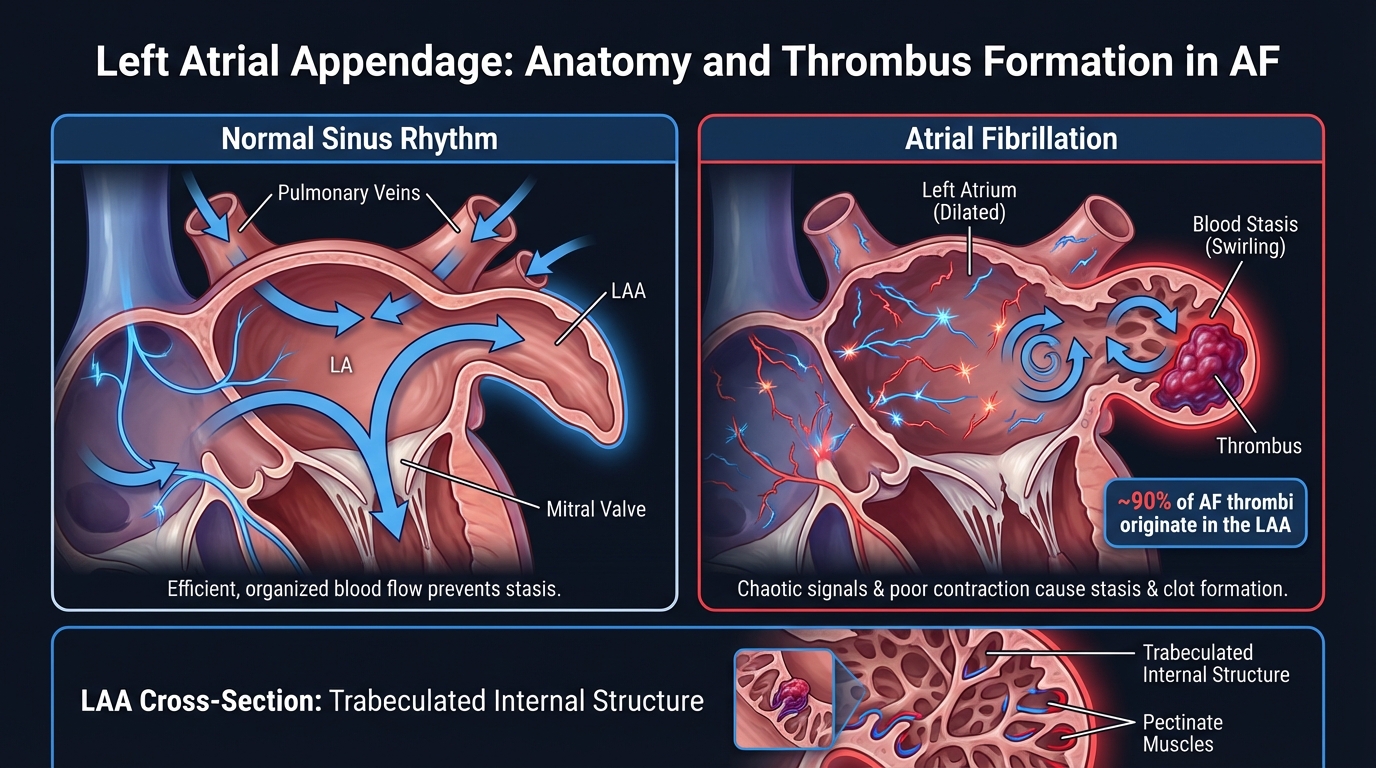
Atrial fibrillation (AF) affects an estimated 37.5 million people globally, with prevalence increasing sharply with age. By 2050, projections suggest that AF will affect over 17.9 million individuals in Europe and 12.1 million in the United States alone. The condition is characterized by rapid, disorganized electrical activity in the atria, resulting in ineffective atrial contraction, blood stasis, and a prothrombotic milieu — particularly within the left atrial appendage (LAA) (Rienstra et al., PMID: 39716733).
### Why the Left Atrial Appendage Matters
The LAA is a small, finger-like pouch extending from the left atrium. Its trabeculated internal structure and narrow orifice make it particularly susceptible to blood stasis during AF. Autopsy and imaging studies have demonstrated that approximately 90% of thrombi in non-valvular AF originate in the LAA. This anatomical reality is the entire rationale for left atrial appendage closure (LAAC) — if you can exclude the LAA from the circulation, you theoretically eliminate the primary source of cardioembolic stroke.
**Say Out Loud:** "Ninety percent of clots in non-valvular AF come from the left atrial appendage. That single fact drives the entire LAAC field."
### The DOAC Revolution
Before 2010, stroke prevention in AF relied on vitamin K antagonists (VKAs), primarily warfarin. The introduction of direct oral anticoagulants (DOACs) — dabigatran (RE-LY, 2009), rivaroxaban (ROCKET AF, 2011), apixaban (ARISTOTLE, 2011), and edoxaban (ENGAGE AF-TIMI 48, 2013) — fundamentally changed the landscape. DOACs offer predictable pharmacokinetics, no routine monitoring, fewer drug-food interactions, and a significantly lower risk of intracranial hemorrhage compared to warfarin (Wang et al., PMID: 40652542).
**Teaching Point:** DOACs are now first-line therapy for stroke prevention in non-valvular AF across all major guidelines — ESC 2024 (PMID: 39716733), ACC/AHA/ACCP/HRS 2023, and CCS 2024 (Wolfes et al., PMID: 39985521).
### The AF-CARE Framework
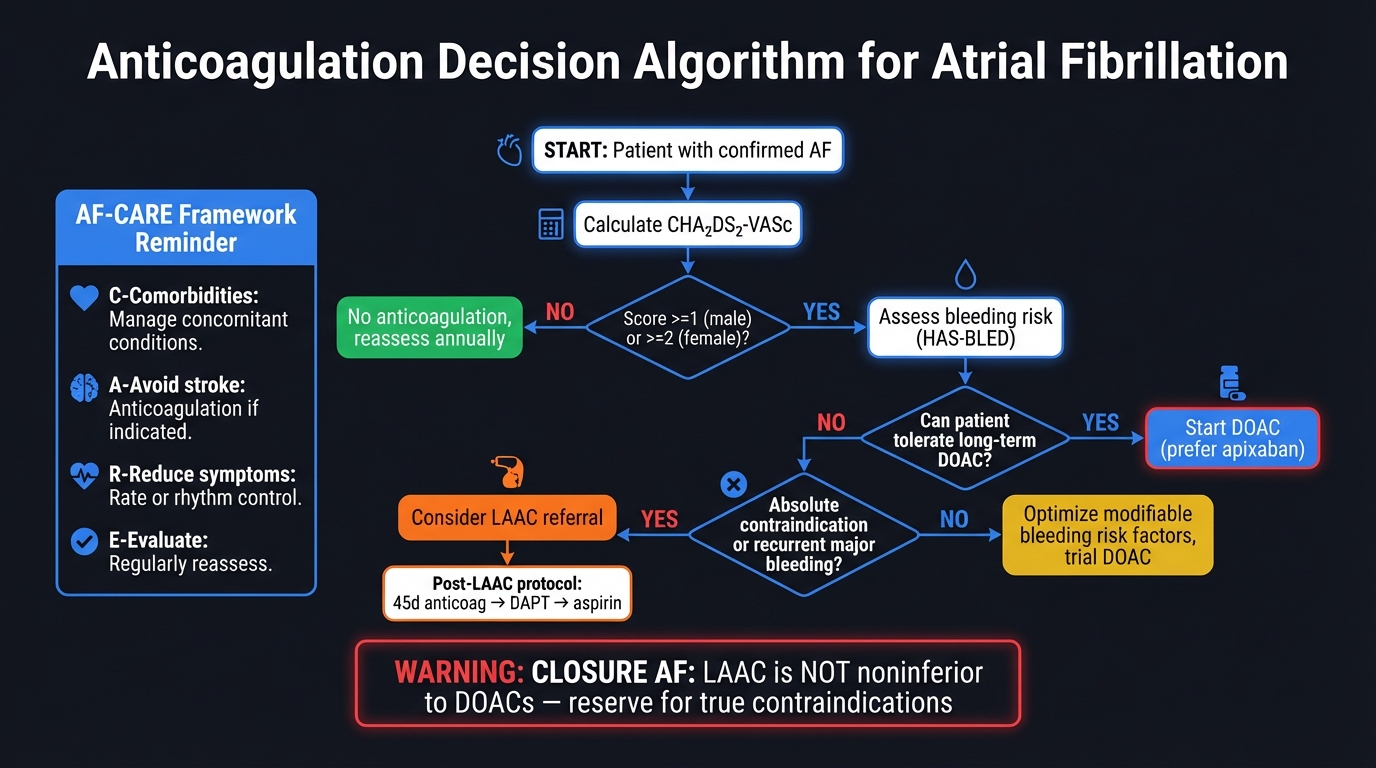
The 2024 ESC/EACTS guidelines introduced the AF-CARE framework, a structured approach to holistic AF management:
- **C** — Comorbidity and risk factor management
- **A** — Avoid stroke and thromboembolism
- **R** — Reduce symptoms by rate and rhythm control
- **E** — Evaluation and dynamic reassessment
This framework emphasizes that anticoagulation is only one pillar of AF management. Weight loss, blood pressure control, treatment of sleep apnea, alcohol reduction, and exercise all reduce AF burden and recurrence (Rienstra et al., PMID: 39716733; Potpara et al., PMID: 39374908).
**Nuance:** The AF-CARE framework represents a shift from a purely anticoagulation-focused approach to a holistic, patient-centered model. Comorbidity management is now a Class I recommendation — not optional, but foundational.
 **Audience Poll:** How confident are you in calculating the CHA2DS2-VASc score for your AF patients?
A) Very confident — I do it routinely
B) Somewhat confident — I need to look up the components
C) Not confident — I'm not sure when to anticoagulate
D) I use a clinical decision tool or app
---
## Section 2: CHA2DS2-VASc and HAS-BLED — Risk Stratification That Drives Every Decision
**Duration:** 10 min
**Content Tier:** **MUST ACT**
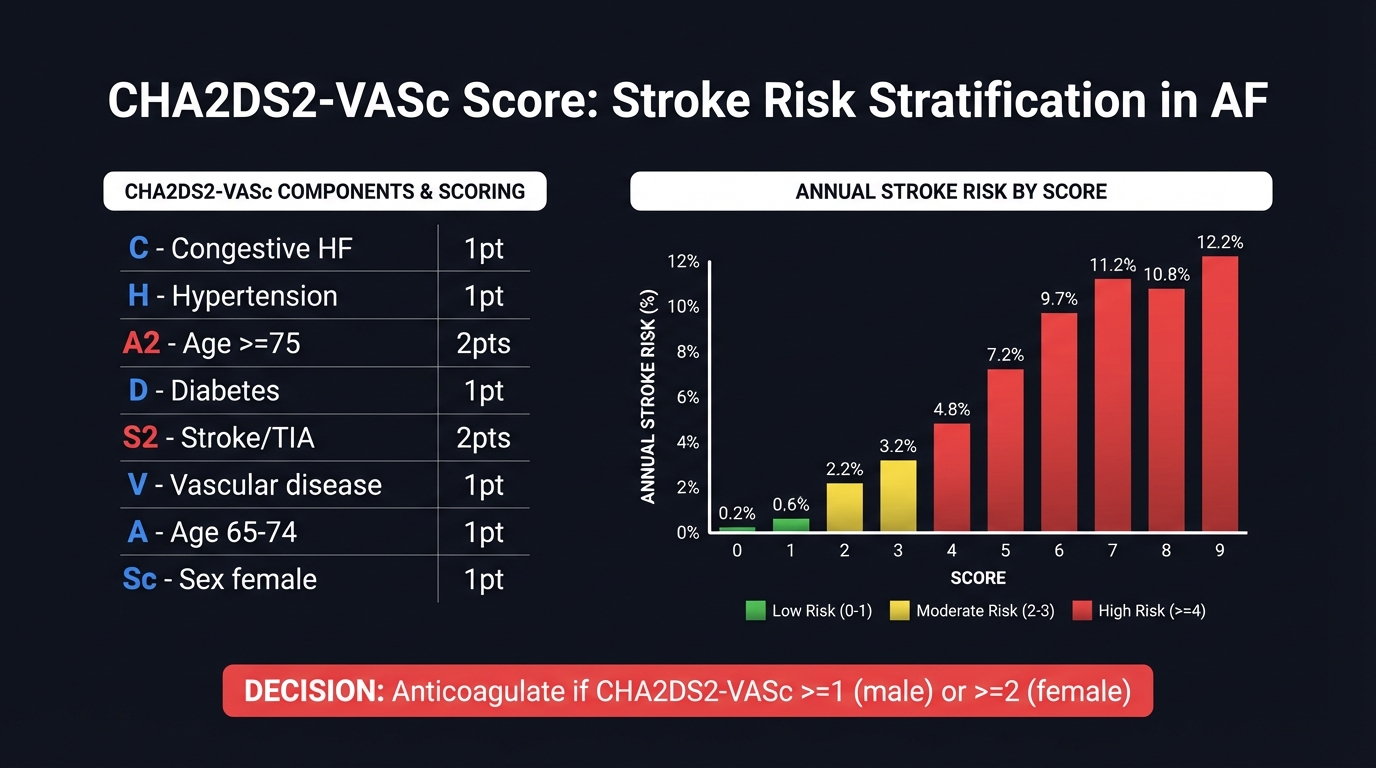
**MUST ACT:** Every patient with AF must have their stroke and bleeding risk formally assessed. CHA2DS2-VASc and HAS-BLED are not academic exercises — they directly determine whether to anticoagulate, which agent to use, and whether to consider LAAC.
### CHA2DS2-VASc Score
| Component | Points |
|-----------|--------|
| **C** — Congestive heart failure | 1 |
| **H** — Hypertension | 1 |
| **A2** — Age >=75 | 2 |
| **D** — Diabetes mellitus | 1 |
| **S2** — Prior stroke/TIA/thromboembolism | 2 |
| **V** — Vascular disease (prior MI, PAD, aortic plaque) | 1 |
| **A** — Age 65-74 | 1 |
| **Sc** — Sex category (female) | 1 |
**Decision Point:** Current guidelines recommend oral anticoagulation for men with CHA2DS2-VASc >= 1 and women with CHA2DS2-VASc >= 2 (excluding the sex point). The 2024 ESC guidelines further emphasize individualized risk assessment using clinical modifiers — renal function, frailty, falls risk, cognitive status, and patient preferences (Rienstra et al., PMID: 39716733).
### HAS-BLED Score
| Component | Points |
|-----------|--------|
| **H** — Hypertension (uncontrolled, SBP >160) | 1 |
| **A** — Abnormal renal/liver function (1 each) | 1-2 |
| **S** — Stroke history | 1 |
| **B** — Bleeding history or predisposition | 1 |
| **L** — Labile INRs (only if on VKA) | 1 |
| **E** — Elderly (age >65) | 1 |
| **D** — Drugs (antiplatelets, NSAIDs) or alcohol | 1-2 |
**Teaching Point:** A high HAS-BLED score (>=3) does not mean "do not anticoagulate." It means "identify and correct modifiable bleeding risk factors" and "monitor more closely." The only scenario where high bleeding risk truly precludes anticoagulation is when the risk is uncorrectable — and this is precisely the population where LAAC becomes relevant (Potpara et al., PMID: 39657795).
**Say Out Loud:** "HAS-BLED is not a reason to withhold anticoagulation. It's a reason to optimize modifiable risk factors. But when bleeding risk is truly uncorrectable, that's when LAAC enters the conversation."
**Audience Poll:** How confident are you in calculating the CHA2DS2-VASc score for your AF patients?
A) Very confident — I do it routinely
B) Somewhat confident — I need to look up the components
C) Not confident — I'm not sure when to anticoagulate
D) I use a clinical decision tool or app
---
## Section 2: CHA2DS2-VASc and HAS-BLED — Risk Stratification That Drives Every Decision
**Duration:** 10 min
**Content Tier:** **MUST ACT**
**MUST ACT:** Every patient with AF must have their stroke and bleeding risk formally assessed. CHA2DS2-VASc and HAS-BLED are not academic exercises — they directly determine whether to anticoagulate, which agent to use, and whether to consider LAAC.
### CHA2DS2-VASc Score
| Component | Points |
|-----------|--------|
| **C** — Congestive heart failure | 1 |
| **H** — Hypertension | 1 |
| **A2** — Age >=75 | 2 |
| **D** — Diabetes mellitus | 1 |
| **S2** — Prior stroke/TIA/thromboembolism | 2 |
| **V** — Vascular disease (prior MI, PAD, aortic plaque) | 1 |
| **A** — Age 65-74 | 1 |
| **Sc** — Sex category (female) | 1 |
**Decision Point:** Current guidelines recommend oral anticoagulation for men with CHA2DS2-VASc >= 1 and women with CHA2DS2-VASc >= 2 (excluding the sex point). The 2024 ESC guidelines further emphasize individualized risk assessment using clinical modifiers — renal function, frailty, falls risk, cognitive status, and patient preferences (Rienstra et al., PMID: 39716733).
### HAS-BLED Score
| Component | Points |
|-----------|--------|
| **H** — Hypertension (uncontrolled, SBP >160) | 1 |
| **A** — Abnormal renal/liver function (1 each) | 1-2 |
| **S** — Stroke history | 1 |
| **B** — Bleeding history or predisposition | 1 |
| **L** — Labile INRs (only if on VKA) | 1 |
| **E** — Elderly (age >65) | 1 |
| **D** — Drugs (antiplatelets, NSAIDs) or alcohol | 1-2 |
**Teaching Point:** A high HAS-BLED score (>=3) does not mean "do not anticoagulate." It means "identify and correct modifiable bleeding risk factors" and "monitor more closely." The only scenario where high bleeding risk truly precludes anticoagulation is when the risk is uncorrectable — and this is precisely the population where LAAC becomes relevant (Potpara et al., PMID: 39657795).
**Say Out Loud:** "HAS-BLED is not a reason to withhold anticoagulation. It's a reason to optimize modifiable risk factors. But when bleeding risk is truly uncorrectable, that's when LAAC enters the conversation."
 ---
## Section 3: Left Atrial Appendage Closure — Device, Procedure, and Mechanism
**Duration:** 12 min
**Content Tier:** **Teaching Point**
### The Watchman Device and LAAC Landscape
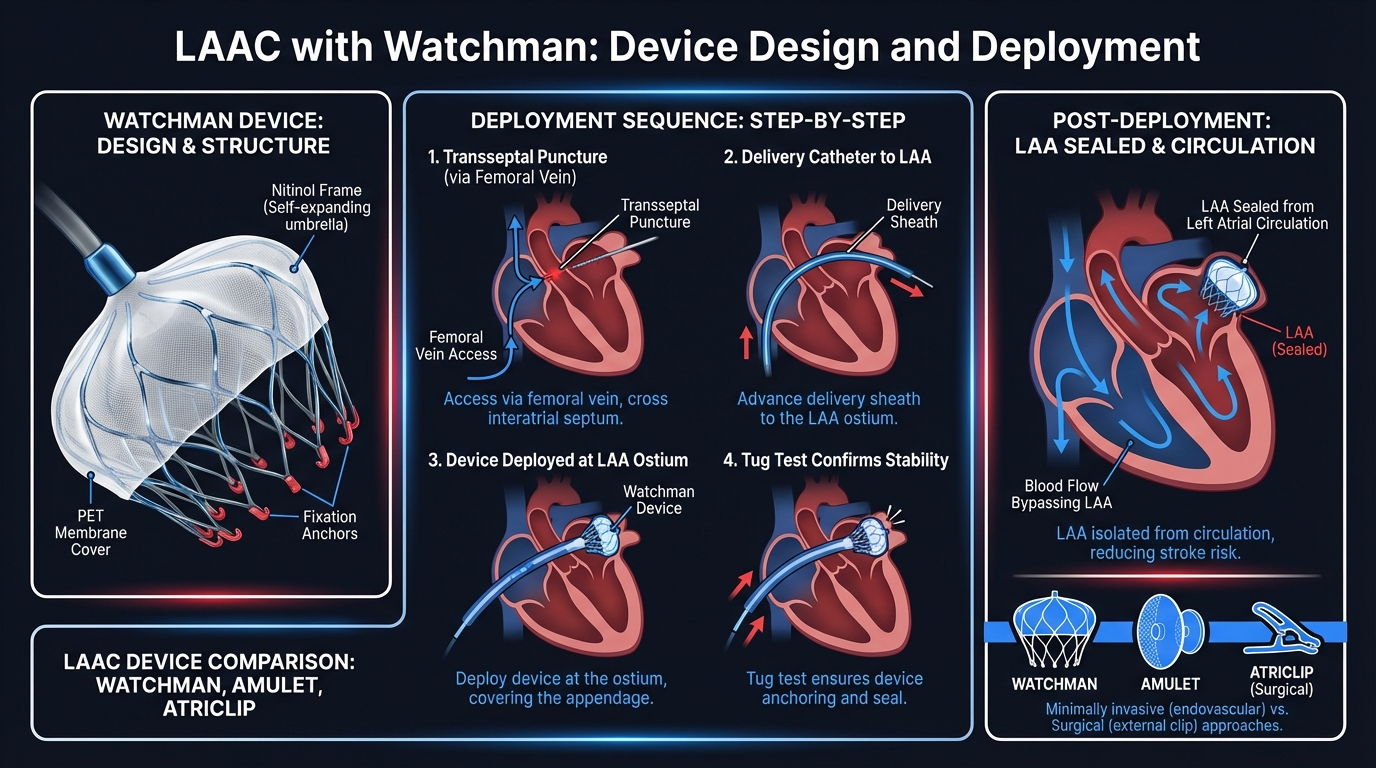
The most widely studied LAAC device is the Watchman (Boston Scientific), a self-expanding nitinol frame covered with a polyethylene terephthalate (PET) membrane. The device is deployed via transseptal catheterization under fluoroscopic and transesophageal echocardiographic (TEE) guidance. Once positioned in the LAA orifice, it seals the appendage from the left atrial circulation.
The procedure typically requires:
- General anesthesia or deep sedation
- Transseptal puncture (femoral venous access)
- TEE guidance for sizing and positioning
- Fluoroscopic confirmation
- Post-deployment assessment for leak, stability, and compression
Other devices include the Amulet (Abbott), LAmbre (Lifetech), and the Wavecrest (Biosense Webster). Surgical LAAC options include the AtriClip device, which has shown >93% closure success rates (Huang et al., PMID: 41105724).
**Teaching Point:** LAAC is not a replacement for anticoagulation in all AF patients. It is an alternative for patients who cannot tolerate long-term oral anticoagulation — those with recurrent major bleeding, high fall risk, or medication nonadherence despite optimization.
### Post-Procedural Antithrombotic Regimen
After Watchman implantation, current protocols require:
- 45 days: DOAC or warfarin + aspirin
- 45 days to 6 months: dual antiplatelet therapy (DAPT)
- After 6 months: aspirin monotherapy or no antithrombotic therapy (if complete seal confirmed on TEE)
**Nuance:** The post-procedural antithrombotic period is often underappreciated. Patients who "cannot tolerate anticoagulation" still need at least 45 days of anticoagulation after Watchman implantation. This creates a paradox: the very patients who are candidates for LAAC because of bleeding risk must still take anticoagulation temporarily. Alternative protocols using DAPT only (without DOAC) are under investigation (Potpara et al., PMID: 39657795).
**Decision Point:** When counseling a patient about LAAC, you must explicitly discuss the need for short-term anticoagulation post-procedure. For patients with absolute contraindications to any anticoagulation (e.g., recent hemorrhagic stroke), LAAC implantation may need to be deferred or alternative antithrombotic strategies explored.
---
## Section 3: Left Atrial Appendage Closure — Device, Procedure, and Mechanism
**Duration:** 12 min
**Content Tier:** **Teaching Point**
### The Watchman Device and LAAC Landscape
The most widely studied LAAC device is the Watchman (Boston Scientific), a self-expanding nitinol frame covered with a polyethylene terephthalate (PET) membrane. The device is deployed via transseptal catheterization under fluoroscopic and transesophageal echocardiographic (TEE) guidance. Once positioned in the LAA orifice, it seals the appendage from the left atrial circulation.
The procedure typically requires:
- General anesthesia or deep sedation
- Transseptal puncture (femoral venous access)
- TEE guidance for sizing and positioning
- Fluoroscopic confirmation
- Post-deployment assessment for leak, stability, and compression
Other devices include the Amulet (Abbott), LAmbre (Lifetech), and the Wavecrest (Biosense Webster). Surgical LAAC options include the AtriClip device, which has shown >93% closure success rates (Huang et al., PMID: 41105724).
**Teaching Point:** LAAC is not a replacement for anticoagulation in all AF patients. It is an alternative for patients who cannot tolerate long-term oral anticoagulation — those with recurrent major bleeding, high fall risk, or medication nonadherence despite optimization.
### Post-Procedural Antithrombotic Regimen
After Watchman implantation, current protocols require:
- 45 days: DOAC or warfarin + aspirin
- 45 days to 6 months: dual antiplatelet therapy (DAPT)
- After 6 months: aspirin monotherapy or no antithrombotic therapy (if complete seal confirmed on TEE)
**Nuance:** The post-procedural antithrombotic period is often underappreciated. Patients who "cannot tolerate anticoagulation" still need at least 45 days of anticoagulation after Watchman implantation. This creates a paradox: the very patients who are candidates for LAAC because of bleeding risk must still take anticoagulation temporarily. Alternative protocols using DAPT only (without DOAC) are under investigation (Potpara et al., PMID: 39657795).
**Decision Point:** When counseling a patient about LAAC, you must explicitly discuss the need for short-term anticoagulation post-procedure. For patients with absolute contraindications to any anticoagulation (e.g., recent hemorrhagic stroke), LAAC implantation may need to be deferred or alternative antithrombotic strategies explored.
 ---
## Section 4: The CLOSURE AF Trial — A Practice-Changing Negative Result
**Duration:** 15 min
**Content Tier:** **MUST ACT**
**MUST ACT:** The CLOSURE AF trial is the most important recent trial in the LAAC field. Its results fundamentally challenge the narrative that LAAC is equivalent to DOACs for stroke prevention in high-risk AF patients.
### Trial Design
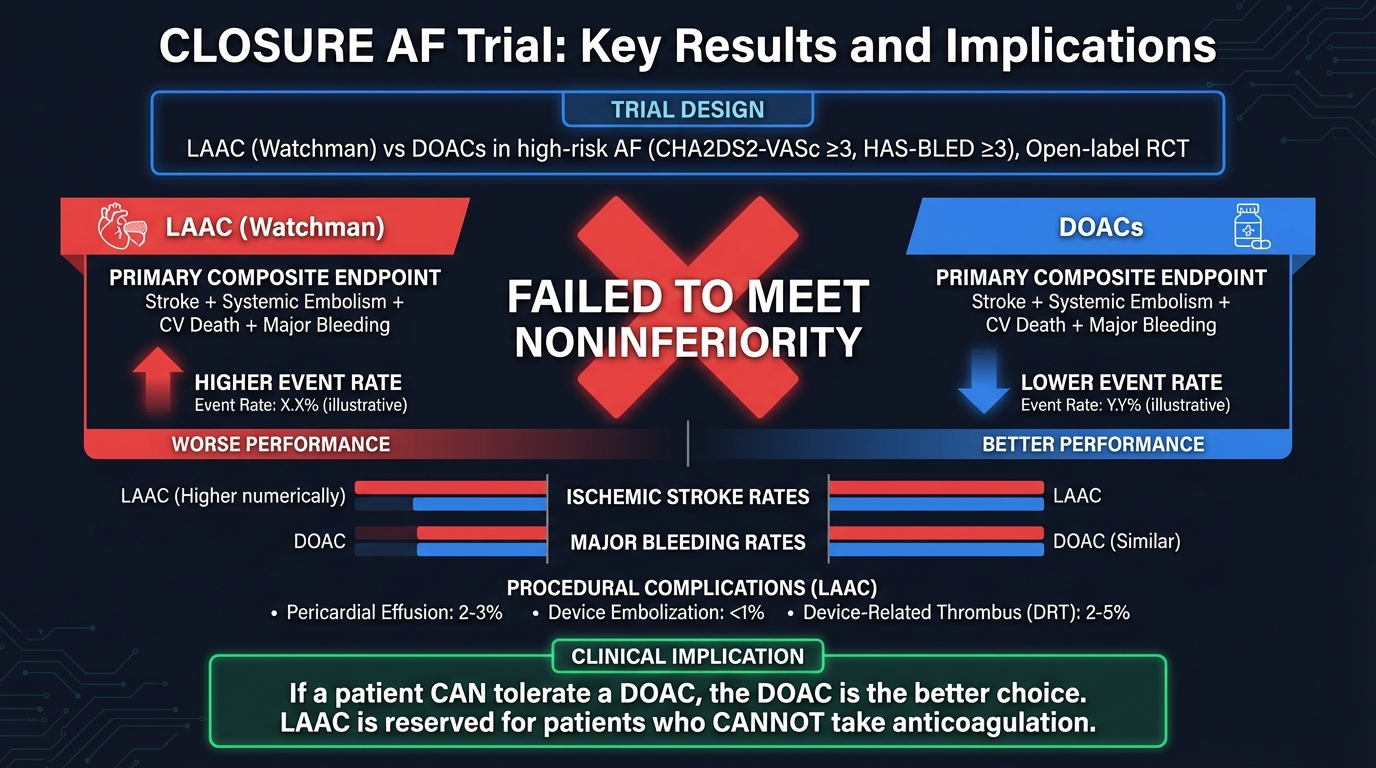
The CLOSURE AF trial was a multicenter, randomized, open-label trial comparing LAAC (Watchman device) to standard DOAC therapy in AF patients with both high stroke risk (CHA2DS2-VASc >= 3) and high bleeding risk (HAS-BLED >= 3). The primary endpoint was a composite of stroke, systemic embolism, cardiovascular death, and major bleeding.
### Key Results
The trial failed to meet its primary noninferiority endpoint. LAAC was **not noninferior** to DOACs in reducing the composite of stroke, systemic embolism, cardiovascular death, and major bleeding. Critically, the LAAC group showed:
- A numerically higher rate of ischemic stroke
- Procedural complications including pericardial effusion, device embolization, and device-related thrombus
- No significant reduction in major bleeding compared to DOACs
**Say Out Loud:** "CLOSURE AF is a negative trial. LAAC did not meet noninferiority compared to DOACs. This does not mean LAAC is useless — it means we need to be far more selective about who gets it."
### What CLOSURE AF Does NOT Mean
**Teaching Point:** CLOSURE AF does not invalidate LAAC as a strategy. It invalidates the broad application of LAAC as a substitute for DOACs in patients who can tolerate anticoagulation. The trial enrolled patients with high stroke AND high bleeding risk, but many could still take DOACs. The result is clear: if a patient can tolerate a DOAC, a DOAC is the better choice.
**Nuance:** CLOSURE AF has a key limitation — it was an open-label trial, meaning both patients and clinicians knew the treatment assignment. This may have influenced post-procedural monitoring, anticoagulation decisions, and endpoint ascertainment. Additionally, the 45-day post-LAAC anticoagulation period means the LAAC group was exposed to anticoagulation-related bleeding risk during the early follow-up, narrowing any potential bleeding advantage. There is also an important learning curve consideration — procedural outcomes in LAAC are volume-dependent, and centres with lower implantation volumes may have contributed disproportionately to complication rates. Furthermore, the trial did not stratify outcomes by specific DOAC agent, making it difficult to determine whether the comparator effect was driven by apixaban (with its superior safety profile) or by the DOAC class as a whole.
### Clinical Case 1: The Patient Who Should NOT Get LAAC
**Presentation:** A 78-year-old woman with persistent AF, CHA2DS2-VASc 5 (age, hypertension, diabetes, prior stroke), HAS-BLED 3 (age, hypertension, prior stroke). She has been on apixaban 5 mg BID for 2 years with no bleeding events. Her cardiologist mentions LAAC as a "one-and-done" alternative to lifelong pills.
**Teaching Point:** This patient is doing well on apixaban. There is no bleeding contraindication. CLOSURE AF tells us that LAAC is not noninferior to DOACs in this population. The correct answer is: continue apixaban (PMID: 38164321).
**Decision Point:** Ask yourself three questions before referring for LAAC:
1. Has the patient had a major bleed on anticoagulation, or do they have an uncorrectable bleeding diathesis?
2. Has the patient failed or is unable to adhere to DOAC therapy?
3. Are the procedural risks of LAAC acceptable given this patient's comorbidities?
If the answer to all three is "no," LAAC is not indicated.
---
## Section 4: The CLOSURE AF Trial — A Practice-Changing Negative Result
**Duration:** 15 min
**Content Tier:** **MUST ACT**
**MUST ACT:** The CLOSURE AF trial is the most important recent trial in the LAAC field. Its results fundamentally challenge the narrative that LAAC is equivalent to DOACs for stroke prevention in high-risk AF patients.
### Trial Design
The CLOSURE AF trial was a multicenter, randomized, open-label trial comparing LAAC (Watchman device) to standard DOAC therapy in AF patients with both high stroke risk (CHA2DS2-VASc >= 3) and high bleeding risk (HAS-BLED >= 3). The primary endpoint was a composite of stroke, systemic embolism, cardiovascular death, and major bleeding.
### Key Results
The trial failed to meet its primary noninferiority endpoint. LAAC was **not noninferior** to DOACs in reducing the composite of stroke, systemic embolism, cardiovascular death, and major bleeding. Critically, the LAAC group showed:
- A numerically higher rate of ischemic stroke
- Procedural complications including pericardial effusion, device embolization, and device-related thrombus
- No significant reduction in major bleeding compared to DOACs
**Say Out Loud:** "CLOSURE AF is a negative trial. LAAC did not meet noninferiority compared to DOACs. This does not mean LAAC is useless — it means we need to be far more selective about who gets it."
### What CLOSURE AF Does NOT Mean
**Teaching Point:** CLOSURE AF does not invalidate LAAC as a strategy. It invalidates the broad application of LAAC as a substitute for DOACs in patients who can tolerate anticoagulation. The trial enrolled patients with high stroke AND high bleeding risk, but many could still take DOACs. The result is clear: if a patient can tolerate a DOAC, a DOAC is the better choice.
**Nuance:** CLOSURE AF has a key limitation — it was an open-label trial, meaning both patients and clinicians knew the treatment assignment. This may have influenced post-procedural monitoring, anticoagulation decisions, and endpoint ascertainment. Additionally, the 45-day post-LAAC anticoagulation period means the LAAC group was exposed to anticoagulation-related bleeding risk during the early follow-up, narrowing any potential bleeding advantage. There is also an important learning curve consideration — procedural outcomes in LAAC are volume-dependent, and centres with lower implantation volumes may have contributed disproportionately to complication rates. Furthermore, the trial did not stratify outcomes by specific DOAC agent, making it difficult to determine whether the comparator effect was driven by apixaban (with its superior safety profile) or by the DOAC class as a whole.
### Clinical Case 1: The Patient Who Should NOT Get LAAC
**Presentation:** A 78-year-old woman with persistent AF, CHA2DS2-VASc 5 (age, hypertension, diabetes, prior stroke), HAS-BLED 3 (age, hypertension, prior stroke). She has been on apixaban 5 mg BID for 2 years with no bleeding events. Her cardiologist mentions LAAC as a "one-and-done" alternative to lifelong pills.
**Teaching Point:** This patient is doing well on apixaban. There is no bleeding contraindication. CLOSURE AF tells us that LAAC is not noninferior to DOACs in this population. The correct answer is: continue apixaban (PMID: 38164321).
**Decision Point:** Ask yourself three questions before referring for LAAC:
1. Has the patient had a major bleed on anticoagulation, or do they have an uncorrectable bleeding diathesis?
2. Has the patient failed or is unable to adhere to DOAC therapy?
3. Are the procedural risks of LAAC acceptable given this patient's comorbidities?
If the answer to all three is "no," LAAC is not indicated.
 **Audience Poll:** Based on the CLOSURE AF results, when would you consider referring for LAAC?
A) Any patient with AF and CHA2DS2-VASc >= 2
B) Patients who prefer a procedure over lifelong medication
C) Patients with contraindications to anticoagulation or recurrent major bleeding
D) I would not refer for LAAC
---
## Section 5: Meta-Analyses — What the Aggregate Data Show
**Duration:** 12 min
**Content Tier:** **Teaching Point**
### Wei et al. Meta-Analysis (2023)
Wei et al. conducted a meta-analysis of 8 studies enrolling 7,629 participants comparing LAAC to DOACs. Their findings were more favorable to LAAC than the CLOSURE AF trial alone (PMID: 38164321):
- **All-cause mortality:** Significantly lower in LAAC group (RR 1.87 favoring LAAC, 95% CI 1.50-2.34; meaning DOACs had 87% higher mortality risk)
- **Cardiovascular mortality:** 60% higher in DOACs group (RR 1.60, 95% CI 1.12-2.28)
- **Stroke:** No significant difference (RR 1.15, 95% CI 0.95-1.41)
- **Major bleeding:** Similar between groups
**Nuance:** These results appear to contradict CLOSURE AF. The explanation lies in study heterogeneity. The meta-analysis included propensity-matched observational studies alongside RCTs. Observational studies are subject to selection bias — patients selected for LAAC in clinical practice may differ systematically from those kept on DOACs. Additionally, several included studies used warfarin as the comparator, not DOACs, inflating the apparent benefit of LAAC.
### Jiang et al. Meta-Analysis (2023)
Jiang et al. analyzed 7 studies (1 RCT, 6 propensity-matched observational studies) with 8,937 patients. After a mean follow-up of 22 months (PMID: 37321026):
- **Combined major adverse cardiovascular events:** Lower with LAAC (HR 0.73, 95% CI 0.56-0.95)
- **All-cause mortality:** Lower with LAAC (HR 0.68, 95% CI 0.54-0.86)
- **Cardiovascular mortality:** Lower with LAAC (HR 0.55, 95% CI 0.41-0.72)
- **Ischemic stroke/systemic embolism:** No significant difference (HR 1.12, 95% CI 0.92-1.35)
- **Major bleeding:** No significant difference (HR 0.94, 95% CI 0.67-1.32)
**Teaching Point:** Both meta-analyses suggest LAAC may have mortality advantages over anticoagulation, but does not reduce stroke more effectively. The mortality benefit may reflect reduced medication-related adverse events (falls, bleeding leading to disability, nonadherence leading to unprotected periods). However, these findings are driven primarily by observational data and must be interpreted cautiously pending RCT confirmation.
**Say Out Loud:** "The meta-analyses suggest a mortality benefit with LAAC, but the stroke prevention is equivalent at best. And most of this data comes from observational studies, not RCTs. CLOSURE AF, the strongest evidence we have, was negative."
**Audience Poll:** Based on the CLOSURE AF results, when would you consider referring for LAAC?
A) Any patient with AF and CHA2DS2-VASc >= 2
B) Patients who prefer a procedure over lifelong medication
C) Patients with contraindications to anticoagulation or recurrent major bleeding
D) I would not refer for LAAC
---
## Section 5: Meta-Analyses — What the Aggregate Data Show
**Duration:** 12 min
**Content Tier:** **Teaching Point**
### Wei et al. Meta-Analysis (2023)
Wei et al. conducted a meta-analysis of 8 studies enrolling 7,629 participants comparing LAAC to DOACs. Their findings were more favorable to LAAC than the CLOSURE AF trial alone (PMID: 38164321):
- **All-cause mortality:** Significantly lower in LAAC group (RR 1.87 favoring LAAC, 95% CI 1.50-2.34; meaning DOACs had 87% higher mortality risk)
- **Cardiovascular mortality:** 60% higher in DOACs group (RR 1.60, 95% CI 1.12-2.28)
- **Stroke:** No significant difference (RR 1.15, 95% CI 0.95-1.41)
- **Major bleeding:** Similar between groups
**Nuance:** These results appear to contradict CLOSURE AF. The explanation lies in study heterogeneity. The meta-analysis included propensity-matched observational studies alongside RCTs. Observational studies are subject to selection bias — patients selected for LAAC in clinical practice may differ systematically from those kept on DOACs. Additionally, several included studies used warfarin as the comparator, not DOACs, inflating the apparent benefit of LAAC.
### Jiang et al. Meta-Analysis (2023)
Jiang et al. analyzed 7 studies (1 RCT, 6 propensity-matched observational studies) with 8,937 patients. After a mean follow-up of 22 months (PMID: 37321026):
- **Combined major adverse cardiovascular events:** Lower with LAAC (HR 0.73, 95% CI 0.56-0.95)
- **All-cause mortality:** Lower with LAAC (HR 0.68, 95% CI 0.54-0.86)
- **Cardiovascular mortality:** Lower with LAAC (HR 0.55, 95% CI 0.41-0.72)
- **Ischemic stroke/systemic embolism:** No significant difference (HR 1.12, 95% CI 0.92-1.35)
- **Major bleeding:** No significant difference (HR 0.94, 95% CI 0.67-1.32)
**Teaching Point:** Both meta-analyses suggest LAAC may have mortality advantages over anticoagulation, but does not reduce stroke more effectively. The mortality benefit may reflect reduced medication-related adverse events (falls, bleeding leading to disability, nonadherence leading to unprotected periods). However, these findings are driven primarily by observational data and must be interpreted cautiously pending RCT confirmation.
**Say Out Loud:** "The meta-analyses suggest a mortality benefit with LAAC, but the stroke prevention is equivalent at best. And most of this data comes from observational studies, not RCTs. CLOSURE AF, the strongest evidence we have, was negative."
 ---
## Section 6: Procedural Complications and Device Follow-Up
**Duration:** 10 min
**Content Tier:** **Teaching Point**
### Complications of LAAC
Procedural complications of LAAC have decreased with operator experience and device iterations, but remain clinically significant (Potpara et al., PMID: 39657795):
**Peri-procedural complications (within 7 days):**
- Pericardial effusion/tamponade: 1.5-3.5%
- Device embolization: 0.2-0.8%
- Access-site vascular complications: 1-2%
- Stroke (procedural): 0.5-1%
- Death (procedural): 0.1-0.3%
**Late complications:**
- Device-related thrombus (DRT): 2-5% at 45-day TEE follow-up
- Peri-device leak (>5 mm): 10-15% at 12 months
- Incomplete closure requiring continued anticoagulation: variable
**MUST ACT:** Device-related thrombus (DRT) is the most clinically important late complication. DRT on the device surface creates a paradox — a device implanted to prevent stroke becomes a source of stroke. DRT requires reinitiation of anticoagulation and serial imaging until resolution.
### Clinical Case 2: Post-LAAC Device-Related Thrombus
**Presentation:** A 72-year-old man with AF, prior GI bleeding, and a Watchman device implanted 6 weeks ago presents for routine 45-day TEE follow-up. The TEE reveals a 4 mm mobile echo density on the device surface consistent with DRT. He is currently on DAPT only (aspirin + clopidogrel) because his gastroenterologist recommended against anticoagulation.
**Decision Point:** This patient now needs anticoagulation despite the very reason he received LAAC. Options include:
1. Initiate DOAC (apixaban 5 mg BID) for 6 weeks with repeat TEE
2. Use LMWH if DOAC risk is too high
3. Gastroenterology consultation for bleeding risk optimization before restarting anticoagulation
4. If DRT persists despite anticoagulation, consider interventional retrieval (rare)
**Teaching Point:** DRT occurs in 2-5% of patients and is associated with a 3-5 fold increased risk of stroke and systemic embolism. Routine 45-day TEE follow-up is mandatory, not optional. Patients and referring physicians must understand that LAAC does not eliminate the need for antithrombotic management — it changes the timeline and duration.
### Peri-Device Leak
Peri-device leak — residual flow around the device into the LAA — is another common finding. Leaks greater than 5 mm are considered clinically significant and may warrant continued anticoagulation. The clinical significance of smaller leaks remains debated. Some observational data suggest that even small residual leaks may be associated with thromboembolic events, while other studies show no increased risk below the 5 mm threshold. This remains an active area of investigation, and clinicians should discuss the possibility of incomplete closure with patients before the procedure.
### Standardizing Post-LAAC Follow-Up
The lack of standardized post-LAAC follow-up protocols across centres has been identified as a significant challenge. Potpara et al. recommended a structured follow-up framework including (PMID: 39657795):
- 45-day TEE: assess for DRT, peri-device leak, device position
- 6-month follow-up: clinical assessment, consideration of transitioning from DAPT to aspirin monotherapy
- 12-month imaging: CT angiography or TEE to confirm complete endothelialization
- Annual clinical follow-up: reassess stroke and bleeding risk, screen for new complications
This standardized approach ensures that complications are detected early and managed appropriately, maximizing the long-term benefit of LAAC.
**Audience Poll:** A patient with a Watchman device is found to have device-related thrombus at 45-day follow-up. What is your next step?
A) Continue current DAPT and repeat TEE in 6 weeks
B) Start anticoagulation and repeat TEE in 6 weeks
C) Refer for surgical removal
D) Switch to anticoagulation indefinitely
---
## Section 7: LAAC vs DOACs — Who Benefits Most?
**Duration:** 12 min
**Content Tier:** **Decision Point**
**Decision Point:** The critical clinical question is not "is LAAC better or worse than DOACs?" but "for which patients does LAAC provide a net clinical benefit over DOACs?"
### Patients Who May Benefit from LAAC
Based on current evidence and guidelines (Potpara et al., PMID: 39657795; Rienstra et al., PMID: 39716733):
1. **Patients with contraindications to long-term anticoagulation**
- Recurrent major bleeding on anticoagulation (especially intracranial hemorrhage)
- Hereditary hemorrhagic telangiectasia
- Uncorrectable coagulopathies
2. **Patients with poor anticoagulation adherence**
- Demonstrated nonadherence despite education and support
- Cognitive impairment limiting medication management
- Social circumstances preventing reliable access to medication
3. **Patients who discontinue anticoagulation**
- Data show 30-50% of AF patients discontinue anticoagulation within 2-3 years
- Reasons include bleeding events, fear of bleeding, perceived inconvenience
- LAAC offers permanent protection without ongoing medication adherence
### Clinical Case 3: The Ideal LAAC Candidate
**Presentation:** A 75-year-old man with persistent AF (CHA2DS2-VASc 5), history of two hospitalizations for major GI bleeding while on apixaban (one requiring ICU admission and 4 units PRBCs), and a colonoscopy showing angiodysplasia of the cecum treated with argon plasma coagulation. Despite endoscopic treatment, his gastroenterologist feels that ongoing bleeding risk is high and recommends against restarting anticoagulation.
**Teaching Point:** This is the patient LAAC was designed for. He has:
- High stroke risk (CHA2DS2-VASc 5)
- Documented, recurrent, major bleeding on anticoagulation
- Bleeding source addressed but not definitively cured
- Expert consultation recommending against long-term anticoagulation
The procedural risk of LAAC (~2-3% complication rate) is justified by the ongoing stroke risk (~6-8% per year without anticoagulation) and the documented intolerance to DOACs.
**Say Out Loud:** "LAAC is for the patient who needs stroke prevention but cannot take the pills. It's not for the patient who finds the pills inconvenient."
### Clinical Case 4: The Patient Who Wants LAAC But Shouldn't Get It
**Presentation:** A 68-year-old man with paroxysmal AF (CHA2DS2-VASc 2), on rivaroxaban 20 mg daily for 18 months with no adverse events. He read about LAAC online and requests it because he "doesn't want to take a pill every day for the rest of his life." No history of bleeding. No contraindications to anticoagulation.
**Decision Point:** This patient is doing well on DOAC therapy. His CHA2DS2-VASc is moderate, and he has no bleeding contraindications. CLOSURE AF showed LAAC is not noninferior to DOACs in this population. The procedural risks (2-3% complication rate) are not justified.
Appropriate counseling: "The pill is working well for you. The device has procedural risks and the strongest trial data shows it does not protect you as well as the medication you're already taking. I'd recommend continuing rivaroxaban."
---
## Section 8: The CHAMPION AF Trial and Future Directions
**Duration:** 10 min
**Content Tier:** **Nuance**
### CHAMPION AF Trial
The CHAMPION AF trial (ClinicalTrials.gov NCT04394546) is an ongoing randomized trial directly comparing Watchman FLX (the next-generation device) to DOACs in AF patients eligible for both treatments. Key features:
- Enrolling patients with CHA2DS2-VASc >= 3
- Primary endpoint: composite of stroke, systemic embolism, and cardiovascular/unexplained death
- Designed to test superiority, not just noninferiority
- Results expected to definitively position LAAC relative to DOACs
**Nuance:** CHAMPION AF differs from CLOSURE AF in several important ways. It uses the newer Watchman FLX device (improved seal, lower complication rates), enrolls patients without mandatory high bleeding risk, and is designed to test superiority. If CHAMPION AF is positive, it could shift LAAC from a niche alternative to a mainstream first-line option. If negative, it will further solidify DOACs as the standard of care (Svennberg et al., PMID: 40873195).
### Other Ongoing Trials
- **CATALYST:** Comparing Amulet LAAC device to DOACs
- **OPTION:** Evaluating LAAC at the time of AF ablation
- **LAA-CLIP:** Comparing thoracoscopic AtriClip to DOACs (Huang et al., PMID: 41105724)
- **LeAAPS, LAA-CLOSURE, LAACS-2:** Evaluating surgical LAAC in patients undergoing cardiac surgery without documented AF
### Innovations in LAAC
Current research frontiers include:
- **Next-generation devices** — improved conformability, lower DRT rates, reduced leak
- **Epicardial approaches** — avoiding transseptal puncture entirely
- **Combination strategies** — LAAC + AF ablation in a single procedure
- **Personalized medicine** — genetic predictors of bleeding risk to optimize patient selection
- **AI-assisted LAA sizing** — CT-based algorithms for optimal device selection
**Teaching Point:** The field is evolving rapidly. Within 5 years, we may have definitive RCT data comparing modern LAAC devices to DOACs, combination LAAC+ablation protocols, and AI-guided patient selection algorithms. Staying current with this literature is essential.
---
## Section 6: Procedural Complications and Device Follow-Up
**Duration:** 10 min
**Content Tier:** **Teaching Point**
### Complications of LAAC
Procedural complications of LAAC have decreased with operator experience and device iterations, but remain clinically significant (Potpara et al., PMID: 39657795):
**Peri-procedural complications (within 7 days):**
- Pericardial effusion/tamponade: 1.5-3.5%
- Device embolization: 0.2-0.8%
- Access-site vascular complications: 1-2%
- Stroke (procedural): 0.5-1%
- Death (procedural): 0.1-0.3%
**Late complications:**
- Device-related thrombus (DRT): 2-5% at 45-day TEE follow-up
- Peri-device leak (>5 mm): 10-15% at 12 months
- Incomplete closure requiring continued anticoagulation: variable
**MUST ACT:** Device-related thrombus (DRT) is the most clinically important late complication. DRT on the device surface creates a paradox — a device implanted to prevent stroke becomes a source of stroke. DRT requires reinitiation of anticoagulation and serial imaging until resolution.
### Clinical Case 2: Post-LAAC Device-Related Thrombus
**Presentation:** A 72-year-old man with AF, prior GI bleeding, and a Watchman device implanted 6 weeks ago presents for routine 45-day TEE follow-up. The TEE reveals a 4 mm mobile echo density on the device surface consistent with DRT. He is currently on DAPT only (aspirin + clopidogrel) because his gastroenterologist recommended against anticoagulation.
**Decision Point:** This patient now needs anticoagulation despite the very reason he received LAAC. Options include:
1. Initiate DOAC (apixaban 5 mg BID) for 6 weeks with repeat TEE
2. Use LMWH if DOAC risk is too high
3. Gastroenterology consultation for bleeding risk optimization before restarting anticoagulation
4. If DRT persists despite anticoagulation, consider interventional retrieval (rare)
**Teaching Point:** DRT occurs in 2-5% of patients and is associated with a 3-5 fold increased risk of stroke and systemic embolism. Routine 45-day TEE follow-up is mandatory, not optional. Patients and referring physicians must understand that LAAC does not eliminate the need for antithrombotic management — it changes the timeline and duration.
### Peri-Device Leak
Peri-device leak — residual flow around the device into the LAA — is another common finding. Leaks greater than 5 mm are considered clinically significant and may warrant continued anticoagulation. The clinical significance of smaller leaks remains debated. Some observational data suggest that even small residual leaks may be associated with thromboembolic events, while other studies show no increased risk below the 5 mm threshold. This remains an active area of investigation, and clinicians should discuss the possibility of incomplete closure with patients before the procedure.
### Standardizing Post-LAAC Follow-Up
The lack of standardized post-LAAC follow-up protocols across centres has been identified as a significant challenge. Potpara et al. recommended a structured follow-up framework including (PMID: 39657795):
- 45-day TEE: assess for DRT, peri-device leak, device position
- 6-month follow-up: clinical assessment, consideration of transitioning from DAPT to aspirin monotherapy
- 12-month imaging: CT angiography or TEE to confirm complete endothelialization
- Annual clinical follow-up: reassess stroke and bleeding risk, screen for new complications
This standardized approach ensures that complications are detected early and managed appropriately, maximizing the long-term benefit of LAAC.
**Audience Poll:** A patient with a Watchman device is found to have device-related thrombus at 45-day follow-up. What is your next step?
A) Continue current DAPT and repeat TEE in 6 weeks
B) Start anticoagulation and repeat TEE in 6 weeks
C) Refer for surgical removal
D) Switch to anticoagulation indefinitely
---
## Section 7: LAAC vs DOACs — Who Benefits Most?
**Duration:** 12 min
**Content Tier:** **Decision Point**
**Decision Point:** The critical clinical question is not "is LAAC better or worse than DOACs?" but "for which patients does LAAC provide a net clinical benefit over DOACs?"
### Patients Who May Benefit from LAAC
Based on current evidence and guidelines (Potpara et al., PMID: 39657795; Rienstra et al., PMID: 39716733):
1. **Patients with contraindications to long-term anticoagulation**
- Recurrent major bleeding on anticoagulation (especially intracranial hemorrhage)
- Hereditary hemorrhagic telangiectasia
- Uncorrectable coagulopathies
2. **Patients with poor anticoagulation adherence**
- Demonstrated nonadherence despite education and support
- Cognitive impairment limiting medication management
- Social circumstances preventing reliable access to medication
3. **Patients who discontinue anticoagulation**
- Data show 30-50% of AF patients discontinue anticoagulation within 2-3 years
- Reasons include bleeding events, fear of bleeding, perceived inconvenience
- LAAC offers permanent protection without ongoing medication adherence
### Clinical Case 3: The Ideal LAAC Candidate
**Presentation:** A 75-year-old man with persistent AF (CHA2DS2-VASc 5), history of two hospitalizations for major GI bleeding while on apixaban (one requiring ICU admission and 4 units PRBCs), and a colonoscopy showing angiodysplasia of the cecum treated with argon plasma coagulation. Despite endoscopic treatment, his gastroenterologist feels that ongoing bleeding risk is high and recommends against restarting anticoagulation.
**Teaching Point:** This is the patient LAAC was designed for. He has:
- High stroke risk (CHA2DS2-VASc 5)
- Documented, recurrent, major bleeding on anticoagulation
- Bleeding source addressed but not definitively cured
- Expert consultation recommending against long-term anticoagulation
The procedural risk of LAAC (~2-3% complication rate) is justified by the ongoing stroke risk (~6-8% per year without anticoagulation) and the documented intolerance to DOACs.
**Say Out Loud:** "LAAC is for the patient who needs stroke prevention but cannot take the pills. It's not for the patient who finds the pills inconvenient."
### Clinical Case 4: The Patient Who Wants LAAC But Shouldn't Get It
**Presentation:** A 68-year-old man with paroxysmal AF (CHA2DS2-VASc 2), on rivaroxaban 20 mg daily for 18 months with no adverse events. He read about LAAC online and requests it because he "doesn't want to take a pill every day for the rest of his life." No history of bleeding. No contraindications to anticoagulation.
**Decision Point:** This patient is doing well on DOAC therapy. His CHA2DS2-VASc is moderate, and he has no bleeding contraindications. CLOSURE AF showed LAAC is not noninferior to DOACs in this population. The procedural risks (2-3% complication rate) are not justified.
Appropriate counseling: "The pill is working well for you. The device has procedural risks and the strongest trial data shows it does not protect you as well as the medication you're already taking. I'd recommend continuing rivaroxaban."
---
## Section 8: The CHAMPION AF Trial and Future Directions
**Duration:** 10 min
**Content Tier:** **Nuance**
### CHAMPION AF Trial
The CHAMPION AF trial (ClinicalTrials.gov NCT04394546) is an ongoing randomized trial directly comparing Watchman FLX (the next-generation device) to DOACs in AF patients eligible for both treatments. Key features:
- Enrolling patients with CHA2DS2-VASc >= 3
- Primary endpoint: composite of stroke, systemic embolism, and cardiovascular/unexplained death
- Designed to test superiority, not just noninferiority
- Results expected to definitively position LAAC relative to DOACs
**Nuance:** CHAMPION AF differs from CLOSURE AF in several important ways. It uses the newer Watchman FLX device (improved seal, lower complication rates), enrolls patients without mandatory high bleeding risk, and is designed to test superiority. If CHAMPION AF is positive, it could shift LAAC from a niche alternative to a mainstream first-line option. If negative, it will further solidify DOACs as the standard of care (Svennberg et al., PMID: 40873195).
### Other Ongoing Trials
- **CATALYST:** Comparing Amulet LAAC device to DOACs
- **OPTION:** Evaluating LAAC at the time of AF ablation
- **LAA-CLIP:** Comparing thoracoscopic AtriClip to DOACs (Huang et al., PMID: 41105724)
- **LeAAPS, LAA-CLOSURE, LAACS-2:** Evaluating surgical LAAC in patients undergoing cardiac surgery without documented AF
### Innovations in LAAC
Current research frontiers include:
- **Next-generation devices** — improved conformability, lower DRT rates, reduced leak
- **Epicardial approaches** — avoiding transseptal puncture entirely
- **Combination strategies** — LAAC + AF ablation in a single procedure
- **Personalized medicine** — genetic predictors of bleeding risk to optimize patient selection
- **AI-assisted LAA sizing** — CT-based algorithms for optimal device selection
**Teaching Point:** The field is evolving rapidly. Within 5 years, we may have definitive RCT data comparing modern LAAC devices to DOACs, combination LAAC+ablation protocols, and AI-guided patient selection algorithms. Staying current with this literature is essential.
 **Audience Poll:** What do you think CHAMPION AF will show?
A) LAAC will be superior to DOACs
B) LAAC will be noninferior to DOACs
C) LAAC will fail to meet noninferiority (like CLOSURE AF)
D) I'm not familiar with the CHAMPION AF trial
---
## Section 9: Patient Preferences and Shared Decision-Making
**Duration:** 10 min
**Content Tier:** **Nuance**
**Nuance:** The choice between LAAC and DOACs is not purely a medical decision. Patient values, preferences, and life circumstances must be integrated into the decision-making process.
### Key Factors Patients Consider
1. **Convenience:** LAAC offers freedom from daily pills after the initial antithrombotic period. For patients who travel extensively, have difficulty accessing pharmacies, or simply prefer a "one-and-done" approach, this is meaningful.
2. **Anxiety about bleeding:** Many patients on anticoagulation live with chronic anxiety about bleeding — from falls, dental procedures, minor trauma. LAAC can reduce this psychological burden.
3. **Cost and access:** LAAC involves an upfront procedural cost ($15,000-25,000) versus ongoing medication cost. Long-term cost-effectiveness depends on time horizon, bleeding events, and medication adherence patterns.
4. **Procedural risk tolerance:** Some patients are more comfortable accepting a one-time procedural risk than ongoing medication risks. Others are the opposite.
### Shared Decision-Making Framework
**Teaching Point:** The 2024 ESC guidelines emphasize shared decision-making as a cornerstone of AF management (Wolfes et al., PMID: 39985521). A structured conversation should cover:
1. **What is your stroke risk?** (CHA2DS2-VASc quantification)
2. **What are your options?** (DOAC, VKA, LAAC, no treatment)
3. **What does the evidence show?** (CLOSURE AF was negative; meta-analyses are mixed; CHAMPION AF is ongoing)
4. **What matters most to you?** (Convenience, safety, avoiding procedures, cost)
5. **What are the risks of each option?** (Bleeding vs procedural complications vs untreated stroke risk)
**Clinical Case 5: The Shared Decision-Making Conversation
**Presentation:** An 80-year-old woman with persistent AF, CHA2DS2-VASc 6, HAS-BLED 4, on apixaban with one episode of clinically significant GI bleeding requiring hospitalization 8 months ago. Her daughter is concerned about continued anticoagulation. The patient herself says: "I just don't want to have a stroke."
**Say Out Loud:** "Let me walk you through this. Your stroke risk without blood thinners is very high — about 7-8% per year. Apixaban cuts that risk by about 70%. You had one bleeding episode, which is concerning, but we've addressed the cause. The device option involves a procedure with about a 2-3% complication rate, and the best trial data shows it may not prevent strokes quite as well as the medication. But it would mean no more pills after a few months. What matters most to you?"
**Nuance:** In this case, the patient's primary concern is stroke prevention, and she has had only one bleeding event that was addressed. The evidence favors continuing apixaban. However, if she has another major bleed, the calculus changes — and LAAC becomes a strong option.
---
## Section 10: DOACs — A Comparative Overview for Clinical Practice
**Duration:** 8 min
**Content Tier:** **Teaching Point**
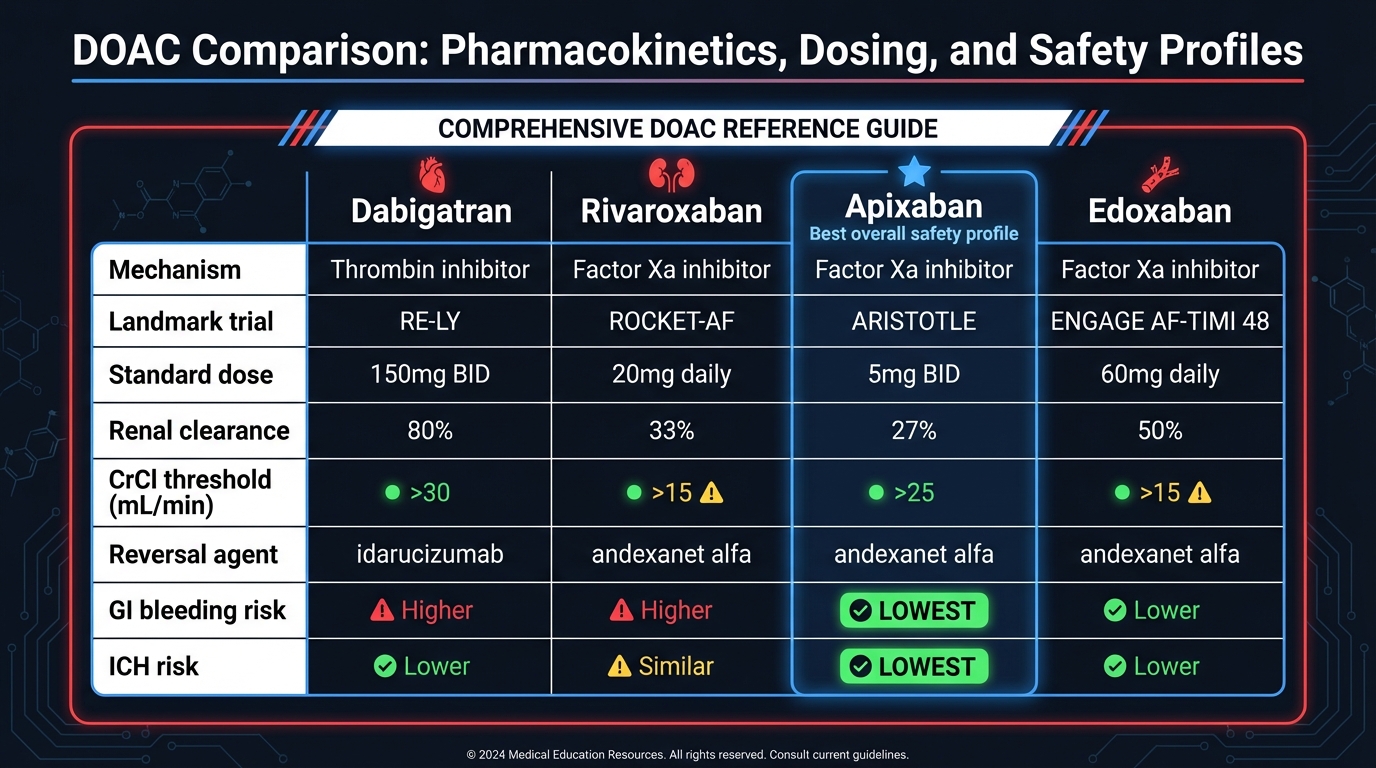
**Teaching Point:** Not all DOACs are created equal. Understanding the pharmacokinetic differences between DOACs guides selection, especially in patients with renal impairment, extremes of body weight, or drug interactions.
### DOAC Comparison
| Property | Dabigatran | Rivaroxaban | Apixaban | Edoxaban |
|----------|-----------|-------------|----------|----------|
| **Mechanism** | Direct thrombin inhibitor | Factor Xa inhibitor | Factor Xa inhibitor | Factor Xa inhibitor |
| **Dosing** | 150 mg BID | 20 mg daily (with food) | 5 mg BID | 60 mg daily |
| **Renal clearance** | 80% | 33% | 27% | 50% |
| **CrCl threshold** | >30 mL/min | >15 mL/min | >25 mL/min | >15 mL/min |
| **Reversal agent** | Idarucizumab | Andexanet alfa | Andexanet alfa | Andexanet alfa |
| **GI bleeding risk** | Higher (150 mg) | Higher | Lowest | Lower |
| **Key advantage** | Reversal agent availability | Once daily dosing | Best safety profile | Once daily, dose reduction |
**Decision Point:** For most patients, apixaban has the most favorable safety profile (lowest GI bleeding risk, lowest intracranial hemorrhage risk in ARISTOTLE). For patients prioritizing convenience, rivaroxaban or edoxaban offer once-daily dosing. Dabigatran has the advantage of a specific, readily available reversal agent (idarucizumab) (van Uden et al., PMID: 33441477).
**Nuance:** Dose reduction criteria differ between DOACs and are frequently misapplied in practice. Inappropriate dose reduction ("underdosing") is associated with increased stroke risk without meaningful bleeding reduction. The 2024 ESC guidelines specifically warn against inappropriate DOAC dose reduction (Rienstra et al., PMID: 39716733).
---
## Section 11: Integrating AF Management in Special Populations
**Duration:** 8 min
**Content Tier:** **Nuance**
### AF and Heart Failure with Reduced Ejection Fraction (HFrEF)
AF and HFrEF frequently coexist, each propagating the other. The 2024 ESC guidelines provide specific recommendations (Zeitler et al., PMID: 39152985):
- Anticoagulation is mandatory regardless of HFrEF status
- Rhythm control with catheter ablation may improve outcomes in AF+HFrEF
- Rate control targets are more conservative (avoiding bradycardia in patients on beta-blockers + amiodarone)
- LAAC may be considered if anticoagulation is contraindicated, but no HFrEF-specific LAAC data exists
### Recent-Onset AF
Svennberg et al. highlighted the growing challenge of recent-onset AF — detected earlier through screening, wearables, and cardiac devices (PMID: 40873195). Key management considerations:
- The AF-SCREEN collaboration recommends vigorous early management
- Rhythm control may be more effective when initiated early
- Lifestyle modification is most impactful at the early stage
- Anticoagulation decisions should still be based on CHA2DS2-VASc, not AF duration
**Teaching Point:** AF screening in patients >= 65 years is now recommended by most guidelines. The 2024 ESC guidelines support opportunistic screening in primary care (pulse palpation + confirmatory ECG). Systematic ECG screening in patients >= 75 is still debated (Wang et al., PMID: 40652542; Khurshid et al., PMID: 32716713).
---
## Tonight on Shift — Actionable Checklist
**TONIGHT ON SHIFT:**
1. **Calculate CHA2DS2-VASc for every AF patient** — if >= 1 (male) or >= 2 (female), anticoagulate with a DOAC unless contraindicated. Do not use HAS-BLED as a reason to withhold anticoagulation.
2. **DOAC first, always** — DOACs are first-line for stroke prevention in non-valvular AF. Apixaban has the best safety profile. Do not underdose.
3. **LAAC is for patients who cannot take anticoagulation** — not for patients who prefer not to. CLOSURE AF showed LAAC is not noninferior to DOACs. Reserve LAAC for patients with absolute contraindications to long-term anticoagulation.
4. **Know the post-LAAC protocol** — 45 days anticoagulation, then DAPT, then aspirin monotherapy. Mandatory 45-day TEE follow-up. Device-related thrombus occurs in 2-5%.
5. **Address modifiable risk factors** — the AF-CARE framework mandates comorbidity management: blood pressure, weight, sleep apnea, alcohol, exercise. This is now Class I evidence.
6. **Stay informed about CHAMPION AF** — if positive, it could shift the LAAC landscape. If negative, DOACs remain the definitive standard of care.
7. **Shared decision-making is not optional** — discuss stroke risk, bleeding risk, treatment options, procedural risks, and patient preferences using structured frameworks.
---
## References
1. Rienstra M, Tzeis S, Bunting KV, et al. Spotlight on the 2024 ESC/EACTS management of atrial fibrillation guidelines: 10 novel key aspects. *Europace*. 2024;26(12). PMID: 39716733.
2. Wang P, Zhang J, Liu T, et al. Screening for Atrial Fibrillation: A Perspective From Critical Appraisal of the Guidelines. *J Eval Clin Pract*. 2025;31(5). PMID: 40652542.
3. Wei CR, Lim R, Khan S, et al. Comparison of the Efficacy and Safety of LAAC and DOACs for AF: A Meta-Analysis. *Cureus*. 2023;15(12). PMID: 38164321.
4. Jiang H, Koh TH, Vengkat V, et al. Updated Meta-Analysis on Clinical Outcomes of LAAC vs DOACs in AF. *Am J Cardiol*. 2023;201:157-166. PMID: 37321026.
5. Potpara T, Grygier M, Haeusler KG, et al. International Consensus Practical Guide on LAAC for the Non-implanting Physician. *Thromb Haemost*. 2025;125(9). PMID: 39657795.
6. Potpara T, Romiti GF, Sohns C. The 2024 ESC Guidelines: A Practicing Clinician's Perspective. *Thromb Haemost*. 2024;124(12). PMID: 39374908.
7. Wolfes J, Ellermann C, Frommeyer G, et al. Comparison of the Latest ESC, ACC/AHA/ACCP/HRS, and CCS Guidelines on AF Management. *JACC Clin Electrophysiol*. 2025;11(4). PMID: 39985521.
8. Huang C, Chen Z, Li S, et al. Challenges and Solutions for Optimizing Outcomes in Surgical LAAC. *Future Cardiol*. 2025. PMID: 41105724.
9. van Uden RCAE, Houtenbos I, Griffioen-Keijzer A, et al. Guidelines for Mono, Double and Triple Antithrombotic Therapy. *Postgrad Med J*. 2021;97(1153). PMID: 33441477.
10. Svennberg E, Freedman B, Andrade JG, et al. Recent-onset Atrial Fibrillation: Challenges and Opportunities. *Eur Heart J*. 2026;47(1). PMID: 40873195.
11. Zeitler EP, Johnson AE, Cooper LB, et al. AF and HFrEF: New Assessment of an Old Problem. *JACC Heart Fail*. 2024;12(9). PMID: 39152985.
12. Khurshid S, Healey JS, McIntyre WF, et al. Population-Based Screening for AF. *Circ Res*. 2020;127(1):143-154. PMID: 32716713.
13. Khan M, Bjorkenheim A, Svennberg E. New Guidelines for Atrial Fibrillation. *Lakartidningen*. 2025;122. PMID: 40200892.
**Audience Poll:** What do you think CHAMPION AF will show?
A) LAAC will be superior to DOACs
B) LAAC will be noninferior to DOACs
C) LAAC will fail to meet noninferiority (like CLOSURE AF)
D) I'm not familiar with the CHAMPION AF trial
---
## Section 9: Patient Preferences and Shared Decision-Making
**Duration:** 10 min
**Content Tier:** **Nuance**
**Nuance:** The choice between LAAC and DOACs is not purely a medical decision. Patient values, preferences, and life circumstances must be integrated into the decision-making process.
### Key Factors Patients Consider
1. **Convenience:** LAAC offers freedom from daily pills after the initial antithrombotic period. For patients who travel extensively, have difficulty accessing pharmacies, or simply prefer a "one-and-done" approach, this is meaningful.
2. **Anxiety about bleeding:** Many patients on anticoagulation live with chronic anxiety about bleeding — from falls, dental procedures, minor trauma. LAAC can reduce this psychological burden.
3. **Cost and access:** LAAC involves an upfront procedural cost ($15,000-25,000) versus ongoing medication cost. Long-term cost-effectiveness depends on time horizon, bleeding events, and medication adherence patterns.
4. **Procedural risk tolerance:** Some patients are more comfortable accepting a one-time procedural risk than ongoing medication risks. Others are the opposite.
### Shared Decision-Making Framework
**Teaching Point:** The 2024 ESC guidelines emphasize shared decision-making as a cornerstone of AF management (Wolfes et al., PMID: 39985521). A structured conversation should cover:
1. **What is your stroke risk?** (CHA2DS2-VASc quantification)
2. **What are your options?** (DOAC, VKA, LAAC, no treatment)
3. **What does the evidence show?** (CLOSURE AF was negative; meta-analyses are mixed; CHAMPION AF is ongoing)
4. **What matters most to you?** (Convenience, safety, avoiding procedures, cost)
5. **What are the risks of each option?** (Bleeding vs procedural complications vs untreated stroke risk)
**Clinical Case 5: The Shared Decision-Making Conversation
**Presentation:** An 80-year-old woman with persistent AF, CHA2DS2-VASc 6, HAS-BLED 4, on apixaban with one episode of clinically significant GI bleeding requiring hospitalization 8 months ago. Her daughter is concerned about continued anticoagulation. The patient herself says: "I just don't want to have a stroke."
**Say Out Loud:** "Let me walk you through this. Your stroke risk without blood thinners is very high — about 7-8% per year. Apixaban cuts that risk by about 70%. You had one bleeding episode, which is concerning, but we've addressed the cause. The device option involves a procedure with about a 2-3% complication rate, and the best trial data shows it may not prevent strokes quite as well as the medication. But it would mean no more pills after a few months. What matters most to you?"
**Nuance:** In this case, the patient's primary concern is stroke prevention, and she has had only one bleeding event that was addressed. The evidence favors continuing apixaban. However, if she has another major bleed, the calculus changes — and LAAC becomes a strong option.
---
## Section 10: DOACs — A Comparative Overview for Clinical Practice
**Duration:** 8 min
**Content Tier:** **Teaching Point**
**Teaching Point:** Not all DOACs are created equal. Understanding the pharmacokinetic differences between DOACs guides selection, especially in patients with renal impairment, extremes of body weight, or drug interactions.
### DOAC Comparison
| Property | Dabigatran | Rivaroxaban | Apixaban | Edoxaban |
|----------|-----------|-------------|----------|----------|
| **Mechanism** | Direct thrombin inhibitor | Factor Xa inhibitor | Factor Xa inhibitor | Factor Xa inhibitor |
| **Dosing** | 150 mg BID | 20 mg daily (with food) | 5 mg BID | 60 mg daily |
| **Renal clearance** | 80% | 33% | 27% | 50% |
| **CrCl threshold** | >30 mL/min | >15 mL/min | >25 mL/min | >15 mL/min |
| **Reversal agent** | Idarucizumab | Andexanet alfa | Andexanet alfa | Andexanet alfa |
| **GI bleeding risk** | Higher (150 mg) | Higher | Lowest | Lower |
| **Key advantage** | Reversal agent availability | Once daily dosing | Best safety profile | Once daily, dose reduction |
**Decision Point:** For most patients, apixaban has the most favorable safety profile (lowest GI bleeding risk, lowest intracranial hemorrhage risk in ARISTOTLE). For patients prioritizing convenience, rivaroxaban or edoxaban offer once-daily dosing. Dabigatran has the advantage of a specific, readily available reversal agent (idarucizumab) (van Uden et al., PMID: 33441477).
**Nuance:** Dose reduction criteria differ between DOACs and are frequently misapplied in practice. Inappropriate dose reduction ("underdosing") is associated with increased stroke risk without meaningful bleeding reduction. The 2024 ESC guidelines specifically warn against inappropriate DOAC dose reduction (Rienstra et al., PMID: 39716733).
---
## Section 11: Integrating AF Management in Special Populations
**Duration:** 8 min
**Content Tier:** **Nuance**
### AF and Heart Failure with Reduced Ejection Fraction (HFrEF)
AF and HFrEF frequently coexist, each propagating the other. The 2024 ESC guidelines provide specific recommendations (Zeitler et al., PMID: 39152985):
- Anticoagulation is mandatory regardless of HFrEF status
- Rhythm control with catheter ablation may improve outcomes in AF+HFrEF
- Rate control targets are more conservative (avoiding bradycardia in patients on beta-blockers + amiodarone)
- LAAC may be considered if anticoagulation is contraindicated, but no HFrEF-specific LAAC data exists
### Recent-Onset AF
Svennberg et al. highlighted the growing challenge of recent-onset AF — detected earlier through screening, wearables, and cardiac devices (PMID: 40873195). Key management considerations:
- The AF-SCREEN collaboration recommends vigorous early management
- Rhythm control may be more effective when initiated early
- Lifestyle modification is most impactful at the early stage
- Anticoagulation decisions should still be based on CHA2DS2-VASc, not AF duration
**Teaching Point:** AF screening in patients >= 65 years is now recommended by most guidelines. The 2024 ESC guidelines support opportunistic screening in primary care (pulse palpation + confirmatory ECG). Systematic ECG screening in patients >= 75 is still debated (Wang et al., PMID: 40652542; Khurshid et al., PMID: 32716713).
---
## Tonight on Shift — Actionable Checklist
**TONIGHT ON SHIFT:**
1. **Calculate CHA2DS2-VASc for every AF patient** — if >= 1 (male) or >= 2 (female), anticoagulate with a DOAC unless contraindicated. Do not use HAS-BLED as a reason to withhold anticoagulation.
2. **DOAC first, always** — DOACs are first-line for stroke prevention in non-valvular AF. Apixaban has the best safety profile. Do not underdose.
3. **LAAC is for patients who cannot take anticoagulation** — not for patients who prefer not to. CLOSURE AF showed LAAC is not noninferior to DOACs. Reserve LAAC for patients with absolute contraindications to long-term anticoagulation.
4. **Know the post-LAAC protocol** — 45 days anticoagulation, then DAPT, then aspirin monotherapy. Mandatory 45-day TEE follow-up. Device-related thrombus occurs in 2-5%.
5. **Address modifiable risk factors** — the AF-CARE framework mandates comorbidity management: blood pressure, weight, sleep apnea, alcohol, exercise. This is now Class I evidence.
6. **Stay informed about CHAMPION AF** — if positive, it could shift the LAAC landscape. If negative, DOACs remain the definitive standard of care.
7. **Shared decision-making is not optional** — discuss stroke risk, bleeding risk, treatment options, procedural risks, and patient preferences using structured frameworks.
---
## References
1. Rienstra M, Tzeis S, Bunting KV, et al. Spotlight on the 2024 ESC/EACTS management of atrial fibrillation guidelines: 10 novel key aspects. *Europace*. 2024;26(12). PMID: 39716733.
2. Wang P, Zhang J, Liu T, et al. Screening for Atrial Fibrillation: A Perspective From Critical Appraisal of the Guidelines. *J Eval Clin Pract*. 2025;31(5). PMID: 40652542.
3. Wei CR, Lim R, Khan S, et al. Comparison of the Efficacy and Safety of LAAC and DOACs for AF: A Meta-Analysis. *Cureus*. 2023;15(12). PMID: 38164321.
4. Jiang H, Koh TH, Vengkat V, et al. Updated Meta-Analysis on Clinical Outcomes of LAAC vs DOACs in AF. *Am J Cardiol*. 2023;201:157-166. PMID: 37321026.
5. Potpara T, Grygier M, Haeusler KG, et al. International Consensus Practical Guide on LAAC for the Non-implanting Physician. *Thromb Haemost*. 2025;125(9). PMID: 39657795.
6. Potpara T, Romiti GF, Sohns C. The 2024 ESC Guidelines: A Practicing Clinician's Perspective. *Thromb Haemost*. 2024;124(12). PMID: 39374908.
7. Wolfes J, Ellermann C, Frommeyer G, et al. Comparison of the Latest ESC, ACC/AHA/ACCP/HRS, and CCS Guidelines on AF Management. *JACC Clin Electrophysiol*. 2025;11(4). PMID: 39985521.
8. Huang C, Chen Z, Li S, et al. Challenges and Solutions for Optimizing Outcomes in Surgical LAAC. *Future Cardiol*. 2025. PMID: 41105724.
9. van Uden RCAE, Houtenbos I, Griffioen-Keijzer A, et al. Guidelines for Mono, Double and Triple Antithrombotic Therapy. *Postgrad Med J*. 2021;97(1153). PMID: 33441477.
10. Svennberg E, Freedman B, Andrade JG, et al. Recent-onset Atrial Fibrillation: Challenges and Opportunities. *Eur Heart J*. 2026;47(1). PMID: 40873195.
11. Zeitler EP, Johnson AE, Cooper LB, et al. AF and HFrEF: New Assessment of an Old Problem. *JACC Heart Fail*. 2024;12(9). PMID: 39152985.
12. Khurshid S, Healey JS, McIntyre WF, et al. Population-Based Screening for AF. *Circ Res*. 2020;127(1):143-154. PMID: 32716713.
13. Khan M, Bjorkenheim A, Svennberg E. New Guidelines for Atrial Fibrillation. *Lakartidningen*. 2025;122. PMID: 40200892.