Sepsis
when an infection turns dangerous
Emergencies · animated video, 4:40 · updated September 27, 2026
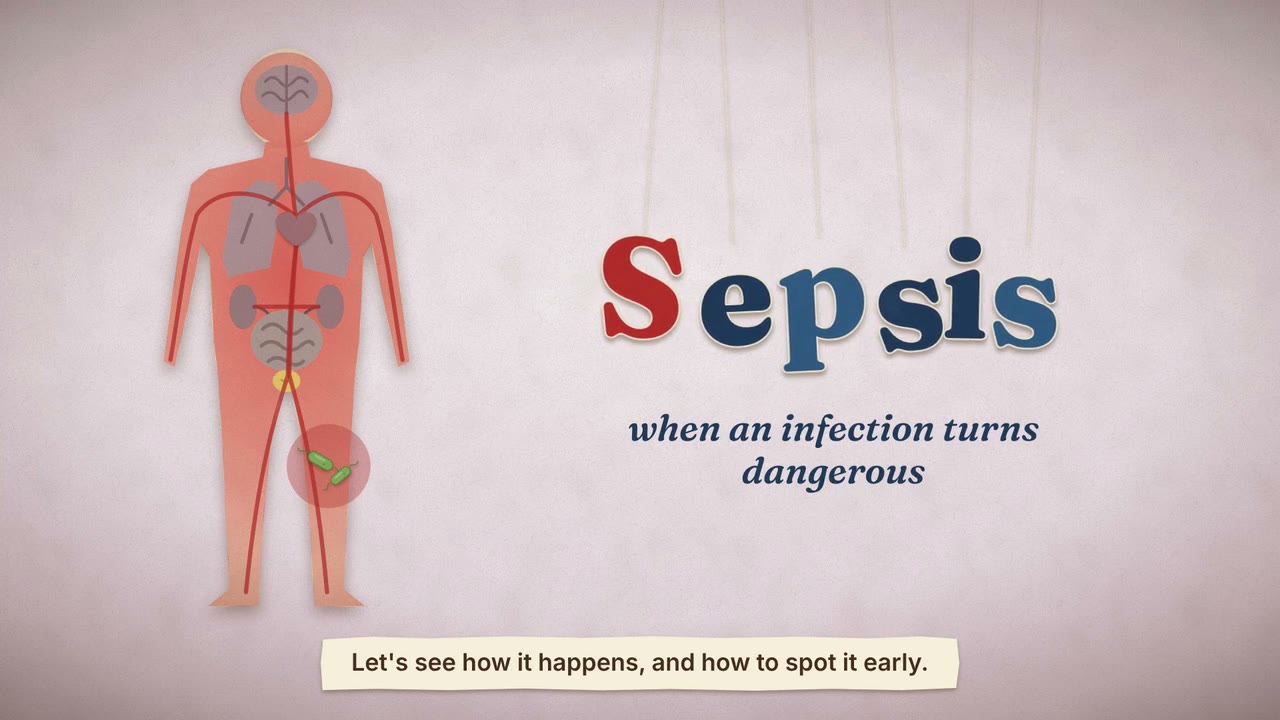
Sepsis is the body's extreme response to an infection, and it can harm its own organs. Learn how it happens, the warning signs, and when to get help fast.
What happens
- Sepsis happens when the body's response to an infection injures its own tissues and organs.
- Almost any infection can lead to it, most often in the lungs, urinary tract, skin or gut.
- Blood vessels leak, blood pressure drops and organs get too little oxygen. Very low blood pressure is septic shock.
- It is a medical emergency: antibiotics and fluids work best when they are given early.
- Most cases start at home, not in hospital. If you're worried, ask: could this be sepsis?
Know the warning signs
- Slurred speech or confusion
- Extreme shivering or muscle pain
- Passing no urine (in a day)
- Severe breathlessness
- It feels like you're going to die
- Skin mottled or discoloured
Signs of sepsis in adults, from the UK Sepsis Trust. If someone has an infection and any of these signs, or is getting worse fast, call 9-1-1 or your local emergency number, or go straight to the emergency department. Ask: could this be sepsis?
Call 9-1-1 or your local emergency number.
What you can do
- Stay up to date on recommended vaccines, like flu, COVID-19 and pneumococcal (pneumonia) vaccines.
- Wash your hands often.
- Keep cuts and wounds clean and covered until they heal.
- Look after long-term conditions such as diabetes, lung disease and kidney disease.
- If an infection isn't getting better, or is getting worse, get checked. Don't wait.
Common questions
Is sepsis the same as a blood infection?
Not exactly. Sepsis is the body's extreme response to an infection, which then harms its own organs. The infection can start anywhere, such as the lungs, the bladder, the skin or the gut. Germs don't have to be in the blood.
What are the first signs of sepsis?
In adults, the UK Sepsis Trust lists slurred speech or confusion, extreme shivering or muscle pain, passing no urine in a day, severe breathlessness, a feeling that you're going to die, and mottled or discoloured skin. Fever or feeling very cold, a fast heartbeat and clammy skin can also be signs. It can get worse quickly, so get help right away.
Can you recover from sepsis?
Yes, many people recover, especially when treatment starts early. Recovery can take time. Up to half of survivors have lasting problems for months, such as tiredness, weakness, poor sleep, or trouble with memory and mood. This is called post-sepsis syndrome, and support is available, so ask your care team about follow-up.
Transcript
Every day, your immune system fights off germs. A sore throat, an infected cut, a bladder infection. Most of the time, you get better, and life goes on.
But sometimes, the body's response to an infection goes too far, and starts to harm the body itself. That's sepsis. Let's see how it happens, and how to spot it early.
First, how defence normally works. When germs get in, white blood cells rush to the spot and send out chemical alarm signals, calling for help.
Nearby blood vessels widen and let more defenders through. The area gets red, warm and swollen. That's inflammation: a healthy, local response.
In sepsis, the response spills over. The alarm signals flood the whole bloodstream, and the body's defences start to injure its own tissues and organs.
That's what doctors mean by sepsis: organs that stop working properly because of the body's response to an infection. It's not just the germ. It's the reaction.
All over the body, the walls of blood vessels become leaky. Fluid seeps out of the blood and into the tissues.
Blood pressure drops. Tiny clots form in the smallest vessels. And less oxygen-rich blood reaches the organs.
Short of oxygen, organs begin to fail: the kidneys, the lungs, the brain, the heart. When blood pressure falls dangerously low, it's called septic shock.
Almost any infection can lead to sepsis. It most often starts with an infection in the lungs, like pneumonia, the urinary tract, the skin, or the gut.
Most cases are caused by bacteria. But viruses, like flu or COVID-nineteen, and fungal infections can trigger it too.
Worldwide, sepsis affects tens of millions of people every year, and it's linked to more than ten million deaths.
Sepsis can happen to anyone, even people who were healthy. But the risk is higher for babies, older adults, people with long-term conditions like diabetes, or kidney or lung disease, and anyone with a weakened immune system.
Sepsis can get worse quickly, so know the warning signs. The UK Sepsis Trust spells them out with the word sepsis.
Slurred speech or confusion. Extreme shivering or muscle pain. Passing no urine in a day.
Severe breathlessness. It feels like you're going to die. Skin mottled or discoloured.
Other signs can include a fever or feeling very cold, a fast heartbeat, and clammy or sweaty skin.
If someone has an infection and any of these signs, or is getting worse fast, call 9-1-1 or your local emergency number, or go straight to the emergency department.
And ask one simple question: could this be sepsis? Asking can help the care team think of it early.
In hospital, every hour counts. Doctors give antibiotics as soon as possible, ideally within the first hour, and fluids through a drip to support blood pressure.
Some people also need oxygen, medicines to raise blood pressure, or care in an intensive care unit. The team also finds and treats the source of the infection.
The good news is that you can lower your risk. It starts with preventing infections. Stay up to date on your vaccines, like flu, COVID-nineteen and pneumonia shots.
Wash your hands often. Keep cuts and wounds clean and covered until they heal. And look after long-term conditions, like diabetes.
And if an infection isn't getting better, or is getting worse, don't wait. Get checked.
Recovery can take time. Many survivors have tiredness, weakness, poor sleep, or trouble with memory and mood for months. This is called post-sepsis syndrome, and support is available.
One common myth is that sepsis only happens in hospital. In fact, most cases start at home, before the person ever reaches a hospital.
So, to recap. An infection triggers an overwhelming response. Blood vessels leak and pressure drops. Organs struggle. And acting fast saves lives.
Now you know what sepsis is, and how to spot it. Trust your instincts, and if you're worried, ask: could this be sepsis?
Sources
- World Health Organization — Sepsis fact sheet
- CDC — About Sepsis
- CDC — Preventing Infections That Can Lead to Sepsis
- UK Sepsis Trust — About sepsis (adult signs)
- NIGMS (NIH) — Sepsis fact sheet
- Singer M et al. Sepsis-3 definitions. JAMA 2016
- Rudd KE et al. Global sepsis incidence and mortality. Lancet 2020
- Sepsis Alliance — Post-sepsis syndrome
General information, not medical advice. If you think you or someone else is having a medical emergency, call 9-1-1 or your local emergency number.