How Your Lungs Work
every breath, step by step
How the body works · animated video, 4:55 · updated September 27, 2026
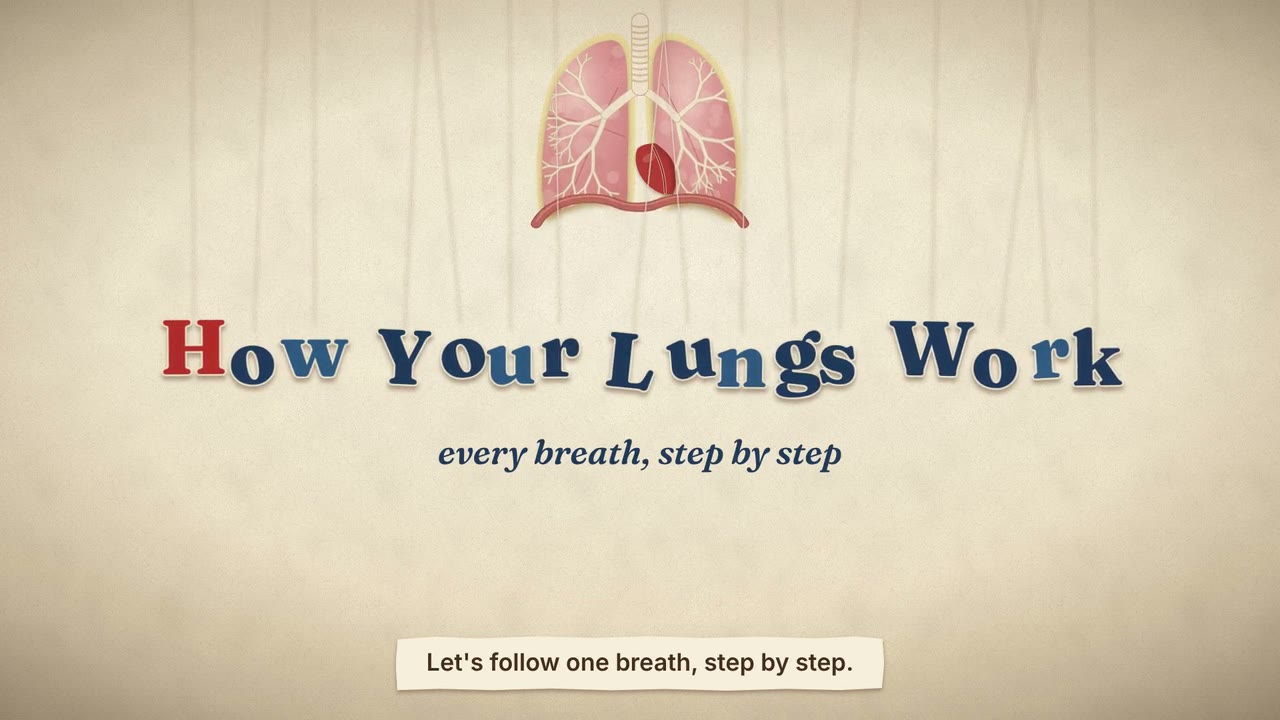
Follow one breath from your nose to the tiny air sacs where oxygen enters your blood, and learn simple ways to protect your lungs.
What happens
- You breathe about 20,000 times a day, mostly without noticing.
- Air travels down branching tubes to hundreds of millions of tiny air sacs called alveoli.
- The diaphragm pulls down, pressure in your chest drops, and outside air pushes in.
- In the air sacs, oxygen moves into your blood and carbon dioxide moves out, across a wall far thinner than a hair.
- Mucus and tiny hairs called cilia keep your airways clean; smoking damages them.
Know the warning signs
- Struggling to breathe
- Can't speak in full sentences
- Lips turning blue
If someone has these signs, call 9-1-1 or your local emergency number.
Call 9-1-1 or your local emergency number.
What you can do
- Don't smoke. Quitting helps at any age.
- Stay active: regular exercise helps your body use oxygen better.
- Keep up with recommended vaccines, such as flu, COVID and pneumonia shots.
- On smoky or high-pollution days, check air quality and take it easy outdoors.
- Test your home for radon.
- See a doctor about a cough lasting more than three weeks or new breathlessness.
Common questions
How many times a day do we breathe?
An adult at rest breathes about 12 to 20 times a minute, which adds up to roughly 20,000 breaths a day.
Is vaping just harmless water vapour?
No. Vaping produces an aerosol that can contain nicotine, tiny particles, chemicals and metals such as nickel, tin and lead, which are breathed deep into the lungs.
When should I see a doctor about a cough?
See a doctor if a cough lasts more than three weeks, keeps getting worse, or if you become breathless doing things that used to be easy. Many lung conditions can be treated, especially when found early.
Transcript
You'll breathe about twenty thousand times today. And you'll hardly notice a single one.
Each breath brings in the oxygen your body needs, and carries away a waste gas it doesn't. Let's follow one breath, step by step.
You have two lungs, soft and spongy, tucked inside your rib cage on either side of your heart. The left one is a little smaller, to make room for it.
A breath usually starts at your nose. Inside, the air is warmed, moistened and filtered before it goes any further.
Then it flows down your windpipe, called the trachea: a tube held open by rings of cartilage.
The windpipe splits into two bronchi, one for each lung. These split again and again, into smaller and smaller tubes called bronchioles.
Turn it over, and it looks like a tree growing upside down: a trunk, then branches, then thousands of tiny twigs.
At the tip of each twig are clusters of tiny air sacs, called alveoli. There are hundreds of millions of them. One careful count found about four hundred and eighty million.
So what actually moves the air? Mostly, a dome-shaped muscle under your lungs, called the diaphragm.
When it tightens, it flattens and pulls down, while muscles between your ribs lift your chest up and out. Your chest gets bigger, the pressure inside drops, and air flows in.
So you don't really suck air in. The air around you pushes its way in. When the diaphragm relaxes, your lungs spring back, and the air flows out.
Deep in your lungs, the air reaches the tiny air sacs. Each one is wrapped in a net of tiny blood vessels, called capillaries.
Oxygen passes from the air, across a wall far thinner than a hair, into your blood. At the same time, carbon dioxide, a waste gas from your cells, passes the other way, to be breathed out.
Spread out flat, all those air sacs would cover roughly half a tennis court. That huge surface is what lets so much oxygen in, so quickly.
What sets your breathing pace? Mostly not oxygen, but carbon dioxide. Sensors in your brain track it, and when it rises, like during exercise, you breathe faster and deeper, automatically.
Your lungs also clean themselves. The airways are lined with a thin layer of sticky mucus that traps dust and germs.
Underneath, countless tiny hairs called cilia sweep the mucus up, like an escalator, to your throat, where you swallow it or cough it out.
Smoking harms this whole system. It damages the cilia, so mucus and dirt build up. That's part of why people who smoke often cough.
Over the years, smoke can also destroy the walls between the air sacs. They merge into fewer, bigger sacs, with much less surface, and they don't grow back. This is emphysema, a type of COPD.
Dirty air matters too. Air pollution, including wildfire smoke, can irritate the airways, and over time, it adds to the risk of lung disease.
See a doctor if a cough lasts more than three weeks, or if you get breathless doing things that used to be easy. Many lung conditions can be treated, especially when found early.
And if someone is struggling to breathe, can't speak in full sentences, or their lips are turning blue, call 9-1-1 or your local emergency number.
The good news is, you can protect your lungs. The biggest step is not smoking. And quitting helps at any age. Within months, coughing and breathlessness often ease.
Keep moving. Regular exercise trains your body to use oxygen better, so everyday tasks leave you less out of breath.
Stay up to date on recommended vaccines, like flu, COVID and pneumonia shots. They help protect your lungs from serious infections.
On smoky days, check the air quality and take it easy outdoors. And test your home for radon, an invisible gas that is the second-leading cause of lung cancer, after smoking.
One common myth is that vaping is just harmless water vapour. In fact, it's an aerosol that can carry nicotine, tiny particles, chemicals and metals deep into your lungs.
So, to recap. Air flows in through branching tubes. The diaphragm does the pulling. Oxygen and carbon dioxide swap in the air sacs. And tiny hairs keep it all clean.
Now you know how your lungs work, one breath at a time. Take a slow, deep one now. They've been working for you all day.
Sources
- NHLBI: How the Lungs Work — The Respiratory System
- Canadian Lung Association: How your lungs work
- American Lung Association: How Your Lungs Get the Job Done
- Ochs M et al. The number of alveoli in the human lung (2004)
- NHLBI: What Is COPD?
- CDC: Health Effects of Vaping
- Health Canada: Radon
- American Lung Association: Exercise and Lung Health
General information, not medical advice. If you think you or someone else is having a medical emergency, call 9-1-1 or your local emergency number.