How Your Digestive System Works
from first bite to last
How the body works · animated video, 4:46 · updated September 28, 2026
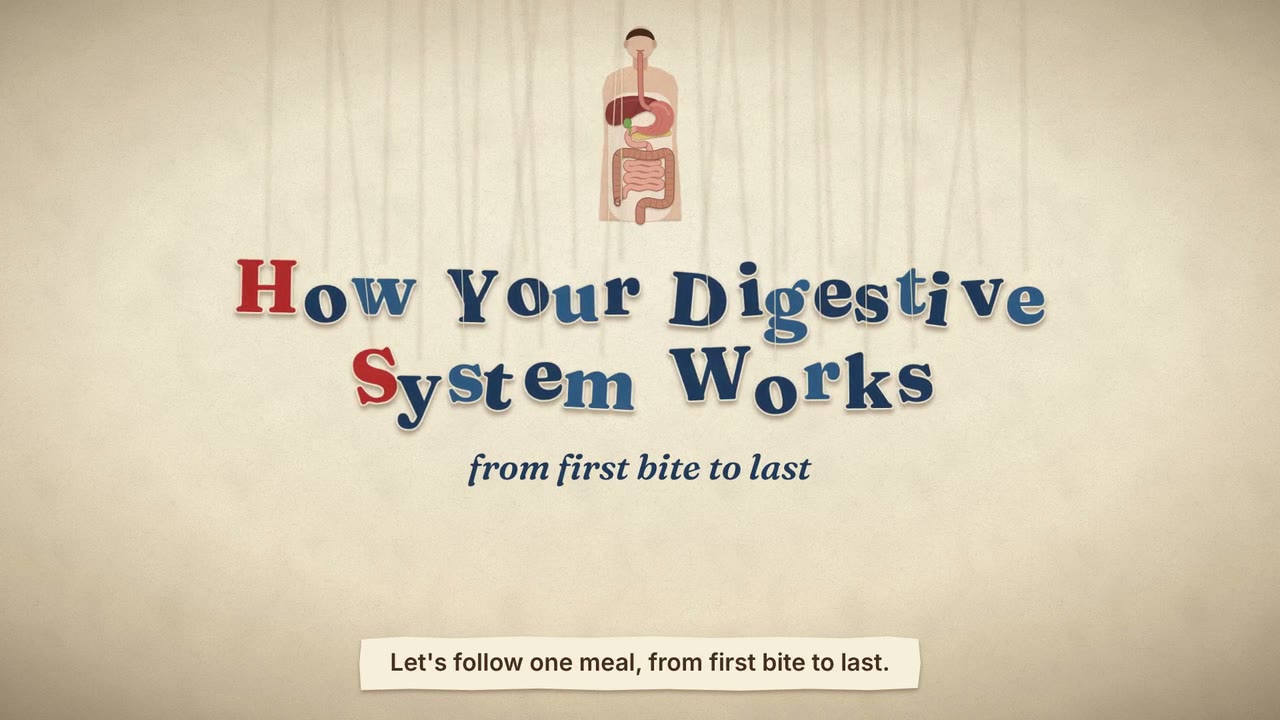
Follow one meal from mouth to stomach, small and large intestine: how food is digested and absorbed, signs to see a doctor, and ways to keep your gut healthy.
What happens
- Your digestive tract is one long tube from mouth to bottom. The liver, gallbladder and pancreas add digestive juices along the way.
- Chewing and saliva start digestion. Waves of muscle (peristalsis) move food down the esophagus, even against gravity.
- The stomach churns food with acid and enzymes. Over a few hours it becomes a thick liquid that passes into the small intestine.
- The small intestine does most of the digestion and absorption. Millions of tiny villi give it a surface of about 30 square metres.
- The large intestine takes back water and is home to tens of trillions of bacteria that feed on fibre. The whole trip often takes a day or two.
Know the warning signs
- Blood in your stool, or black, tarry stool
- Weight loss you can't explain
- Trouble swallowing
- Heartburn that keeps coming back
- A change in your bowel habits that doesn't go away
See a doctor about these signs. If you're vomiting blood, or you have sudden, severe belly pain, call 9-1-1 or your local emergency number.
Call 9-1-1 or your local emergency number.
Looking after your gut
- Eat plenty of fibre from vegetables, fruit, beans and whole grains.
- Drink enough fluids, especially when you eat more fibre.
- Stay active. Moving your body helps your bowels move too.
- Don't smoke, and limit alcohol and processed meats, which are linked to bowel cancer.
- Ask about colorectal (bowel) cancer screening from about age 45 or 50, depending on where you live.
Common questions
How long does it take to digest food?
The whole trip from mouth to toilet often takes a day or two, but it varies a lot between people. Anywhere from about half a day to three days can be normal. Food usually spends a few hours in the stomach, and most of the time is spent in the large intestine.
Do I need a detox or colon cleanse?
No. Your liver and kidneys already remove waste from your body every day. Detox products and colon cleanses haven't been shown to help, and some can cause harm. Fibre, fluids and regular activity are what keep your gut working well.
When should I see a doctor about digestive symptoms?
See a doctor if you notice blood in your stool or black, tarry stool, weight loss you can't explain, trouble swallowing, heartburn that keeps coming back, or a change in your bowel habits that doesn't go away. If you're vomiting blood or have sudden, severe belly pain, call 9-1-1 or your local emergency number.
Transcript
Every meal you eat sets off on a long journey. Metres of winding tube, a team of organs, and trillions of tiny helpers, all working without you having to think about it.
This is your digestive system. Its job is to turn food into fuel and building blocks your body can use. Let's follow one meal, from first bite to last.
Think of it as one long tube, from your mouth to your bottom, called the digestive tract. Along the way, your liver, gallbladder and pancreas add their own digestive juices.
It starts in your mouth. Your teeth grind food into smaller pieces, and saliva softens it. Saliva also carries an enzyme that starts breaking down starches, like bread and rice.
When you swallow, a small flap called the epiglottis folds down over your windpipe, so food goes the right way, into your esophagus.
Your esophagus doesn't rely on gravity. Waves of muscle squeeze the food along, a movement called peristalsis. It works so well that you could even swallow upside down.
Next stop, the stomach: a stretchy, muscular bag. Its walls churn the food, and mix it with acid and enzymes that start breaking down protein.
The acid is strong enough to kill many germs, and a layer of mucus protects the stomach's own lining. Over a few hours, the meal becomes a thick liquid, released a little at a time into the small intestine.
The small intestine is where most digestion and absorption happens. It's narrow, but long: several metres of tube, folded neatly into your belly.
Here, it gets help. The pancreas adds enzymes that break down carbohydrates, fats and proteins. And the liver makes bile, which is stored in the gallbladder and squeezed out to help digest fats.
The inside of the small intestine is lined with millions of tiny, finger-like bumps called villi. And each villus is covered in even smaller bumps of its own.
All those folds give the small intestine a huge surface, about thirty square metres. That's roughly half a badminton court, tucked inside your belly.
Across that surface, nutrients are absorbed into your body: sugars, the building blocks of protein, fats, vitamins and minerals. Your blood then carries them to every cell.
What's left moves on into the large intestine, about one and a half metres long. It takes back much of the remaining water, and turns the waste into stool.
Your large intestine is also home to your gut microbiome: tens of trillions of bacteria, roughly as many as the cells in your body. They feed on fibre, the parts of plants we can't digest on our own, and make substances that help nourish the gut lining.
Finally, stool collects in the rectum until you're ready to go. The whole trip often takes a day or two, though anywhere from about half a day to three days can be normal.
Most tummy troubles, like gas or an upset stomach, come and go. But some signs are worth seeing a doctor about.
Blood in your stool, or black, tarry stool. Weight loss you can't explain. Trouble swallowing. Heartburn that keeps coming back. Or a change in your bowel habits that doesn't go away.
If you're vomiting blood, or you have sudden, severe belly pain, call 9-1-1 or your local emergency number.
Colorectal cancer, or bowel cancer, is common, but screening can find it early, often before any symptoms. Ask about screening from about forty-five or fifty, depending on where you live.
The good news is that everyday habits help your gut. Eat plenty of fibre, from vegetables, fruit, beans and whole grains, and drink enough fluids to keep things moving.
Stay active, because moving your body helps your bowels move too. Don't smoke. And limit alcohol and processed meats, which are linked to bowel cancer.
One common myth is that your gut needs a cleanse, or a detox. In fact, your liver and kidneys already do that job, every day. Detox products and colon cleanses haven't been shown to help, and some can cause harm.
So, to recap. Your mouth starts the work. Your stomach churns. Your small intestine absorbs. And your large intestine, with its bacteria, finishes the job.
Now you know how your digestive system works, and how to look after it. A long journey, every time you eat.
Sources
- NIDDK: Your Digestive System & How It Works
- Cleveland Clinic: Digestive System
- Canadian Digestive Health Foundation: When to talk to your doctor about reflux
- Helander & Fändriks. Surface area of the digestive tract – revisited. Scand J Gastroenterol 2014
- Sender, Fuchs & Milo. Revised estimates for the number of human and bacteria cells in the body. PLoS Biol 2016
- NIDDK: Treatment for Constipation
- NCCIH: "Detoxes" and "Cleanses": What You Need To Know
- USPSTF: Colorectal Cancer Screening (2021)
General information, not medical advice. If you think you or someone else is having a medical emergency, call 9-1-1 or your local emergency number.