Hands-Only CPR
how to help save a life
Emergencies · animated video, 4:23 · updated September 27, 2026
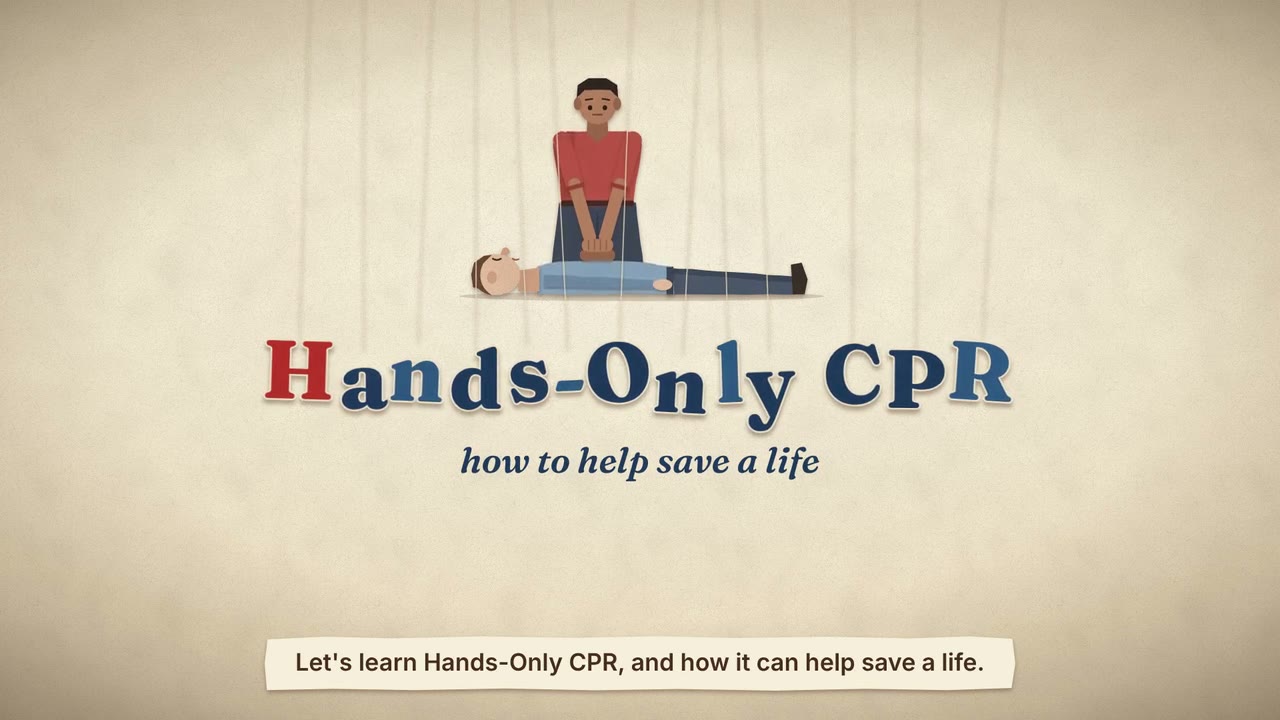
If a teen or adult collapses and isn't breathing normally, call 9-1-1 and push hard and fast in the centre of the chest. Here's how Hands-Only CPR works.
What happens
- Cardiac arrest is an electrical problem: the heart suddenly stops pumping. A heart attack is a blocked artery. A heart attack can trigger a cardiac arrest.
- Someone in cardiac arrest collapses, doesn't respond and isn't breathing normally. Gasping is not normal breathing.
- Immediate CPR from a bystander can double or even triple the chance of survival.
- Call 9-1-1, then push hard and fast in the centre of the chest: at least 5 cm (2 inches) deep, 100 to 120 times a minute.
- Use an AED as soon as one arrives. It talks you through each step and only shocks if a shock is needed.
Know the warning signs
- Suddenly collapses
- Doesn't respond when you tap them and shout
- Isn't breathing normally, or is only gasping
If a teen or adult collapses and isn't breathing normally, call 9-1-1 or your local emergency number and start pushing on the centre of the chest right away.
Call 9-1-1 or your local emergency number.
What you can do
- Take a CPR course. It covers rescue breaths for babies, children, drowning and overdose, too.
- Notice where the AEDs are at work, school, the gym and other places you go.
- Remember the tempo: 100 to 120 pushes a minute, about the beat of Stayin' Alive.
- Save your local emergency number in your phone and know how to use speakerphone.
- If you're ever unsure, call 9-1-1. The dispatcher will coach you through CPR.
Common questions
What is the difference between a cardiac arrest and a heart attack?
A heart attack is a circulation problem: a blocked artery stops blood reaching part of the heart muscle, and the person is usually awake. A cardiac arrest is an electrical problem: the heart's rhythm suddenly fails, it stops pumping, and the person collapses and stops breathing normally. A heart attack can trigger a cardiac arrest.
Can I hurt someone by doing CPR?
Without CPR, a person in cardiac arrest will die. Ribs sometimes crack during chest compressions, and ribs heal. International guidelines say bystanders should start CPR without worrying about causing injury, and in most of Canada and the United States, Good Samaritan laws protect people who help in good faith.
Is Hands-Only CPR right for children and babies?
Hands-Only CPR is for teens and adults who suddenly collapse. For babies and children, and for people after drowning or a drug overdose, CPR with rescue breaths is recommended. A CPR course teaches you how, and a 9-1-1 dispatcher can coach you on the phone.
Transcript
Imagine someone collapses in front of you. They don't respond, and they aren't breathing normally. What you do in the next few minutes could save their life.
This is a cardiac arrest. And you don't need special training to help. Let's learn Hands-Only CPR, and how it can help save a life.
Your heart is a pump with its own electrical system. Steady electrical signals tell the heart muscle to squeeze in rhythm, sending blood to your brain and body.
In a cardiac arrest, that rhythm suddenly goes wrong. Often it turns chaotic: instead of pumping, the heart just quivers, and blood stops moving.
That's different from a heart attack. A heart attack is a circulation problem: a blocked artery. A cardiac arrest is an electrical problem. A heart attack can trigger one, but they're not the same thing.
With no blood flow, the brain is starved of oxygen. Within seconds, the person collapses and stops responding. Without help, death can follow within minutes.
They may still gasp, or make snoring sounds. That is not normal breathing. It's a sign of cardiac arrest, and a signal to start CPR.
Most cardiac arrests outside hospital happen at home. So the person who needs you may well be someone you love.
And the first few minutes matter most. Immediate CPR from someone nearby can double, or even triple, a person's chance of survival.
Pushing on the chest moves blood through the heart and out to the brain. It buys time until a defibrillator and paramedics arrive.
Here's what to do if a teen or adult suddenly collapses. First, make sure the area is safe. Then tap them firmly and shout: are you okay?
If they don't respond and aren't breathing normally, call 9-1-1 or your local emergency number. Put your phone on speaker.
If others are around, point to one person to call, and another to bring an AED: the portable defibrillator found in many public places.
Then start pushing. With the person on their back, kneel beside them. Put the heel of one hand in the centre of the chest, and your other hand on top.
Lock your elbows and keep your arms straight, with your shoulders right over your hands. Push with your body weight, not just your arms.
Push hard: at least five centimetres, or two inches, deep. And push fast: a hundred to a hundred and twenty times a minute.
That's about the beat of the song Stayin' Alive. After each push, let the chest come all the way back up.
Keep going. Don't stop until paramedics take over, an AED is ready to use, or the person starts to wake up and breathe normally.
It's tiring work. If someone else can help, switch about every two minutes, with as little pause as possible.
When the AED arrives, turn it on and follow its spoken instructions. It checks the heart's rhythm for you, and only gives a shock if one is needed.
And you won't be doing this alone. The emergency dispatcher can coach you through every step, right there on the phone.
Hands-Only CPR is for teens and adults who suddenly collapse. For babies and children, and after drowning or a drug overdose, rescue breaths matter too. A CPR course can teach you how.
Worried about legal trouble? In most of Canada and the United States, Good Samaritan laws protect people who help in good faith.
One common myth is that you might hurt the person. But without CPR, someone in cardiac arrest will die. Ribs sometimes crack during CPR, and ribs heal. Trying is always better than doing nothing.
So, to recap. Call 9-1-1. Push hard and fast in the centre of the chest. Use an AED. And don't stop.
You can get ready today. Take a CPR course, and notice where the AEDs are in the places you go every day.
Now you know how to do Hands-Only CPR. If the moment ever comes, you'll know what to do. Your two hands can help save a life.
Sources
- American Heart Association: Hands-Only CPR
- American Heart Association: Cardiac Arrest vs. Heart Attack
- Part 7: Adult Basic Life Support, 2025 AHA Guidelines (Circulation)
- Heart & Stroke Foundation of Canada: Hands-Only CPR poster
- Heart & Stroke Foundation of Canada: AEDs
- ILCOR 2025 Consensus on Science: Executive Summary (Circulation)
- Rib fractures and other injuries after CPR: systematic review (Eur J Trauma Emerg Surg, 2024)
General information, not medical advice. If you think you or someone else is having a medical emergency, call 9-1-1 or your local emergency number.