Cholesterol, Explained
the good, the bad and what to do
Heart health · animated video, 4:31 · updated September 27, 2026
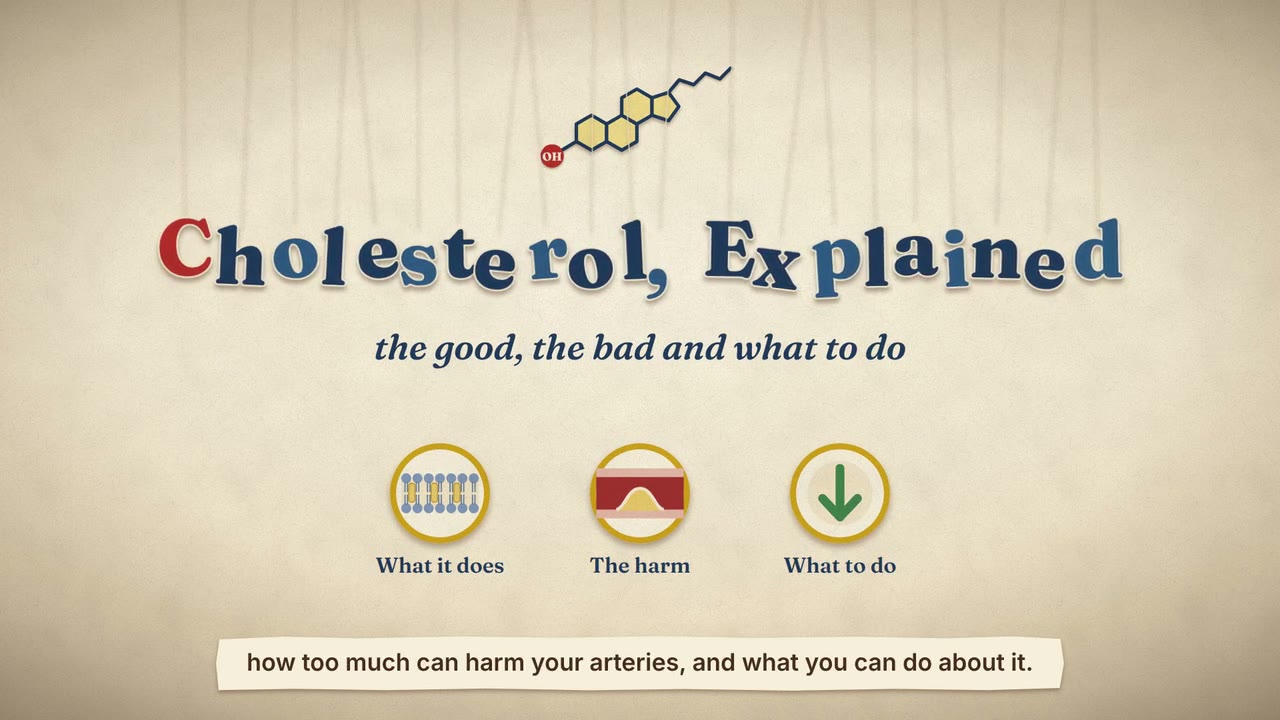
What cholesterol does, how too much LDL builds plaque in your arteries, why a blood test is the only way to know, and what lowers it.
What happens
- Your body needs cholesterol for cell walls, some hormones, vitamin D and bile, and it makes all it needs.
- LDL carries cholesterol to your cells; too much can build up in artery walls as plaque. HDL carries extra back to the liver.
- High cholesterol usually has no symptoms. A simple blood test, a lipid panel, is the only way to know.
- High cholesterol can run in families. Familial hypercholesterolemia affects about 1 in 300 people.
- Food choices, activity, not smoking and, when needed, medicines like statins can lower LDL and the risk of heart attack and stroke.
What you can do
- Cut back on saturated fat (fatty meats, butter, many baked goods) and avoid trans fats.
- Choose healthier fats like olive oil, nuts and fish.
- Eat more fibre: oats, beans, lentils, vegetables and fruit.
- Stay active most days of the week.
- If you smoke, get help to quit.
- Ask your health care provider when to get tested, especially if high cholesterol or early heart disease runs in your family.
Common questions
What is the difference between LDL and HDL cholesterol?
Both are lipoproteins, tiny packages that carry cholesterol in the blood. LDL delivers cholesterol to your cells, and too much of it can build up in artery walls as plaque, so it is called "bad" cholesterol. HDL picks up extra cholesterol and carries it back to the liver, which clears it from the body, so it is called "good" cholesterol.
Can you feel high cholesterol?
Usually not. High cholesterol rarely causes symptoms, so you cannot tell by how you feel or how you look. The only way to know is a blood test called a lipid panel, which measures your cholesterol and triglycerides.
Can thin people have high cholesterol?
Yes. People of any size can have high cholesterol, and genes play a big part. Some families have an inherited condition, familial hypercholesterolemia, that causes very high LDL from birth. Get your cholesterol checked whatever your weight.
Transcript
Cholesterol has a bad reputation. But it's in every cell of your body, and you couldn't live without it.
So why do doctors keep an eye on it? Let's look at what cholesterol does, how too much can harm your arteries, and what you can do about it.
Cholesterol is a waxy, fat-like substance. Your body uses it to build the outer walls of your cells, and to make some hormones, vitamin D, and bile, which helps you digest fat.
Your body makes all the cholesterol it needs, and much of it is made in your liver. Some also comes from foods from animals, like meat, eggs and dairy.
But there's a catch. Cholesterol is fatty, and blood is mostly water. And like oil and water, they don't mix.
Cholesterol travels through your blood in tiny packages called lipoproteins. Think of them as delivery trucks on the highway of your bloodstream.
The main delivery truck is called LDL. It carries cholesterol out to cells all over your body. But when there's too much LDL, it can drop its load inside artery walls. That's why it's called the bad cholesterol.
HDL works more like a clean-up truck. It picks up extra cholesterol and carries it back to the liver, which clears it from the body. That's why HDL is called the good cholesterol.
Here's how too much LDL does harm. LDL particles slip into the artery wall and get stuck. The body sends in cells to clean them up, and a fatty build-up starts to form.
This build-up is called plaque. Over many years, it can narrow the artery. And if a plaque cracks, a blood clot can form and block the artery. That can cause a heart attack or a stroke.
Your blood carries another kind of fat, too, called triglycerides. They store extra energy from the food you eat. High triglycerides, especially with high LDL or low HDL, add to the risk of heart attack and stroke.
Here's the tricky part. High cholesterol usually has no symptoms. You can't feel it, and you can't tell by looking in the mirror.
The only way to know is a simple blood test, called a lipid panel. It measures your cholesterol and triglycerides.
Ask your health care provider when to get tested, and what your numbers mean for you. The right target depends on your overall risk.
For some people, high cholesterol runs in the family. An inherited condition called familial hypercholesterolemia affects about one in three hundred people. It causes very high LDL from birth.
So if a parent, brother or sister has very high cholesterol, or had a heart attack at a young age, tell your health care provider. Finding it early makes a big difference.
The good news is, there's a lot you can do. Start with your plate. Cut back on saturated fat, found in fatty meats, butter and many baked goods, and avoid trans fats.
Choose healthier fats instead, like olive oil, nuts and fish. And eat more fibre. Oats, beans, lentils, vegetables and fruit all help lower LDL.
Keep moving, and if you smoke, get help to quit. Regular activity can lower triglycerides and raise HDL. And quitting smoking helps your HDL and protects your artery walls.
Sometimes, lifestyle changes aren't enough, especially when high cholesterol runs in the family. Medicines called statins lower LDL. They've been studied in large trials for decades, and they lower the risk of heart attack and stroke.
There are other cholesterol-lowering medicines too, if you need them. Your health care provider can help you weigh the benefits and the side effects.
One common myth is that thin people don't get high cholesterol. In fact, people of any size can have it. Genes play a big part, so check your numbers, whatever your weight.
So, to recap. Your body needs cholesterol. Too much LDL builds plaque. High cholesterol is silent, so get tested. And food, activity and medicine can all bring it down.
Now you know what cholesterol is, and how to keep it in check. A simple blood test is a great place to start.
Sources
- CDC — About Cholesterol
- CDC — LDL and HDL Cholesterol and Triglycerides
- MedlinePlus — Cholesterol
- CDC — About Familial Hypercholesterolemia
- American Heart Association — Common Misconceptions about Cholesterol
- Heart & Stroke Foundation of Canada — Eat to lower your cholesterol
- Heart & Stroke Foundation of Canada — Managing cholesterol
- NHLBI — Blood Cholesterol
General information, not medical advice. If you think you or someone else is having a medical emergency, call 9-1-1 or your local emergency number.