Blood Pressure, Explained
what the numbers mean
Heart health · animated video, 4:48 · updated September 27, 2026
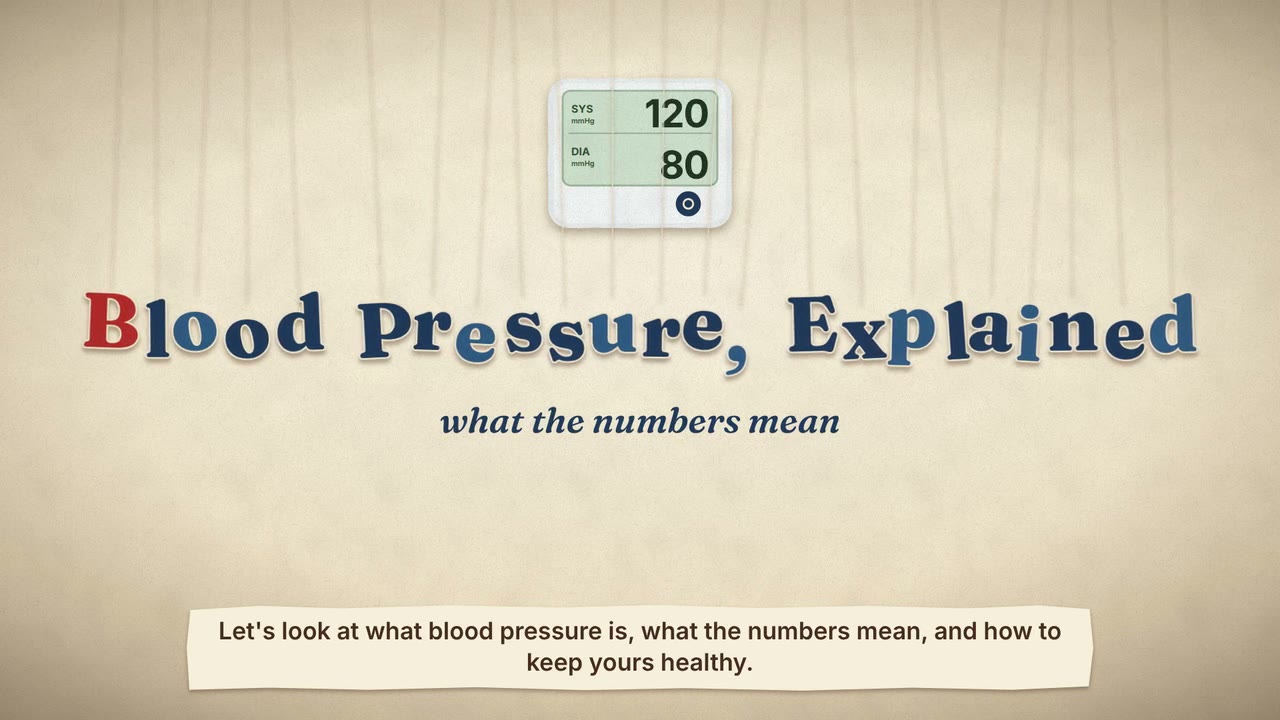
What the two blood pressure numbers mean, what counts as high, why it's called the silent killer, and how to measure and lower yours.
What happens
- Blood pressure has two numbers: systolic (the push when the heart beats) over diastolic (the pressure between beats).
- Under about 120/80 is considered healthy for most adults. Guidelines call it high when readings stay at or above 130/80 or 140/90, so ask your clinician which applies to you.
- High blood pressure usually causes no symptoms, but over the years it damages the heart, brain, kidneys and eyes.
- The only way to know is to measure it, correctly and more than once.
- Less salt, DASH-style eating, activity, a healthy weight, less alcohol and not smoking all help, and medicines work well when they are needed.
Know the warning signs
- A reading above 180/120 with chest pain
- Shortness of breath or back pain
- Weakness or numbness
- Vision changes or trouble speaking
If a reading is above 180/120, wait a minute and check again. If it is still that high and you have any of these symptoms, call 9-1-1 or your local emergency number. If you feel fine, contact your clinician right away.
Call 9-1-1 or your local emergency number.
What you can do
- Measure at home the right way: no caffeine, exercise or smoking for 30 minutes first, then sit quietly for 5 minutes with your back supported, feet flat and arm at heart level. Take two readings a minute apart.
- Cut back on salt, especially from packaged and restaurant food.
- Eat the DASH way: vegetables, fruit, whole grains, beans and low-fat dairy.
- Move more most days, and if you carry extra weight, losing even a little helps.
- Keep alcohol low, and if you smoke, get help to quit.
- If you're prescribed medicine, take it every day, even when you feel fine.
Common questions
What is a normal blood pressure?
For most adults, a reading under about 120/80 is considered healthy. Blood pressure naturally rises and falls through the day with activity, stress and even talking, so doctors look at the pattern across several readings.
What blood pressure is considered high?
It depends on the guideline. American guidelines and Canada's latest home-reading threshold use 130/80. European and UK guidelines use 140/90 for readings taken in the clinic. One high reading isn't enough to diagnose it. Your clinician will tell you which numbers apply to you.
Can you feel high blood pressure?
Usually not. Most people with high blood pressure feel perfectly well, which is why it's called the silent killer. Headaches and nosebleeds aren't a reliable sign. The only way to know is to measure it.
Transcript
Right now, your blood is pressing gently against the walls of your arteries. That pressure is what carries blood to every part of your body.
But when it stays too high for too long, it quietly wears the body down. Let's look at what blood pressure is, what the numbers mean, and how to keep yours healthy.
With every beat, your heart squeezes a surge of blood into your arteries. These are stretchy tubes that carry it all through your body.
Picture waves against a sea wall. Each wave pushes hard, then eases off. Your heartbeat sends a wave of pressure through your arteries, sixty to a hundred times a minute at rest.
Blood pressure is written as two numbers, like one-twenty over eighty, measured in millimetres of mercury.
The top number is the systolic pressure: the peak push, each time your heart squeezes.
The bottom number is the diastolic pressure: what's left while your heart relaxes between beats.
For most adults, a reading under about one-twenty over eighty is considered healthy. And it's normal for blood pressure to rise and fall during the day, with activity, stress, or even talking.
When readings stay high, time after time, that's high blood pressure, also called hypertension. Some guidelines draw the line at one-thirty over eighty. Others use one-forty over ninety. Your clinician can tell you which applies to you.
One high reading doesn't mean you have it. What matters is the pattern, across several readings on different days.
High blood pressure is often called the silent killer, because it usually causes no symptoms at all.
Around the world, about one in three adults aged thirty to seventy-nine has it. And more than four in ten of them don't know.
So what does it do? Like waves pounding a sea wall year after year, extra pressure strains the artery walls. They stiffen, and plaque builds up more easily.
The heart has to pump harder against that pressure. Over time, its muscle can thicken and weaken, raising the risk of heart attack and heart failure.
In the brain, damaged blood vessels can block or burst. High blood pressure is the biggest risk factor for stroke that we can change.
The tiny vessels in the kidneys and the eyes can be damaged too, harming how well the kidneys filter, and how well you see.
The only way to know your blood pressure is to measure it: at a clinic, a pharmacy, or at home with a validated upper-arm monitor.
For a good home reading, skip caffeine, exercise and smoking for thirty minutes first, and empty your bladder. Then sit quietly for five minutes, back supported, feet flat, legs uncrossed.
Rest your arm on a table at heart level, with the right-sized cuff on bare skin. Don't talk. Take two readings, a minute apart, and write them down.
If a reading is above one-eighty over one-twenty, wait a minute and check again. If it's still that high and you feel fine, contact your clinician right away.
But if it comes with chest pain, shortness of breath, back pain, weakness or numbness, vision changes or trouble speaking, call 9-1-1 or your local emergency number.
Now the good news: high blood pressure responds well to everyday changes. Start with salt. Most of the salt we eat is already in packaged and restaurant food.
An eating pattern called DASH, rich in vegetables, fruit, whole grains, beans and low-fat dairy, can lower blood pressure within a few weeks.
Move more, most days. If you carry extra weight, losing even a little helps. Keep alcohol low, and if you smoke, quitting protects your heart and arteries.
Many people also need medicine, and that's okay. Blood pressure medicines are well studied, and they work. Lowering the top number by ten points cuts the risk of stroke by about a quarter.
One common myth: I'd feel it if my blood pressure were high. In fact, most people with high blood pressure feel perfectly well. Headaches and nosebleeds aren't a reliable sign. Only a reading tells you.
So, to recap. Two numbers: the push, and the pause. High pressure is usually silent. Measure it the right way. And everyday changes, plus medicine when needed, bring it down.
Now you know what the numbers mean. Get yours checked. It takes a minute, and it can protect you for years.
Sources
- World Health Organization — Hypertension fact sheet
- WHO — Global report on hypertension 2025
- American Heart Association — Understanding blood pressure readings
- American Heart Association — When to call 911 about high blood pressure
- CDC — Measuring your blood pressure at home
- NHLBI — DASH eating plan
- Heart & Stroke Foundation of Canada — High blood pressure
- 2025 AHA/ACC High Blood Pressure Guideline (Circulation)
General information, not medical advice. If you think you or someone else is having a medical emergency, call 9-1-1 or your local emergency number.