Asthma, Explained
what's happening in your airways
Lung health · animated video, 4:08 · updated September 28, 2026
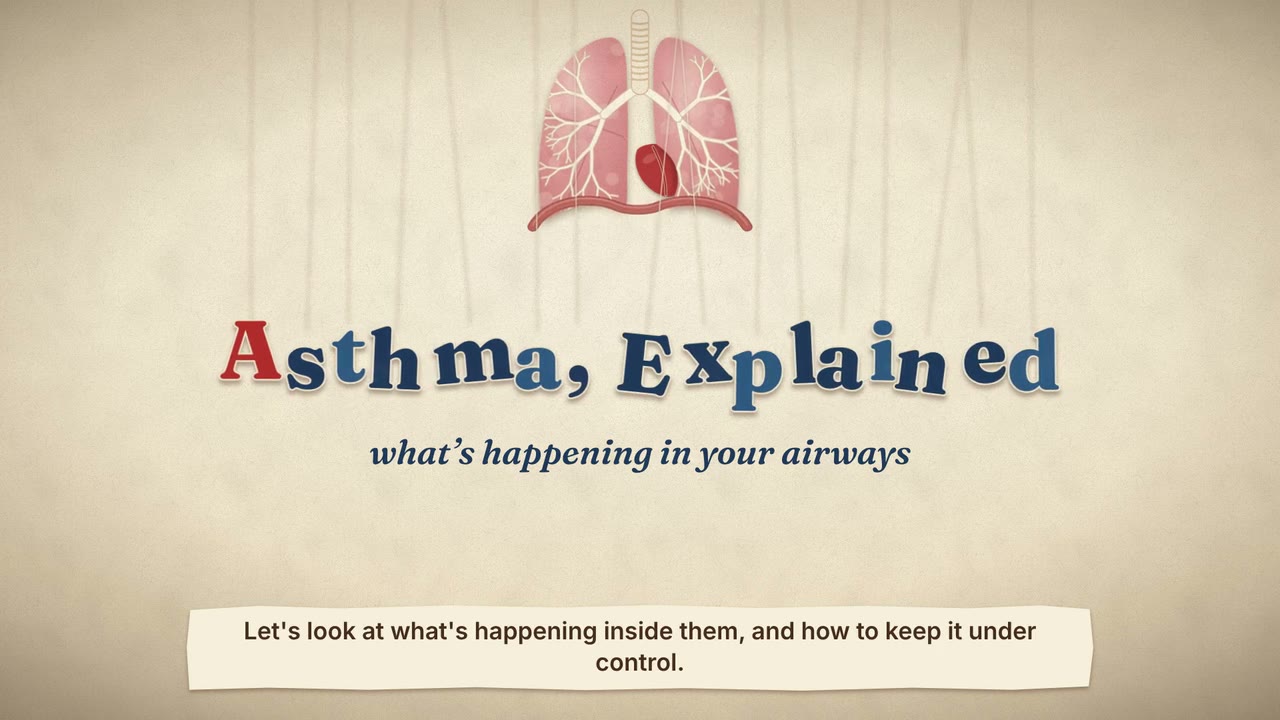
What happens inside your airways during asthma, the common signs and triggers, how preventer and reliever inhalers work, and when to call 9-1-1.
What happens
- In asthma, the airways are inflamed and extra sensitive, even on days you feel fine.
- In a flare-up, three things narrow the airway: the lining swells, extra mucus builds up, and the muscle around it squeezes (bronchospasm).
- Common signs are wheezing, a cough that's often worse at night, a tight chest and shortness of breath.
- Preventers calm the inflammation over time; relievers open the airways within minutes. For most adults and teens, a reliever alone isn't enough.
- A written asthma action plan tells you what to do in the green, yellow and red zones.
Know the warning signs
- Can't speak in full sentences
- Lips turning blue or grey
- Reliever isn't helping
- Drowsy or confused
If someone has these signs, call 9-1-1 or your local emergency number right away.
Call 9-1-1 or your local emergency number.
What you can do
- Ask for a written asthma action plan, and keep it where you can find it.
- Ask your clinician whether your reliever should also contain a preventer.
- Have your inhaler technique checked; with a puffer, use a spacer.
- Learn your triggers and steer clear of them when you can.
- Don't smoke, and avoid second-hand smoke.
- Stay up to date on flu and COVID shots, and check the air quality on smoky days.
Common questions
What happens in the lungs during an asthma attack?
The airways, which are already inflamed and sensitive, narrow in three ways: the lining swells, it makes extra thick mucus, and the band of muscle around each airway tightens (bronchospasm). Air has to squeeze through a much narrower tube, which can cause wheezing, coughing, a tight chest and shortness of breath.
What is the difference between a preventer and a reliever inhaler?
A preventer (controller) usually contains an inhaled corticosteroid that calms the inflammation in the airways over time, so flare-ups happen less often. A reliever works within minutes to relax the tightened muscle and open the airways. International guidelines advise that most adults and teens shouldn't rely on a reliever alone, and for many people the preferred reliever also contains a preventer. Ask your clinician which plan is right for you.
Can you get asthma as an adult?
Yes. Asthma often starts in childhood, but it can begin at any age, including later in life, and it often continues into adulthood. New wheezing, a cough that won't go away, or breathlessness are worth getting checked.
Transcript
For most people, breathing takes no effort at all. But for about two hundred and sixty million people around the world, some days, every breath is hard work.
They live with asthma, a long-term condition of the airways. Let's look at what's happening inside them, and how to keep it under control.
When you breathe in, air flows down your windpipe, then through branching tubes, called bronchi and bronchioles, deep into your lungs.
Let's slice one airway open. It's a soft tube, lined with a thin layer of mucus, and wrapped in a band of smooth muscle.
In a healthy airway, the muscle is relaxed, the lining is calm, and the opening is wide. Air flows through easily.
In asthma, the airways are inflamed and extra sensitive, even on days when you feel fine. They overreact to things that most people barely notice.
When sensitive airways are set off, it can lead to a flare-up, or asthma attack. Three things happen, and they all narrow the airway.
First, the lining swells.
Second, it makes extra mucus, thick and sticky, which clogs the space even more.
Third, the muscle around the airway tightens and squeezes. This is called bronchospasm.
Now air has to force its way through a much narrower tube. It's a bit like breathing through a straw. That can make a whistling sound, called a wheeze.
So the common signs of asthma are wheezing, a cough that's often worse at night, a tight chest, and shortness of breath. They can come and go.
Flare-ups are often set off by triggers. Common ones include colds and other viruses, pollen, dust mites, pets, mould, and cigarette smoke.
Cold air, exercise and air pollution, including wildfire smoke, can trigger them too. Learning your own triggers helps you steer clear of them.
The good news is that asthma can usually be well controlled. Treatment works on both problems: the inflamed lining, and the tight muscle.
Preventer inhalers, also called controllers, usually contain an inhaled corticosteroid. Over time, they calm the inflammation, so flare-ups happen less often.
Reliever inhalers work fast. They relax the tightened muscle, and open the airways within minutes.
International guidelines now advise that most adults and teens shouldn't rely on a quick reliever alone. For many people, the reliever also contains a preventer. Ask your clinician whether yours should.
How you use your inhaler matters, too. With a puffer, a spacer helps more of the medicine reach your lungs. Ask to have your technique checked.
Ask for a written asthma action plan. It works like a traffic light. Green means you're doing well. Yellow means your asthma is getting worse, and tells you what to change. Red means get help now.
Call 9-1-1 or your local emergency number if someone can't speak in full sentences, their lips turn blue or grey, their reliever isn't helping, or they become drowsy or confused.
You can lower your risk of flare-ups. Don't smoke, and avoid second-hand smoke. Stay up to date on flu and COVID shots. And on smoky days, check the air quality.
One common myth is that asthma is only a childhood disease. In fact, it can start at any age, even later in life, and it often continues into adulthood.
So, to recap. In asthma, the airways are sensitive. In a flare-up, they swell, fill with mucus and squeeze tight. Preventers calm them, relievers open them. And a plan keeps you in control.
Now you know what's happening in your airways. With the right treatment and a plan, most people with asthma can breathe easier, and live a full, active life.
Sources
- Global Initiative for Asthma (GINA) — Summary Guide for Asthma Management and Prevention (2025)
- Yang CL et al. Canadian Thoracic Society 2021 Guideline update: diagnosis and management of asthma in preschoolers, children and adults
- NHLBI — What Is Asthma?
- NHLBI — Asthma Action Plan
- Asthma Canada — Asthma Attacks
- World Health Organization — Asthma fact sheet
General information, not medical advice. If you think you or someone else is having a medical emergency, call 9-1-1 or your local emergency number.