Anaphylaxis
when an allergy becomes an emergency
Emergencies · animated video, 4:10 · updated September 28, 2026
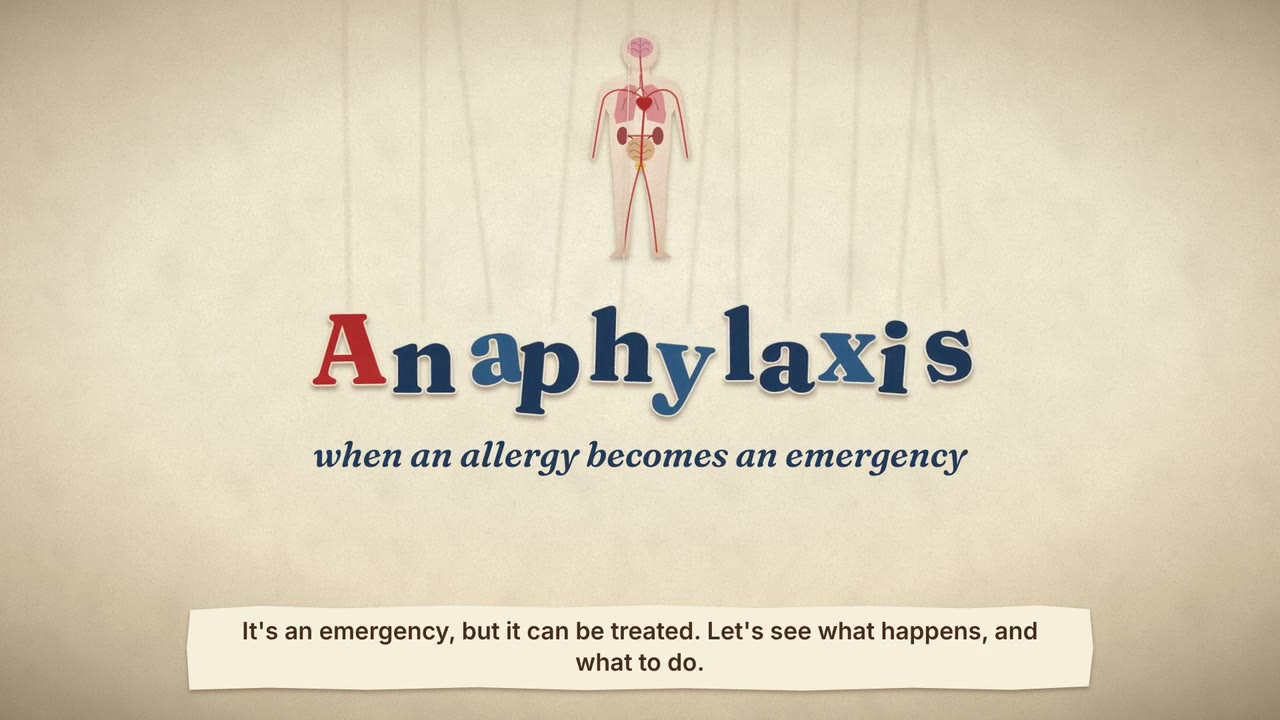
Anaphylaxis is a severe, whole-body allergic reaction. Learn why it happens, the signs to watch for, and how to use an epinephrine auto-injector.
What happens
- In an allergy, the immune system mistakes something harmless, like a food, for a threat. Mast cells release chemicals such as histamine.
- In anaphylaxis, the reaction spreads through the whole body within minutes: blood pressure can fall and airways can swell.
- Common triggers are foods (peanuts, tree nuts, shellfish, fish, milk, eggs, sesame), insect stings, some medicines and latex.
- Epinephrine (adrenaline) is the first and most important treatment. Use it right away, then call 9-1-1.
- Go to hospital even if you feel better: symptoms can come back hours later.
Know the warning signs
- Hives, flushing, or swelling of the lips, face or tongue
- Throat tightness, a hoarse voice, coughing or wheezing
- Trouble breathing
- Vomiting or stomach cramps
- Dizziness, feeling faint or collapsing
Signs often involve more than one part of the body, and not everyone gets hives. If you think it's anaphylaxis, use an epinephrine auto-injector right away, then call 9-1-1 or your local emergency number.
Call 9-1-1 or your local emergency number.
What you can do
- Know your triggers, and read food labels every time: recipes can change.
- Carry your auto-injector everywhere. Many experts advise carrying two.
- Check the expiry date, and keep a written anaphylaxis action plan.
- Wear a medical ID.
- Show family, friends and coworkers where your auto-injector is and how to use it.
Common questions
Are antihistamines enough to treat anaphylaxis?
No. Antihistamines can ease itching and hives, but they can't raise blood pressure or open the airways. Epinephrine is the first and most important treatment for anaphylaxis. Use it right away, then call 9-1-1 or your local emergency number.
Why go to hospital if I feel better after using epinephrine?
Symptoms can come back hours later, even without another exposure. This is called a biphasic reaction. In hospital, the team can give oxygen, fluids and more epinephrine if needed, and watch you closely.
Can I give an auto-injector through clothing?
Yes. Press the tip firmly into the outer thigh, through clothing if needed, and hold it in place for as long as the device's instructions say. If symptoms don't improve, or come back, a second dose can be given as early as five minutes after the first.
Transcript
A bite of a cookie. A bee sting at a picnic. For most people, nothing much happens. But for some people, within minutes, it can become a life-threatening emergency.
That's anaphylaxis: a severe allergic reaction that can affect the whole body. It's an emergency, but it can be treated. Let's see what happens, and what to do.
First, what is an allergy? Your immune system is built to fight germs. In an allergy, it mistakes something harmless, like a food or pollen, for a threat.
The body makes antibodies against it, called I-G-E. They stick to alarm cells called mast cells, which sit in the skin, the airways and the gut.
The next time you meet the trigger, it locks onto those antibodies, and the mast cells release a flood of chemicals, like histamine.
In a mild allergy, that might mean a runny nose or a few hives. In anaphylaxis, the reaction spreads through the whole body, fast.
Blood vessels widen and leak, so blood pressure can fall. And the airways can swell and tighten, making it hard to breathe.
What sets it off? Most often, foods: peanuts, tree nuts, shellfish, fish, milk, eggs and sesame.
Other common triggers are insect stings, some medicines, and latex. Sometimes, no cause is found.
So know the signs. They often show up in more than one part of the body at once.
On the skin: hives, flushing, or swelling of the lips, face or tongue.
In the throat and chest: tightness, a hoarse voice, coughing, wheezing, or trouble breathing.
In the gut: vomiting or stomach cramps. And as blood pressure drops: dizziness, feeling faint, or collapsing.
Not everyone gets hives. A reaction can be serious even without a rash.
If you think it's anaphylaxis, use an epinephrine auto-injector right away. Don't wait to see if it gets worse.
Epinephrine is also called adrenaline. It tightens leaky blood vessels, raises blood pressure, and opens the airways. It's the first and most important treatment.
Take off the safety cap. Press the tip firmly into the outer thigh, through clothing if needed, and hold it there for as long as the label says.
Then call 9-1-1 or your local emergency number, and say it's anaphylaxis.
Lie down with your legs raised. If breathing is hard, sit up instead. Don't stand up or walk suddenly.
If symptoms don't improve, or come back, a second dose can be given, as early as five minutes after the first.
In hospital, the team can give oxygen, fluids and more epinephrine if needed, and watch you closely.
So go to hospital, even if you feel better. Symptoms can come back hours later, without another exposure.
The good news is, you can be ready. If you have a serious allergy, know your triggers, and read food labels every time. Recipes can change.
Carry your auto-injector everywhere. Many experts advise carrying two. Check the expiry date, and keep a written anaphylaxis action plan.
Wear a medical ID. And show family, friends and coworkers where your auto-injector is, and how to use it.
One common myth is that an antihistamine pill is enough. It can ease itching and hives, but it can't raise blood pressure or open the airways.
And a mild reaction last time doesn't mean the next one will be mild. Treat every reaction seriously.
So, to recap. Know your triggers. Know the signs. Use epinephrine right away. And call 9-1-1.
Now you know when an allergy becomes an emergency, and what to do. Be ready, and help the people around you be ready, too.
Sources
- Food Allergy Canada — Emergency information
- Canadian Society of Allergy and Clinical Immunology — Patient and school resources (anaphylaxis emergency plan)
- Golden DBK et al. Anaphylaxis: A 2023 practice parameter update. Ann Allergy Asthma Immunol 2024;132:124–176
- Cardona V et al. World Allergy Organization anaphylaxis guidance 2020. World Allergy Organ J 2020;13:100472
- Resuscitation Council UK — Emergency treatment of anaphylaxis (2021)
- UK MHRA — Adrenaline auto-injectors: advice to carry two
General information, not medical advice. If you think you or someone else is having a medical emergency, call 9-1-1 or your local emergency number.